

How to Prepare Your Home for the 2026 Hurricane Season
As the shadow of Hurricane Helene still lingers, the storms of 2025 are already on the horizon. Hurricane Helene, a

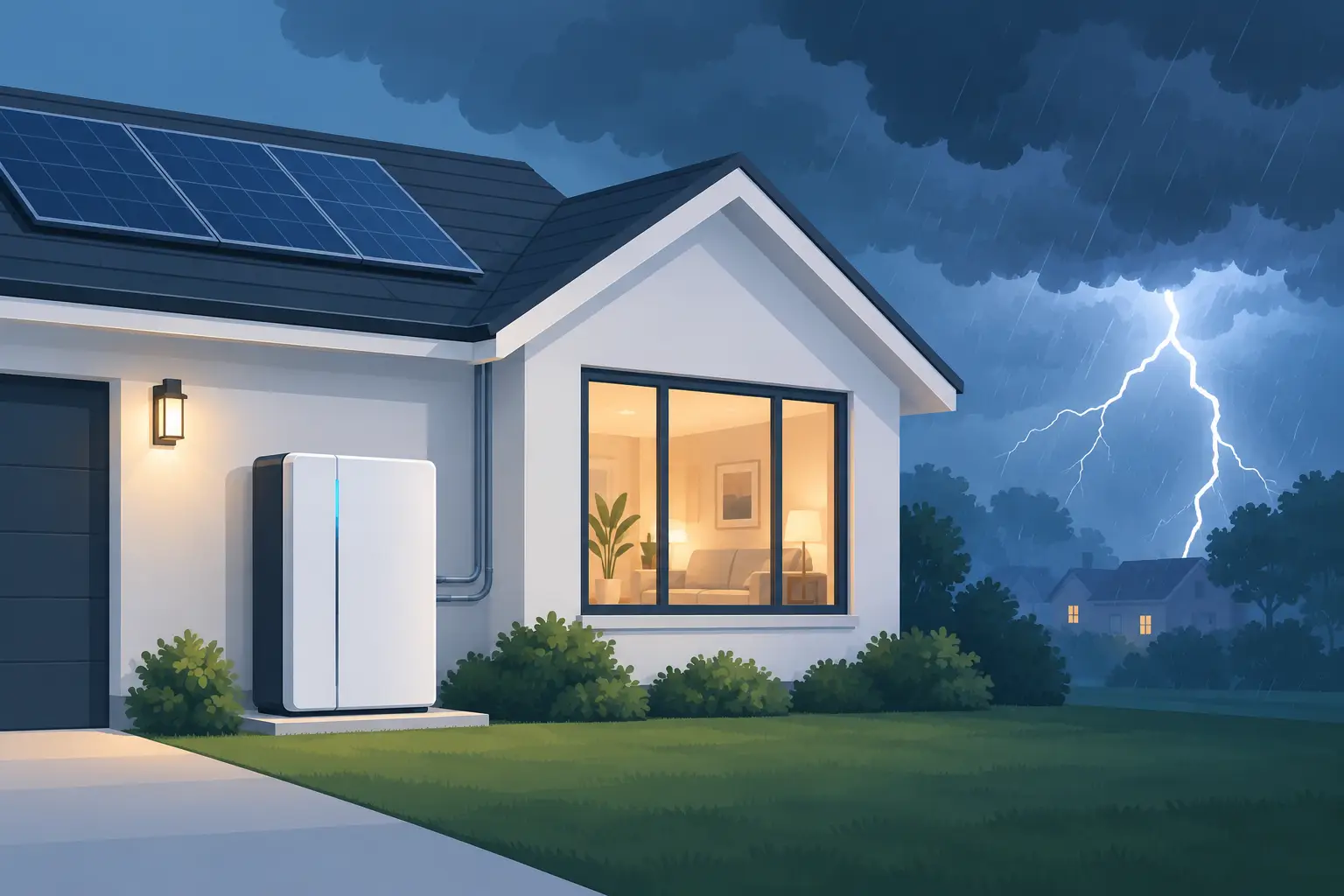
A blackout changes priorities fast. The question is no longer whether your battery can charge a phone. It is whether your refrigerator stays cold, the water pump runs, the internet remains available, and your household can get through the night safely. This whole home battery review focuses on the factors that determine whether a system is truly ready for outages, hurricane season, and everyday power uncertainty.
A whole-home battery is a serious investment, but it can deliver something a portable unit cannot: automatic, dependable backup for the circuits that keep your property functional. The right choice is less about buying the largest battery available and more about matching stored energy, power output, solar charging, and installation quality to the way you actually live.
The phrase “whole home” can be misleading. Some systems are designed to support every circuit in a house for a limited period. Others back up only selected essential loads, such as refrigeration, lighting, Wi-Fi, security systems, outlets, and a few fans. Both can be smart choices.
Start by separating necessities from conveniences. During an outage, most homeowners want refrigeration, communications, lights, fans, a television, device charging, and possibly a well pump or water pressure system. A small business may also need point-of-sale equipment, security cameras, network hardware, and lighting. Those are the loads that protect comfort, safety, and operations.
High-demand equipment changes the equation. Central air conditioning, electric water heaters, electric ranges, clothes dryers, pool pumps, and large workshop tools can drain a battery quickly. A battery system can support some of these appliances, but doing so requires more storage capacity, more inverter power, and a larger budget. There is no single best setup. A home that needs to run air conditioning through a long summer outage needs a very different system from a home that can rely on fans and protect the essentials.
Battery capacity is measured in kilowatt-hours, or kWh. Think of it as the size of your fuel tank. A 10 kWh battery stores roughly twice as much energy as a 5 kWh battery, although the usable amount may be slightly lower depending on system settings and reserve requirements.
For perspective, a carefully managed essential-load setup may use 5 to 15 kWh per day. Add central AC, electric cooking, or pumping equipment, and daily energy use can climb much higher. This is why a battery that sounds large on paper may not provide the runtime a household expects.
Ask your installer or retailer to estimate your essential-load energy use for a full day, then consider the outage duration you are planning for. A battery sized for a typical three-hour interruption is not automatically sized for a two-day storm outage. In the Bahamas and other coastal locations, planning around multi-day restoration timelines is often more realistic.
Capacity and output are not the same thing. A battery may have plenty of stored energy but still lack the inverter output needed to start and operate several major appliances at the same time.
Power output is measured in kilowatts, or kW. It determines whether the system can handle the instant demand from your loads. Refrigerators, pumps, air conditioners, and power tools can require a high surge of power when they start. If the inverter cannot manage that surge, the appliance may not run even if the battery still has energy available.
A useful review should state both continuous output and surge capability. For an essential-load home, lower output may be sufficient. For a property with pumps, multiple AC units, or business equipment, inverter capability deserves as much attention as battery capacity.
A battery without solar is still valuable. It can provide automatic power during an outage, charge from the grid when electricity is available, and sometimes help reduce peak-time utility use. But during a long outage, stored energy eventually runs out.
Solar panels turn a home battery from a limited reserve into a renewable power source. When the sun returns, the system can recharge and continue supporting priority loads. That matters after storms, when fuel may be difficult to obtain and gas generators become noisy, costly, or impractical.
Solar does not mean unlimited electricity. Cloud cover, panel size, roof orientation, shading, and household demand all affect how much energy is available. If the battery is supporting air conditioning all day, solar production may not fully replace what is used. Still, pairing solar with storage can significantly extend independence when the system is sized around realistic loads.
For homes that already have solar, confirm whether the existing inverter can work with battery storage and whether it can operate during an outage. Many standard grid-tied solar systems shut down when the grid fails unless they are designed with approved battery backup equipment. That detail should be confirmed before purchase, not discovered when the lights go out.
For island homes and coastal properties, performance is not just about the specification sheet. Heat, humidity, salt air, heavy rain, and storm exposure place real demands on every part of the system.
Look for equipment with an appropriate environmental rating and an installation plan that protects critical components. Batteries and inverters should be placed where they are shielded from direct weather exposure, excessive heat, flood risk, and physical damage. Coastal corrosion protection matters for mounting hardware, electrical connections, enclosures, and outdoor equipment.
A good system also needs a clear transfer strategy. When utility power fails, the battery should switch to backup power safely and quickly. Automatic transfer is especially valuable when no one is at the property, when outages happen overnight, or when the system supports security, refrigeration, medical equipment, or communications.
Do not treat installation as an afterthought. Proper load calculations, permits where required, electrical protection, grounding, and local code compliance are part of the product experience. The battery is only as dependable as the system built around it.
Most modern home batteries use lithium iron phosphate, often called LFP or LiFePO4, or another lithium-ion chemistry. LFP batteries are widely valued for thermal stability, long cycle life, and suitability for frequent backup use. They are a practical fit for homeowners who want a system they can depend on year after year.
Warranty terms need a close reading. A long warranty is encouraging, but look beyond the headline number. Check the covered capacity at the end of the warranty, the number of cycles allowed, installation requirements, exclusions, and whether labor is included if a repair is needed. A battery may remain useful after its warranty period, but it will gradually store less energy as it ages.
For properties exposed to frequent outages, cycle life matters. A system used only a few times per year experiences different wear from one that cycles daily for solar self-consumption or utility savings. Choose a battery designed for the role you expect it to play.
Whole-home battery pricing varies widely because the equipment is only one part of the project. Storage capacity, inverter size, critical-load panels, solar integration, electrical upgrades, permitting, labor, and site conditions all affect the final cost.
The cheapest path is not always the best value. An undersized battery may keep a few lights on but leave out the pump, refrigerator, or communications equipment that made backup power necessary. On the other hand, paying to run every heavy appliance may not make sense if your household can manage demand during an outage.
A practical middle ground is to build around critical circuits, leave room for future battery expansion, and use solar to extend runtime. This approach can protect the essentials now while giving you options as needs and budget change.
Before choosing a system, get direct answers on a few points: Which appliances will it support during an outage? For how many hours or days under normal use? Can solar recharge the battery while the grid is down? Does it provide automatic transfer? Is the system expandable? Where will the equipment be installed, and how will it be protected from heat, moisture, and storm conditions?
Also ask what happens when the battery reaches its minimum reserve. Some systems can be configured to preserve a portion of energy for an outage, while others prioritize daily savings. The right setting depends on whether your top priority is reducing utility costs or holding power in reserve for emergencies.
The strongest whole-home battery setup is not the one with the biggest marketing claim. It is the one that keeps your most important loads running through the outage you are likely to face, with a realistic plan for recharging and a professional installation built for local conditions.
For households and property owners preparing for storm season, backup power should be treated like any other essential protection. Choose the system around the life you need to maintain when the grid is unavailable, then give it the care, placement, and solar support required to perform when it matters most.
As the shadow of Hurricane Helene still lingers, the storms of 2025 are already on the horizon. Hurricane Helene, a
The Bahamas: turquoise waters, sun-kissed beaches, gentle trade winds, and a relaxed pace of life. It’s one of the most

The Bahamas is blessed with sunshine almost all year round, making it one of the best places on earth to
All rights reserved sol1242.com © 2025


