
How to Prepare Your Home for the 2026 Hurricane Season
As the shadow of Hurricane Helene still lingers, the storms of 2025 are already on the horizon. Hurricane Helene, a

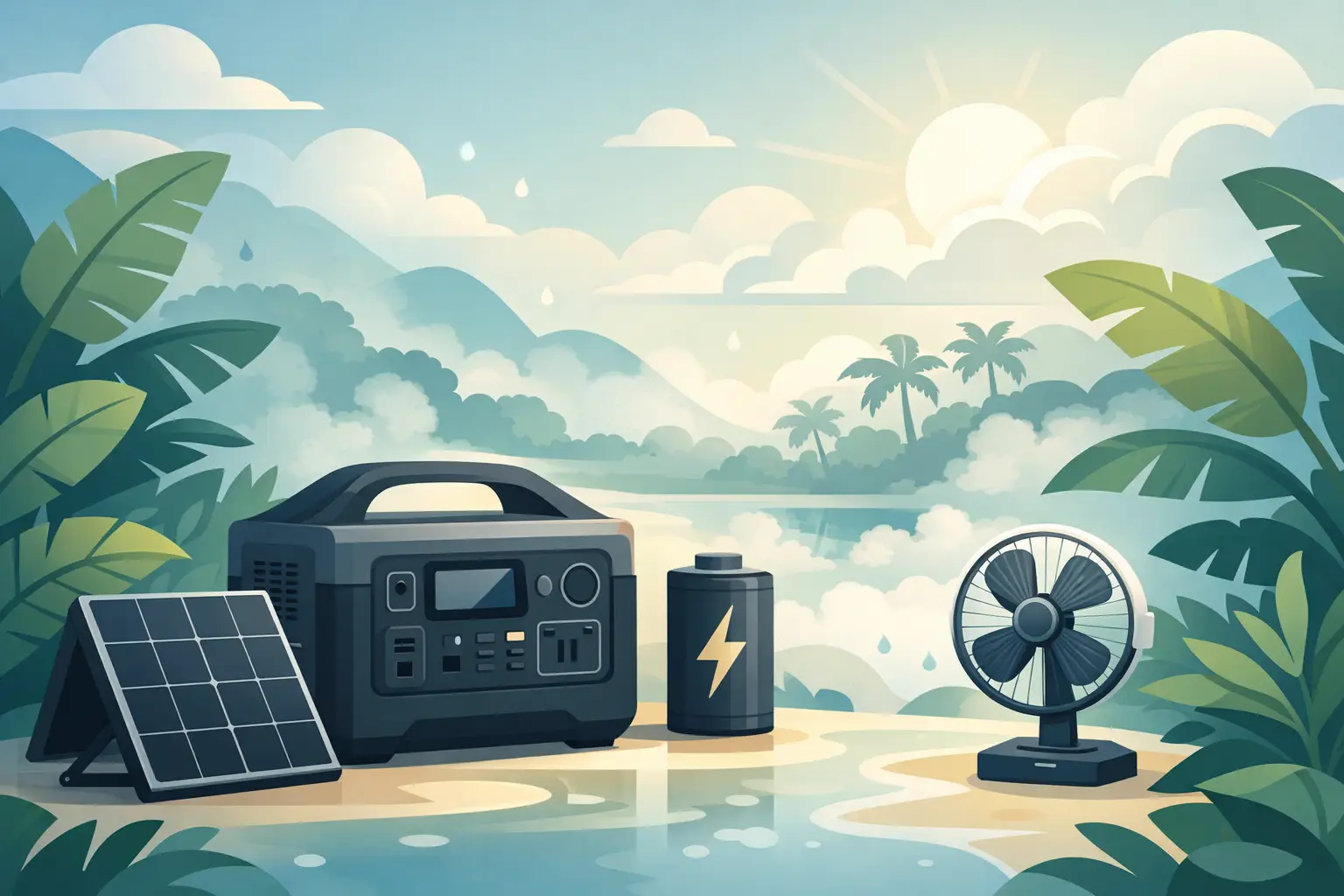
A power station can look perfectly protected on a shelf, then face a very different test during a wet, sticky outage. High humidity, wind-driven rain, salt air, and rapid temperature changes can affect charging, connections, and storage habits. The best portable power station for humid weather is not simply the unit with the largest battery. It is the one with the right capacity, safe operating design, practical charging options, and a protection plan that fits the way you live.
For homeowners and businesses in coastal climates, dependable backup power starts before the storm. A portable power station should be easy to deploy when the grid goes down, strong enough to run the essentials, and simple to keep dry and properly maintained between outages.
Humidity alone does not mean a power station will fail. Quality battery systems are designed to operate across a range of normal outdoor temperatures and moisture levels. The concern is condensation and direct water exposure, especially when a cool unit is moved into hot, humid air or when rain reaches ports, vents, cables, or power strips.
Salt air adds another concern near the coast. Over time, salt residue can encourage corrosion on exposed metal contacts and connectors. That does not make portable backup power a poor fit for island life. It means equipment needs sensible placement, covered operation, and regular inspection.
A portable power station should never be treated as waterproof unless its manufacturer specifically says so. Most units are intended for dry, ventilated use. Even a model with a durable enclosure needs to stay out of standing water, blowing rain, and puddle-prone areas. Think of it as protected indoor equipment that can support outdoor needs when it is positioned correctly.
Start with battery chemistry. Lithium iron phosphate, often called LiFePO4 or LFP, is a strong choice for preparedness because it is known for long cycle life and stable performance. For a power station that may sit charged and ready through hurricane season, a long-lasting battery matters as much as headline wattage. It can provide years of reliable use when stored and charged according to the manufacturer’s instructions.
Next, look at usable capacity. Capacity is measured in watt-hours, or Wh, and it tells you how much stored energy is available. A 500Wh to 800Wh unit can be useful for phones, lights, a router, a fan, and small electronics. A 1,000Wh to 2,000Wh station gives a household or small business more room for a refrigerator, medical device, work equipment, or several essentials used carefully over time.
Output power matters too. Watt-hours tell you how long the battery can run equipment. Watts tell you whether the power station can start and operate that equipment at all. A refrigerator may use moderate running power but need more power when its compressor starts. Check both the continuous AC output and surge rating before relying on a station for appliances with motors.
For humid conditions, physical details deserve equal attention. Choose a unit with covered or recessed ports where available, a clear display, sturdy handles, and reliable cooling. You want connections that are easy to inspect and controls you can use quickly during an outage. Avoid relying on loose adapters or damaged extension cords, since exposed connections are often the weakest point in wet weather setups.
The right size depends on what must keep running when utility power is unavailable. During a short outage, charging phones, powering lights, and keeping a router online may be enough. During a longer storm disruption, refrigeration, fans, communications, and essential medical equipment may become the priority.
A compact station is easy to move and can be an excellent first layer of readiness. It is ideal for a bedroom, apartment, vehicle, boat dock office, or emergency kit. The trade-off is runtime. If you want to power a refrigerator overnight or run several loads, step up to a larger battery capacity or choose an expandable system.
Larger power stations offer more security but require more planning. They weigh more, cost more, and take longer to recharge from a wall outlet. In return, they can support more meaningful backup loads and pair well with portable solar panels after the weather clears. For many households, the practical answer is not one oversized unit. It may be a larger station for core loads plus a smaller unit for communications and lighting.
Do not plan around high-draw heating appliances. Coffee makers, hot plates, kettles, space heaters, hair dryers, and electric grills can drain a battery quickly. A power station is most valuable when it is reserved for the equipment that protects food, safety, communication, comfort, and work continuity.
During humid weather, placement protects your investment. Run the power station inside a dry room, covered porch area that remains completely dry, or another sheltered location with airflow. Keep it elevated on a stable table, crate, or dry platform. Do not place it directly on damp concrete, near open windows, or where water can enter during a sudden squall.
Give the unit breathing room. Cooling vents need clear space, and enclosing a running power station in a sealed bin, cabinet, or plastic bag can trap heat. If you need weather protection while operating near an outdoor workspace, keep the power station inside and run a properly rated extension cord to the load only when conditions are safe. Keep every connection off the ground.
If a power station has been in an air-conditioned space and is moved outside into heavy humidity, let it acclimate in a dry protected area before use. Check the housing, ports, and cables for visible moisture. If you see condensation, do not charge or operate the unit until it is fully dry.
Portable solar panels make a power station far more useful during extended outages. In the Bahamas and other sunny coastal regions, solar can replenish essential backup power without depending entirely on fuel availability or the grid. But panels must be deployed with weather awareness.
Do not set up portable panels in rain, high winds, or lightning conditions. Once the sky clears, place them where they receive direct sun, secure them against gusts, and keep connectors dry. A wet connector is not a small inconvenience. It is a reason to stop, dry the equipment, and inspect it before reconnecting.
Solar input ratings vary widely. A larger station may accept more solar wattage and recharge faster, but real charging speed changes with sun angle, cloud cover, panel position, and heat. A practical solar setup includes enough panel capacity to make a meaningful recovery during daylight, not just enough to slowly top up a phone battery.
A power station is emergency equipment, not something to charge once and forget. Store it in a cool, dry interior space away from direct sun, salt spray, and extreme heat. Do not leave it in a hot car, an unventilated shed, or an exposed outdoor storage area.
Check the battery level regularly, especially before hurricane season. Follow the manufacturer’s recommended storage charge range and recharge schedule. Test the AC outlets, USB ports, charging cable, and solar input before an emergency, not while rain is already hitting the windows.
Keep the surrounding kit organized as well. Store compatible cables, a surge-protected power strip if appropriate, LED lights, and written instructions together in a dry container. Label the loads you plan to run so family members or staff know which devices take priority.
The best portable power station is one part of a larger resilience plan. Decide what must stay on, calculate the expected energy use, and choose a dry operating location before the next outage. If you manage a rental property or small business, identify which communications, payment devices, lighting, or refrigeration loads need a dedicated backup source.
SOL242 helps make this decision practical by focusing on backup power and solar solutions suited to heat, outages, and coastal living. Choose equipment for the conditions you actually face, then protect it with good placement and routine care. When the weather turns, a prepared power station can keep the essentials within reach.
As the shadow of Hurricane Helene still lingers, the storms of 2025 are already on the horizon. Hurricane Helene, a
The Bahamas: turquoise waters, sun-kissed beaches, gentle trade winds, and a relaxed pace of life. It’s one of the most

The Bahamas is blessed with sunshine almost all year round, making it one of the best places on earth to
All rights reserved sol1242.com © 2025


