
How to Prepare Your Home for the 2026 Hurricane Season
As the shadow of Hurricane Helene still lingers, the storms of 2025 are already on the horizon. Hurricane Helene, a

A guest may forgive a passing rain shower. They are far less likely to forgive a dark, hot rental with no Wi-Fi, no cold drinks, and no way to charge a phone. Backup power for vacation rentals protects the experience you promised, especially when a local outage or storm arrives without warning.
For property owners, dependable electricity is not just a convenience. It helps protect bookings, preserve food and supplies, maintain communication, and keep essential systems running when the grid is down. The right setup can turn a stressful outage into a manageable interruption instead of a refund request or a damaging review.
Vacation guests expect a property to function. Air conditioning, lights, internet, refrigeration, water pumps, gate access, and security cameras all shape whether they feel safe and comfortable. When power fails, even for a few hours, a rental can quickly become difficult to manage from a distance.
That risk is higher in coastal and island environments, where hurricane season, heavy rain, salt air, and stressed utility infrastructure can all affect service. A backup power plan gives you more control when conditions are unpredictable. It also gives your property manager clear instructions instead of a last-minute scramble for extension cords, ice, and a working generator.
Reliable backup can protect more than guest comfort. Refrigerators and freezers can stay cold, electronic locks can remain available, and internet equipment can keep guests connected to airlines, family, and emergency updates. For owners with several properties, that continuity can make a real difference in operations and reputation.
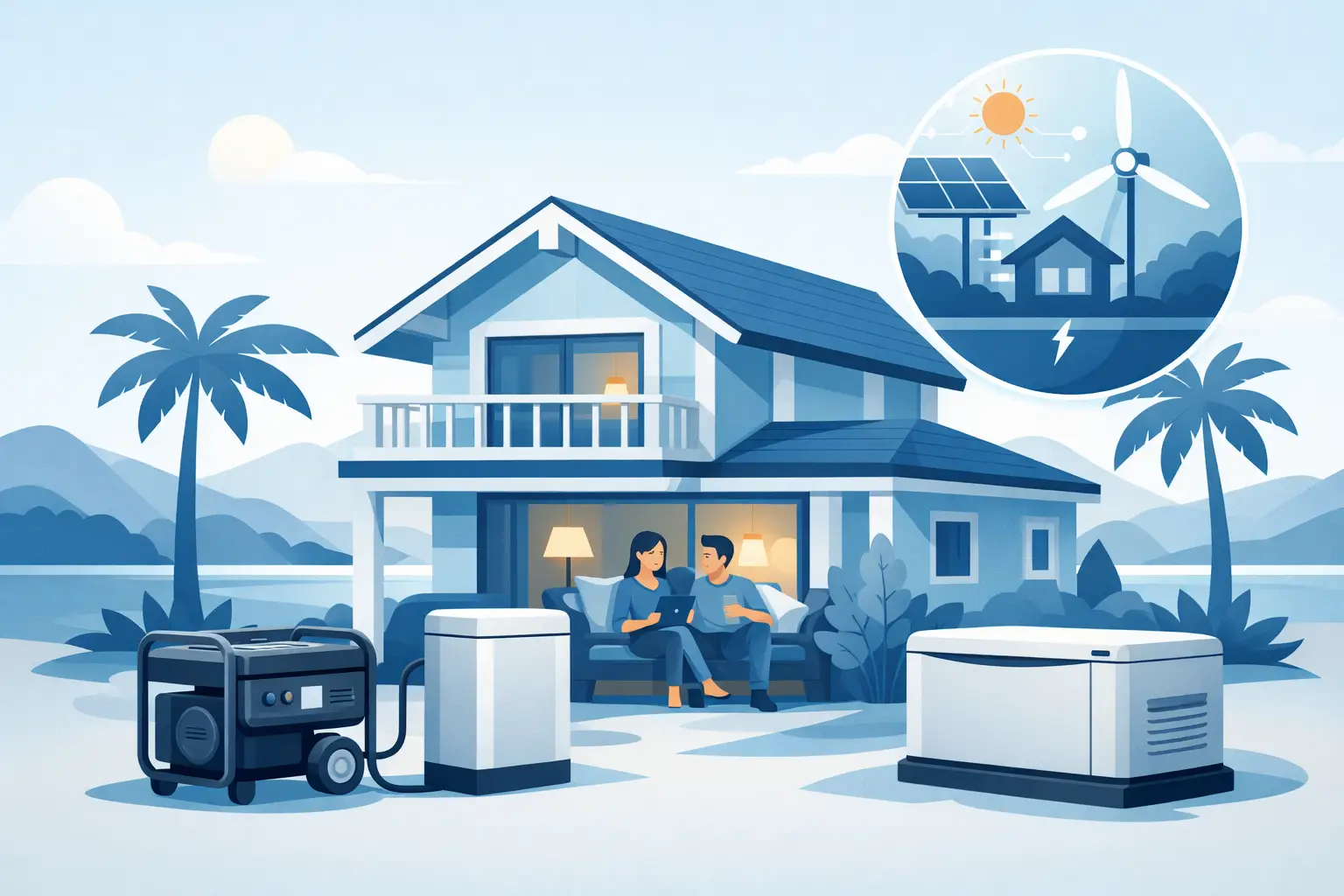
The best system depends on what your guests need to keep running and how long outages typically last. A compact portable power station may be enough for a studio, a guest suite, or a short outage. A larger solar generator or home battery system is better suited to a full house, a premium villa, or a property that needs overnight power for multiple essential loads.
Start by separating essential loads from nice-to-have loads. Essential loads are the items that protect safety, communication, food, and basic comfort. In most rentals, those include a refrigerator, modem and router, lights, phone charging, security equipment, and possibly a water pump. Air conditioning may also be essential in hot climates, but it requires considerably more battery capacity than small electronics.
A practical backup plan does not have to run every appliance at once. Trying to power central air conditioning, an electric range, a clothes dryer, a pool pump, and every outlet can require a much larger and more expensive system. Many owners get better value by supporting a defined group of circuits or appliances first.
Battery capacity is usually measured in watt-hours, while appliance demand is measured in watts. The basic calculation is simple: multiply an appliance’s wattage by the number of hours you want it to run. A 100-watt router and modem setup running for 10 hours uses about 1,000 watt-hours. A 150-watt refrigerator does not draw that amount constantly, but its compressor cycles and can still use meaningful energy over a full day.
Use the appliance label, manual, or a plug-in watt meter whenever possible. Then leave room for startup surges and real-world losses. Refrigerators, pumps, and some air conditioners can draw much more power when they first start than when they are running.
For many vacation rentals, these four questions make product selection clearer:
A portable power station can be placed where it is needed most and used without fuel storage. An installed home battery can automatically support selected circuits and is often the better choice for properties where the owner is off-site or wants a more hands-off response.
A battery is only as useful as its available charge. During a multi-day outage, portable solar panels or a properly designed solar charging setup can extend runtime significantly. That matters in sunny regions where fuel deliveries may be delayed, stations may be crowded, or road conditions may make resupply difficult after a storm.
Solar does not eliminate the need to manage power. Cloud cover, panel angle, shade, and daily energy use all affect charging results. Still, solar gives your rental a renewable way to recharge phones, lights, communication equipment, refrigeration, and other selected loads without relying entirely on fuel.
For a portable setup, choose a secure outdoor location with strong sun exposure and keep panels away from guest traffic. Panels should be brought inside or secured well before severe weather. Portable solar equipment is valuable during recovery, but it should never be left exposed when high winds are expected.
Guests do not think in watt-hours. They notice whether the lights work, whether the bedroom stays comfortable, and whether they can contact someone. Your backup plan should reflect that reality.
Keep a clearly labeled outage kit at the property with battery-powered lights, charging cables, a printed contact sheet, and simple instructions for using approved backup equipment. If a portable power station is part of the plan, state exactly what guests may plug into it. This prevents a guest from connecting a hair dryer, hot plate, or other high-draw appliance that drains the battery quickly.
Communication also matters. Include a brief outage message in your house manual: where emergency lights are stored, what power is backed up, who to contact, and what steps are being taken. Calm, specific communication can prevent frustration from becoming a negative review.
If your rental uses an electric gate, smart lock, Wi-Fi camera, or well pump, test those systems during a controlled power outage. Do not assume a battery will support them just because it has a large capacity rating. Confirm the actual draw, the correct cables or transfer equipment, and the expected runtime.
Portable battery systems are generally simpler and quieter than fuel-powered generators, but they still need thoughtful placement. Keep equipment dry, ventilated, and away from direct heat. In coastal areas, protect connectors and electronics from moisture, salt exposure, and corrosion. Store portable units indoors when they are not in use and keep them charged according to the manufacturer’s guidance.
For whole-home or selected-circuit backup, use a qualified electrician. A proper transfer switch, critical-load panel, and code-compliant installation help prevent backfeeding and protect both the property and utility workers. This is especially important when your rental has a water pump, large appliances, or solar equipment already connected to the electrical system.
Before storm season, run a real test. Charge the batteries, power the selected loads, check solar charging, and make sure your property manager knows the procedure. Testing reveals problems when they are easy to fix, not when guests are waiting in the dark.
A backup system should match the standard of your rental. A simple cabin may only need lights, charging, and refrigeration. A high-end beachfront home may need Wi-Fi, fans, security, a pump, and enough battery capacity to maintain comfort through the night. There is no single system that fits every property, but there is a clear goal: protect the essentials first and expand from there.
SOL242 helps property owners prepare with solar and battery solutions suited to demanding heat, humidity, and outage conditions. The strongest setup is the one you understand, test regularly, and can rely on before the next booking becomes your next emergency.
When guests arrive, they should feel that the property is ready for whatever the weather brings. That confidence is worth building into every rental before the forecast changes.
As the shadow of Hurricane Helene still lingers, the storms of 2025 are already on the horizon. Hurricane Helene, a
The Bahamas: turquoise waters, sun-kissed beaches, gentle trade winds, and a relaxed pace of life. It’s one of the most

The Bahamas is blessed with sunshine almost all year round, making it one of the best places on earth to
All rights reserved sol1242.com © 2025


