
How to Prepare Your Home for the 2026 Hurricane Season
As the shadow of Hurricane Helene still lingers, the storms of 2025 are already on the horizon. Hurricane Helene, a

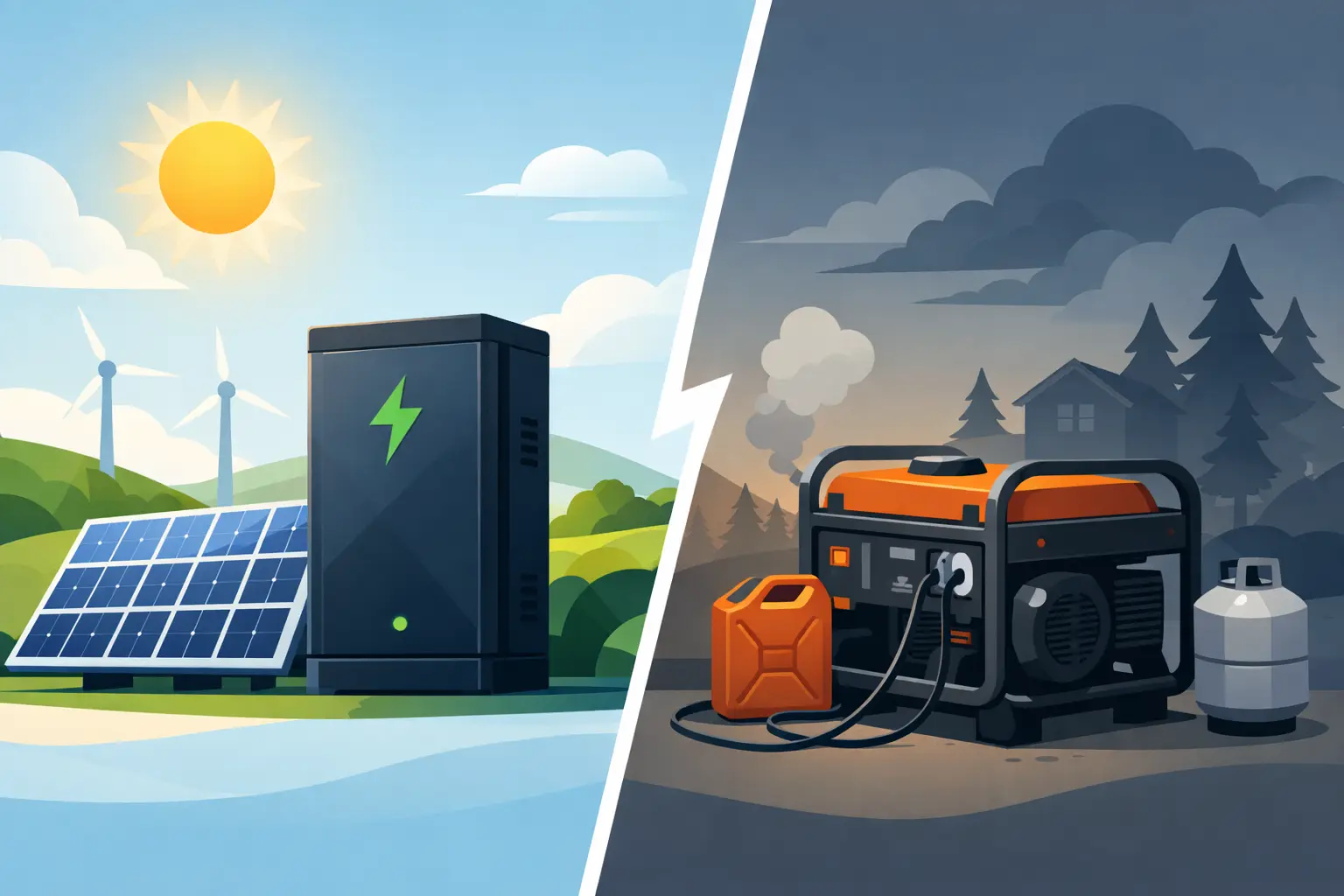
When the power drops, the question is no longer theoretical: solar battery versus gas generator – which one will keep your home, business, or rental property running safely? For households preparing for hurricane season, the best choice comes down to what you need to power, how long outages usually last, and how much daily effort you can realistically manage when conditions are difficult.
A gas generator has long been the familiar answer to backup power. It can produce significant wattage quickly, provided you have fuel. A solar battery system takes a different approach: it stores electricity quietly and can recharge from solar panels, the grid, or both. Neither is automatically right for every property. The dependable answer is the one that matches your load, budget, and readiness plan before the storm arrives.
The clearest difference is how each system makes electricity available. A solar battery stores power for immediate use. If paired with solar panels, it can recharge during daylight and continue supporting essential loads for multiple days with careful energy management. There is no refueling trip, engine oil check, or exhaust to manage.
A gas generator converts stored fuel into electricity while it runs. It is often a strong choice for high-demand equipment, such as central air conditioning, large pumps, power tools, or commercial refrigeration. But it only works as long as you can safely access enough fuel, keep the unit maintained, and operate it outdoors away from windows, doors, and vents.
For many homes, the practical comparison looks like this: a solar battery provides quiet, instant power for critical electronics and everyday essentials, while a generator delivers high output but requires fuel, noise tolerance, and hands-on operation. A hybrid setup can offer the best protection for larger homes or businesses, using batteries for daily essentials and a generator only when unusually heavy loads or extended cloudy weather demand it.
Backup power is not just about a wattage number on a box. It is about what happens at 2 a.m., after a storm has passed, when roads may be blocked and fuel supplies may be limited.
A battery backup system switches on quickly, often within seconds or less depending on the setup. That matters for Wi-Fi, phones, security systems, lights, medical devices, computers, and refrigeration. Portable power stations can also be moved where they are needed, making them useful for apartments, smaller homes, mobile work, and emergency kits.
A generator usually requires a manual routine. It must be moved into a safe outdoor location, connected properly, started, and refueled at intervals. That may be manageable in fair weather. It is far less convenient in driving rain, high winds, darkness, or when you are away from the property. Fuel also becomes a concern after widespread outages, when stations may be closed, lines may be long, or supply deliveries are delayed.
For island properties, this difference carries extra weight. A backup system that relies on sunlight already available at the property can reduce dependence on fuel logistics. Solar does not eliminate the need to plan for cloudy days and major loads, but it gives you a source of replenishment that does not need to be trucked in.
A portable gas generator can have a lower upfront cost than a complete solar battery and panel setup. For a homeowner who needs occasional emergency power for a few hours at a time, that may make it an appealing starting point.
However, the purchase price is only one part of ownership. Generators consume fuel every time they run. They also need oil changes, filters, spark plugs, periodic testing, and proper fuel storage. Fuel can degrade over time, and storing it safely requires space and attention. During a long outage, operating costs can rise quickly.
Solar batteries generally require a larger initial investment, especially when sized for whole-home backup. Their long-term advantage is lower day-to-day operating cost. Sunlight is free, and modern battery systems require far less routine maintenance than an engine. If the system can offset some regular electricity use before and after an outage, it may provide value beyond emergency preparedness.
The right financial question is not simply, “Which costs less?” Ask, “What will it cost to keep my essential loads running for three days, five days, or a week?” Include fuel, maintenance, installation, replacement cycles, and the value of avoiding spoiled food, lost work time, or business interruption.
A solar battery is quiet. That sounds like a minor benefit until an outage lasts through the night. Batteries let you run lights, fans, communications, and selected appliances without engine noise outside your window or disruption to neighbors and guests.
Generators are loud by nature, even quieter inverter models. They can also draw attention during a neighborhood outage. More importantly, gasoline-powered equipment produces carbon monoxide. It must never be operated inside a home, garage, enclosed porch, or near openings where exhaust can enter the building. Safe placement and proper electrical connection are not optional.
Never connect a generator directly to a wall outlet. This dangerous practice, sometimes called backfeeding, can injure utility workers and damage equipment. A properly installed transfer switch or generator inlet allows a generator to power selected circuits safely. The same principle applies to permanent battery systems: professional planning helps ensure the system is sized and connected for the loads that matter most.
Most backup plans become more affordable and effective when they focus on essentials first. During an outage, you may not need to run every appliance exactly as you do when the grid is available. Prioritize refrigeration, lighting, phone charging, internet, fans, medical equipment, a television, and perhaps a small pump or window air conditioner.
A portable solar power station may be enough for charging devices, running a router, powering lights, and keeping a small refrigerator operating. A larger home battery can support selected circuits or, with proper sizing, much more of the home. Solar panels extend runtime by replacing energy during the day, but their output changes with weather, panel orientation, shading, and available daylight.
Generators are often better suited to short periods of heavy demand. Starting a large air conditioner, well pump, or motor-driven appliance can require a surge of power that exceeds a small battery system. That does not mean a generator must run continuously. Smart load management can reduce fuel use by running high-demand equipment only when necessary.
Before buying either option, write down the appliances you cannot be without, their running watts, and how many hours per day they need to operate. Then account for startup surges on refrigerators, pumps, and air conditioners. This simple exercise prevents the common mistake of buying a unit that looks powerful but cannot support the loads you expect.
A solar battery is often the stronger fit when quiet operation, low maintenance, indoor-safe use, and renewable recharging are priorities. It is especially valuable for households that experience frequent short outages, work from home, rely on communications equipment, or want dependable overnight power without getting up to refuel an engine.
It also makes sense for properties where fuel storage is inconvenient or where noise and exhaust are unacceptable. For off-grid cabins, boatside use, remote work areas, and hurricane kits, portable power stations with portable solar panels can provide practical energy independence without the operating burden of a generator.
The trade-off is capacity. Large appliances and long periods of poor solar production require a larger battery bank, more panels, careful usage, or another backup source. Battery power rewards planning.
A gas generator remains useful when you need high output at a lower entry price, especially for intermittent use. It can be a practical solution for construction tools, large pumps, multiple refrigerators, or emergency air conditioning where battery capacity would be expensive to install.
The trade-off is dependence on fuel and regular attention. A generator should be tested before storm season, supplied with fresh stabilized fuel, and stored according to manufacturer safety requirements. Plan for its noise, secure placement, and a safe way to connect it to your electrical system.
For some households, a generator is the first step toward backup power. For others, it becomes the reserve layer behind a solar battery system. That approach reduces fuel consumption while preserving a high-output option for demanding conditions.
The strongest backup system is rarely the one with the biggest number on the label. It is the system you can operate safely, replenish reliably, and afford to maintain. Start with critical loads, then choose capacity based on the length of outage you want to withstand.
For many Bahamian homes and businesses, solar and battery backup provides a calmer, cleaner way to protect essentials through routine outages and storm recovery. A generator can still play a valuable role where heavy loads or very long outages require it. SOL242 helps customers prepare for both realities with backup power options designed around resilience, not wishful thinking.
Choose before the forecast turns serious, test your setup before you need it, and make sure the people in your home know exactly how to use it safely.
As the shadow of Hurricane Helene still lingers, the storms of 2025 are already on the horizon. Hurricane Helene, a
The Bahamas: turquoise waters, sun-kissed beaches, gentle trade winds, and a relaxed pace of life. It’s one of the most

The Bahamas is blessed with sunshine almost all year round, making it one of the best places on earth to
All rights reserved sol1242.com © 2025


