
How to Prepare Your Home for the 2026 Hurricane Season
As the shadow of Hurricane Helene still lingers, the storms of 2025 are already on the horizon. Hurricane Helene, a

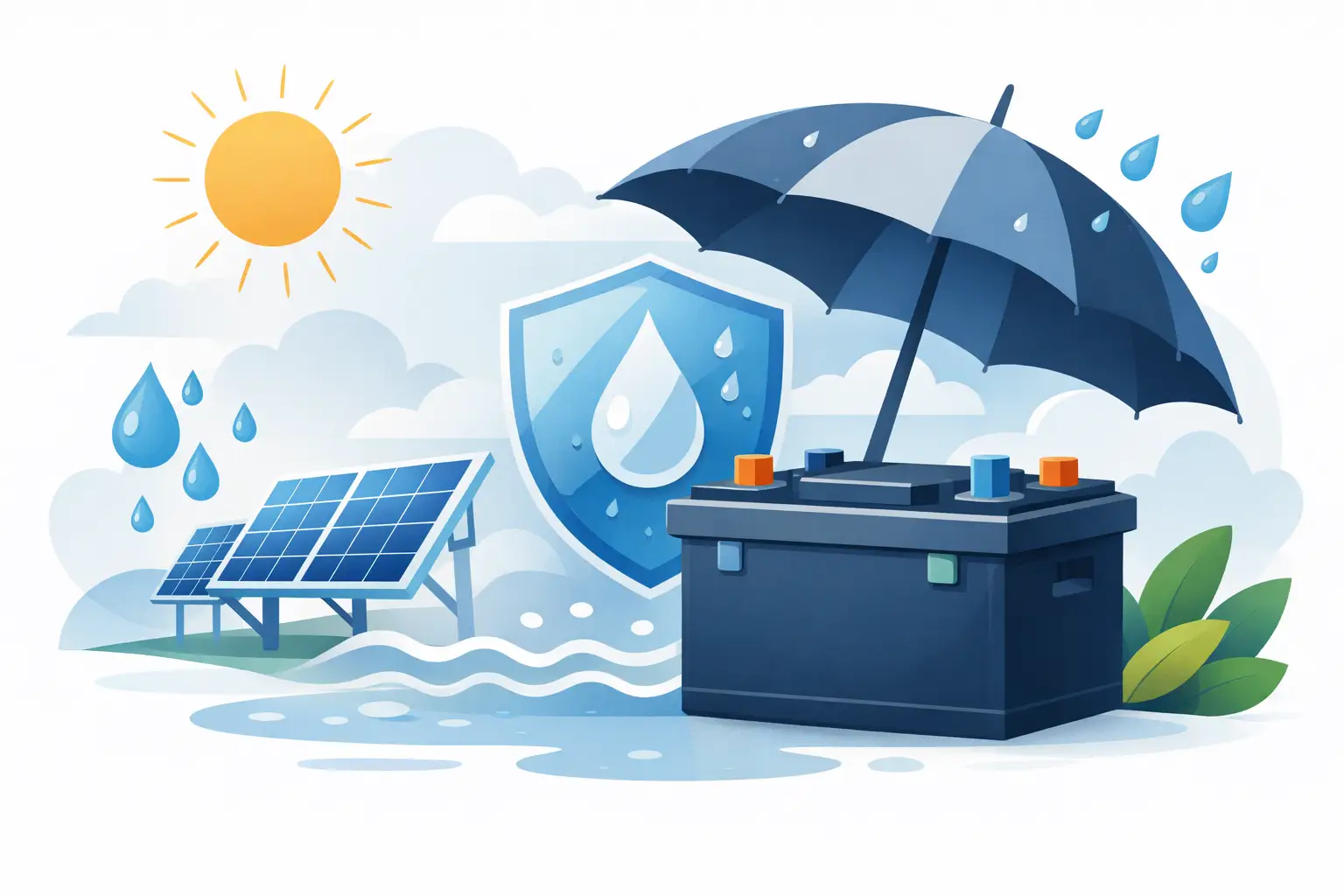
A solar battery can be protected from rain and still fail early because humid air finds its way into the wrong space. To protect solar batteries from humidity, homeowners need more than a weatherproof box. They need the right installation location, controlled airflow, dry electrical connections, and a plan for the wettest days of hurricane season.
For homes, rentals, and small businesses that depend on backup power, this work protects more than equipment. It helps ensure your battery is ready when the grid goes down, food needs to stay cold, a pump needs to run, or communications matter most.
High humidity does not usually damage a quality battery in one dramatic moment. The trouble is cumulative. Moist air can cause condensation on terminals, cable lugs, breakers, and monitoring equipment. Over time, that moisture can lead to corrosion, poor connections, nuisance faults, and reduced system reliability.
Coastal conditions add another concern: salt in the air. Salt residue attracts moisture and can accelerate corrosion on exposed metal components. A battery may be indoors, but if the room is poorly sealed, unconditioned, or exposed to sea air through open louvers and windows, its electrical connections can still be at risk.
Heat makes the situation harder. Warm, humid air entering a cooler enclosure can form condensation when temperatures shift overnight or after air conditioning cycles. That means a fully sealed cabinet is not always the answer. The goal is to keep direct water and salt spray out while preventing trapped moisture from building up inside.
Battery chemistry and product design matter, too. Many lithium iron phosphate battery systems are well suited to backup power because of their long cycle life and stable chemistry, but they still require the installation conditions specified by the manufacturer. An enclosure rating can help protect against dust and water intrusion. It does not guarantee that condensation will never form inside a cabinet or around connected equipment.
The best humidity protection starts before installation. Place the battery and inverter in a covered, shaded, well-maintained area that stays above flood level. A utility room, properly ventilated garage, interior storage space, or purpose-built equipment enclosure can work well when it meets the system’s clearance, temperature, and ventilation requirements.
Avoid placing batteries directly on concrete floors, especially in garages or outdoor utility spaces. Concrete can hold and release moisture, and floor-level equipment is more vulnerable to minor flooding. Use a manufacturer-approved wall mount, rack, or raised base to keep equipment off the ground and allow air to circulate underneath.
Do not install a battery beneath a leaking roof, beside an unsealed louver, or in the path of wind-driven rain. In the Bahamas and other coastal areas, storm rain can move sideways. An open carport or covered porch may look protected on a calm day but can become a wet environment during severe weather.
A cabinet that keeps out rain but traps warm, moist air can create its own problem. Use an enclosure designed for electrical equipment and sized correctly for the battery, inverter, disconnects, and cable bends. Follow the manufacturer’s required clearances so heat can escape and maintenance remains possible.
Where conditions call for an enclosed installation, a qualified installer may recommend ventilated designs, filtered vents, drip loops, moisture-resistant cable glands, or a controlled dehumidification solution. The right approach depends on whether the equipment is in conditioned indoor space, an unconditioned garage, or an exterior-rated enclosure.
Do not add a household dehumidifier or heater inside a battery cabinet without professional guidance. Extra heat, restricted airflow, and unsuitable electrical equipment can create safety issues. Battery systems need the environment their manufacturer specifies, not improvised modifications.
Humidity damage often begins at the connections, not inside the battery cells. Terminals, busbars, breakers, ground connections, and communication ports should be installed cleanly and inspected regularly. Cables entering an enclosure should use proper fittings that limit moisture entry without pinching or stressing the wire.
A licensed solar or electrical professional can use approved anti-corrosion practices on applicable external connections. This is not a job for random sprays or heavy grease applied to every surface. Some products can interfere with electrical contact, attract dirt, or conflict with manufacturer instructions.
Drip loops also matter. When cables run downward before entering an enclosure, water traveling along the cable is less likely to reach a connection point. It is a small installation detail with a real payoff in heavy rain and persistent humidity.
Humidity protection should work alongside hurricane preparedness. Secure equipment to approved mounting surfaces, keep the battery above anticipated water levels, and make sure exterior enclosures are rated for their intended exposure. A battery system cannot provide dependable backup power if wind, floodwater, or loose equipment damages the supporting installation.
Keep solar batteries away from locations that are likely to flood first, such as low exterior closets, basement-level rooms, or ground-level storage areas with poor drainage. If your property has experienced water intrusion before, treat that history as a warning. Raising the equipment or relocating it before storm season is far easier than replacing damaged power equipment afterward.
For portable power stations, protection is more straightforward but still necessary. Store them indoors in a dry area, away from open windows and damp sheds. Do not leave a portable battery in a vehicle, on a boat dock, or under a patio cover during wet weather. Before charging or connecting appliances, confirm that the unit, cable ends, and outlets are completely dry.
SOL242 customers often choose backup power for the moment utility service becomes uncertain. That makes correct storage and installation part of the purchase decision, not an afterthought.
A quick monthly check can catch small issues before they affect your backup power. Look for water stains near equipment, dampness inside an enclosure, rust on mounting hardware, discoloration around terminals, or cracked cable seals. During the rainy season, inspect more often, particularly after a major storm.
Watch for these signs that require attention:
Turn off the system only according to its operating instructions if you see active water exposure, corrosion at electrical connections, a burning smell, or damage to the enclosure. Contact a qualified installer or electrician rather than trying to repair live battery equipment yourself.
A compact portable power station used for weekend outages does not need the same installation as a whole-home battery connected to an inverter and transfer switch. Portable units mainly need dry indoor storage, sensible charging habits, and protection from direct rain and salt air. A permanently installed home battery needs a more deliberate site assessment that considers ventilation, heat, wiring routes, flood risk, and code requirements.
Off-grid cabins, vacation homes, and small businesses may face a different challenge: equipment that sits unattended for long periods. In those cases, remote monitoring, periodic inspections, and a dry, controlled equipment space become even more valuable. If a property is closed up for months, moisture can build quietly until the next time backup power is needed.
The most dependable battery system is not simply the one with the largest capacity. It is the one installed where it can stay cool, dry, accessible, and ready to perform. Give your solar batteries a protected home now, and they will be far more likely to deliver calm, capable power when the weather turns against you.
As the shadow of Hurricane Helene still lingers, the storms of 2025 are already on the horizon. Hurricane Helene, a
The Bahamas: turquoise waters, sun-kissed beaches, gentle trade winds, and a relaxed pace of life. It’s one of the most

The Bahamas is blessed with sunshine almost all year round, making it one of the best places on earth to
All rights reserved sol1242.com © 2025


