
How to Prepare Your Home for the 2026 Hurricane Season
As the shadow of Hurricane Helene still lingers, the storms of 2025 are already on the horizon. Hurricane Helene, a

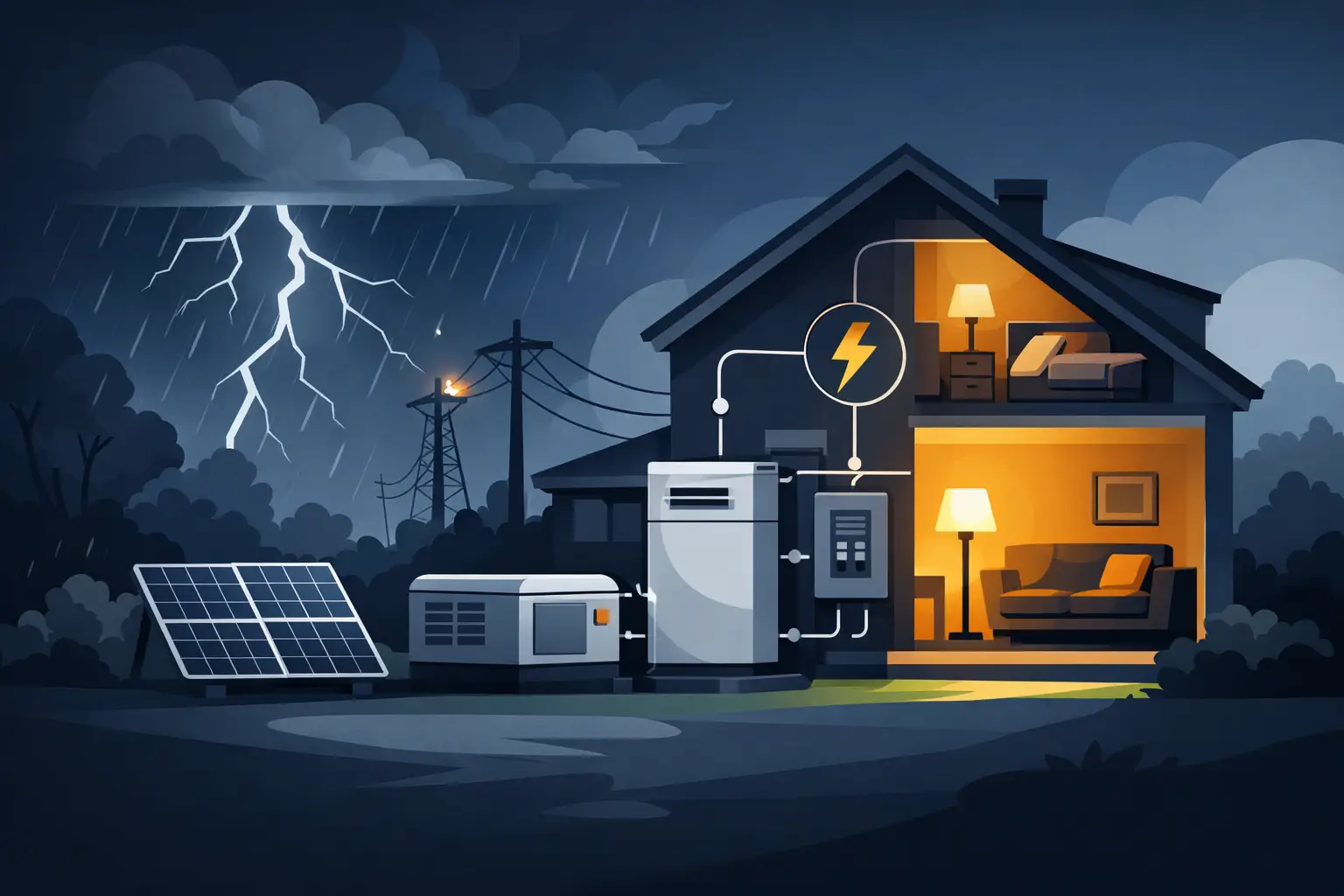
A blackout does not have to mean losing everything at once. With the right plan, your household can keep lights on, food cold, phones charged, and critical equipment running without trying to power the entire property. This home blackout backup system example shows what a practical setup can look like for hurricane season, grid failures, and everyday outages.
The goal is not to recreate normal utility power at any cost. It is to protect the loads that matter most, use stored energy wisely, and have a reliable way to recharge when the outage lasts longer than expected.
Consider a three-bedroom home with two adults, two children, and a small home office. The homeowner wants coverage for the refrigerator, internet, lights, phones, fans, a TV, and a few medical or work essentials. They do not expect the battery system to run central air conditioning, an electric range, clothes dryer, or whole-home water heater during an outage.
A sensible backup setup could include a 3,000-watt portable power station with roughly 3,000 watt-hours of battery capacity, paired with 400 to 800 watts of portable solar panels. During an outage, the power station is connected to selected devices directly or through a properly installed transfer solution for designated circuits.
That system might support these essential loads:
The daily total may land between 2,500 and 4,000 watt-hours, depending on habits and appliance efficiency. A 3,000 watt-hour battery can cover a shorter outage or an overnight period, while solar panels can restore a meaningful portion of that energy during daylight. If sunshine is strong and power use is disciplined, the household can extend its backup time substantially.
The fastest way to overspend on a backup system is to size it around everything in the home. Air conditioners, electric stoves, dryers, pool pumps, and water heaters use large amounts of power. Running them from batteries is possible, but it requires a much larger battery bank, higher inverter capacity, more solar input, and a bigger budget.
For most homeowners, the first layer of blackout protection should focus on preserving comfort, communication, food, and safety. Keep the refrigerator cold. Run a fan at night. Charge phones and radios. Maintain internet access when service is available. Power a CPAP machine, medical device, security system, or laptop when needed.
This approach matters especially in the Bahamas and other coastal locations where outages may follow severe weather. After a storm, stored energy becomes more valuable when it is not being drained by high-demand appliances that can wait.
A 3,000-watt inverter has enough output for many household essentials, but wattage capacity and battery capacity are different. The inverter rating tells you how much power can be supplied at one time. Battery watt-hours tell you how long the system can supply it.
For example, a refrigerator might draw 150 watts while running but require a higher surge when its compressor starts. Add a 60-watt fan, 20 watts of lights, 25 watts of internet equipment, and a laptop, and the system may only be supplying a few hundred watts most of the time. That is manageable for a quality 3,000-watt station.
However, plugging in a 1,500-watt kettle, microwave, toaster oven, or hair dryer changes the picture quickly. These devices can be used occasionally, but each one can consume a large share of stored power. During a prolonged blackout, treat high-heat appliances as short-use tools rather than everyday conveniences.
A portable power station is a strong starting point for apartments, condos, renters, smaller homes, and customers who want flexible backup without major electrical work. It can also be moved where power is needed most, whether that is the kitchen, bedroom, office, or a small business location.
A permanently installed home battery backup system is usually the better fit when you need selected circuits to switch over automatically, want longer runtime, or have more critical loads. A larger battery bank can support multiple refrigerators, dedicated lighting circuits, a well pump, security equipment, office devices, and certain efficient air conditioning systems, depending on the design.
For a home that needs two to three days of essential-load coverage with limited solar production, a battery capacity in the 10 to 20 kilowatt-hour range may be more appropriate. This is not a universal rule. A home with a chest freezer, medical equipment, multiple refrigerators, or a sump pump may need more. A small household that mainly needs lights, communications, fans, and one refrigerator may need less.
The right question is not, “What is the biggest system available?” It is, “What must stay on, for how long, and what will recharge the battery?”
Battery capacity gets you through the first hours of an outage. Solar recharge helps you continue when the outage lasts into the next day.
In the example above, 400 watts of solar may produce around 1,200 to 2,000 watt-hours on a good sunny day after normal charging losses and changing weather conditions. Increasing to 800 watts can provide more recovery room, particularly when the refrigerator, fans, and communications equipment run continuously.
Solar output is never guaranteed. Cloud cover, panel angle, shade, heat, and damage after a storm can reduce production. That is why a backup plan should not depend on perfect conditions. Start with adequate battery storage, then use solar to extend runtime and reduce dependence on fuel or the grid.
Portable panels offer flexibility. They can be positioned for sun, stored indoors before severe weather, and deployed after conditions are safe. For permanent systems, professionally mounted panels and properly protected electrical equipment may offer higher daily production and a more hands-off experience.
A well-sized system can still run down quickly if the household uses power as though the grid never failed. The best blackout plan includes a few practical rules.
Keep refrigerator and freezer doors closed as much as possible. Run fans in occupied rooms instead of every room. Charge phones and battery banks during the day when solar production is strongest. Use LED lanterns and task lighting rather than lighting the entire home. If cooking requires electricity, choose short, planned uses instead of leaving power-hungry appliances connected all day.
It also helps to test the system before hurricane season. Plug in the refrigerator, internet equipment, lights, and fans you expect to run. Watch the power station display over several hours. This reveals your real energy use and highlights issues such as extension-cord needs, overloaded circuits, or an appliance with a larger startup surge than expected.
For installed systems, have a qualified electrician confirm which circuits are backed up and how the transfer equipment operates. Never attempt to feed a portable generator or power station into household wiring without the correct equipment. Improper connections can endanger utility workers, damage appliances, and create a fire risk.
A compact power station may be enough if your priority is communications, lights, fans, and charging. A mid-size solar generator can add refrigerator coverage and longer comfort during overnight outages. A larger portable or installed battery system is better for households that need multiple essential circuits, extended runtime, or support for work and medical equipment.
SOL242 focuses on backup solutions that make sense for island conditions: equipment that can be stored securely, deployed when needed, and supported by solar when grid restoration takes time. The best system is one you will keep charged, understand how to use, and trust when the weather turns.
Before buying, make a simple written list of your must-run devices and their wattage. Separate needs from conveniences. Then choose enough battery capacity for the first night and enough solar input to make the next day easier. A blackout plan becomes far more dependable when every watt has a purpose.
As the shadow of Hurricane Helene still lingers, the storms of 2025 are already on the horizon. Hurricane Helene, a
The Bahamas: turquoise waters, sun-kissed beaches, gentle trade winds, and a relaxed pace of life. It’s one of the most

The Bahamas is blessed with sunshine almost all year round, making it one of the best places on earth to
All rights reserved sol1242.com © 2025


