

How to Prepare Your Home for the 2026 Hurricane Season
As the shadow of Hurricane Helene still lingers, the storms of 2025 are already on the horizon. Hurricane Helene, a

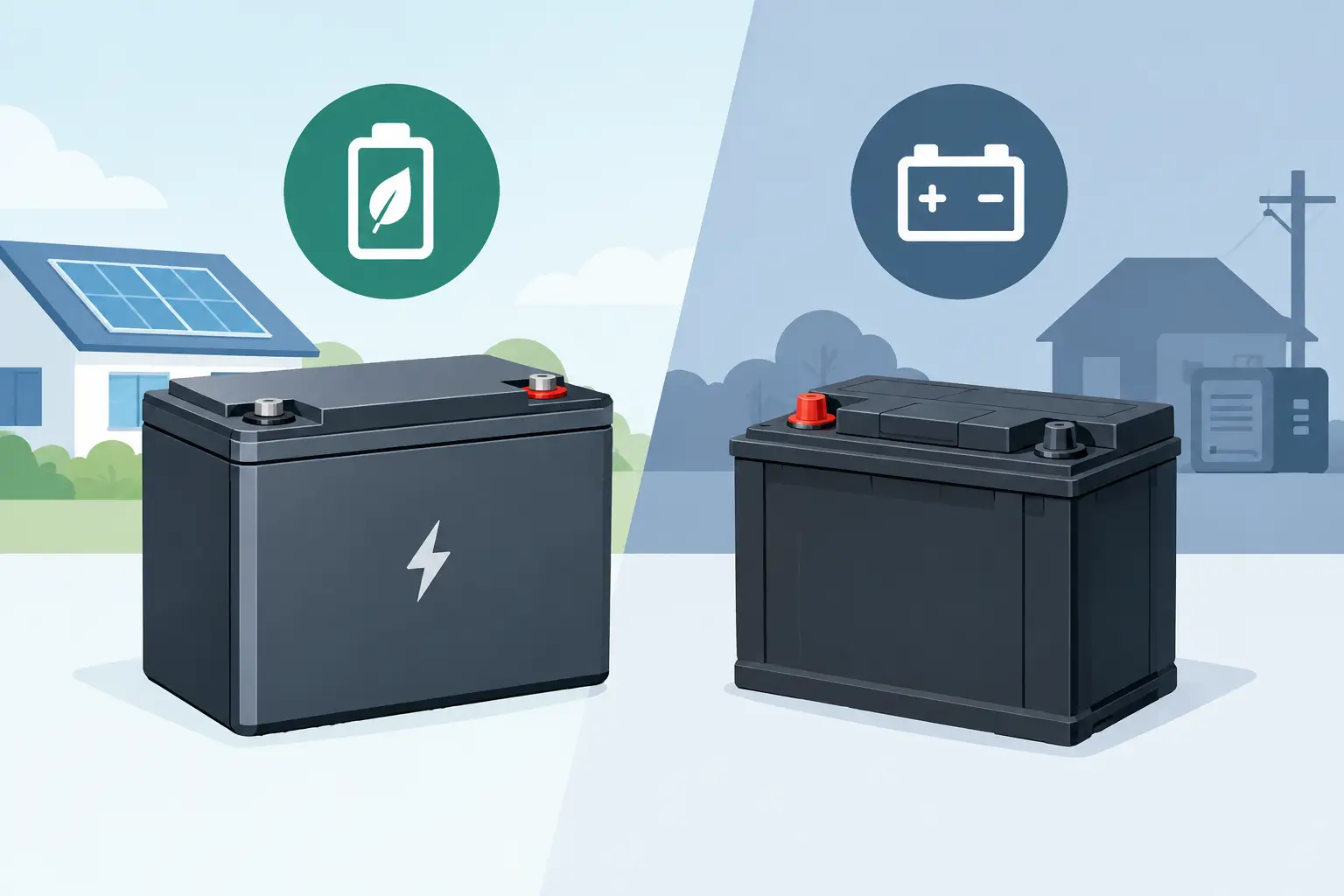
A battery choice made on price alone can become expensive the first time an outage lasts longer than expected. For hurricane readiness, solar storage, and everyday backup, the LiFePO4 versus lead acid decision affects how much power you can actually use, how quickly the battery recharges, and how often you will need to replace it.
Lead acid batteries have served homes, boats, vehicles, and backup systems for decades. They remain familiar and affordable upfront. LiFePO4 batteries, also called lithium iron phosphate batteries, cost more at the start but bring a longer service life, deeper usable capacity, lower weight, and faster charging. Neither is automatically right for every application. The right answer depends on the loads you need to protect, the space you have, your charging equipment, and how seriously you are planning for extended outages.
The most practical difference is how each battery handles stored energy. A lead acid battery is happiest when it is not deeply discharged. Regularly taking it too low shortens its life quickly. A LiFePO4 battery is designed to provide a much larger share of its rated capacity without the same damage from normal cycling.
For example, a 100Ah lead acid battery may be rated for 1,200 watt-hours at 12 volts, but using more than about half of that capacity repeatedly is not ideal. A 100Ah LiFePO4 battery has a similar headline capacity but can often provide 80% to 100% of it, depending on the battery’s built-in battery management system and manufacturer guidance. That difference matters when you are trying to keep a refrigerator, internet equipment, lights, fans, or a small medical device operating through the night.
LiFePO4 also maintains its voltage more consistently as it discharges. Lead acid voltage falls as the battery empties, which can cause an inverter to shut down earlier than expected under a heavier load. In real backup use, that can make a battery bank feel smaller than its label suggests.
Lead acid generally wins on purchase price. If you need basic power for a short-term or occasional use and your budget is tight, an AGM or flooded lead acid battery can be a reasonable entry point. This can apply to a small emergency lighting setup, a rarely used backup system, or a temporary project where frequent cycling is not expected.
LiFePO4 usually wins on ownership cost. A quality lead acid battery may provide a few hundred useful cycles when regularly discharged. A quality LiFePO4 battery can commonly provide several thousand cycles under appropriate conditions. That means one LiFePO4 battery may outlast multiple lead acid replacements.
The calculation is bigger than battery price. Consider replacement labor, downtime, shipping, storage space, and the risk of discovering that a neglected lead acid battery no longer holds a charge just before storm season. For a home or small business that expects to use backup power often, paying more initially can reduce long-term expense and uncertainty.
After an outage, recharging speed is part of your resilience plan. Lead acid batteries charge relatively slowly, especially as they approach full capacity. They also lose efficiency during charging, so more solar energy is required to refill them. Flooded lead acid batteries need periodic full charging to avoid sulfation, a buildup that reduces capacity and battery life.
LiFePO4 batteries charge efficiently and can accept higher charging current when paired with compatible equipment. With adequate solar input or a properly sized AC charger, they can recover much faster after an overnight discharge. That can be a major advantage during unsettled weather, when clear solar hours may be limited between storms.
Compatibility still matters. A LiFePO4 battery should be used with a charger, solar charge controller, or inverter charger that has a lithium charging profile or adjustable settings. Do not assume an old lead acid charger is suitable simply because it has the same voltage. Incorrect absorption, float, temperature, or equalization settings can reduce performance or trigger battery protection.
Lead acid batteries are heavy. A typical 100Ah AGM battery can weigh roughly 60 pounds or more. A comparable LiFePO4 battery may weigh around 25 pounds. For a fixed battery room, that may seem minor. For a condo, boat, RV, portable solar generator, elevated shelf, or equipment that must be moved before a storm, the difference is substantial.
The lower weight of LiFePO4 also makes it easier to expand a system. More usable energy can fit into a smaller, more manageable footprint. This is especially valuable where storage space is limited and every pound transported or installed carries a cost.
Flooded lead acid batteries require ventilation because they can release gas while charging. They also need periodic maintenance, including checking water levels in many models. Sealed AGM and gel batteries reduce maintenance and spill concerns, but they still carry the cycle-life and weight limitations of lead acid chemistry. LiFePO4 batteries do not require water maintenance and do not vent under normal operation, though they should still be installed according to manufacturer instructions with appropriate wiring, fusing, and clearance.
Heat is hard on every battery. In hot climates, lead acid batteries can lose life rapidly, particularly when they remain fully charged in a warm utility area. High humidity and salt air add another layer of concern because corroded terminals, poorly protected connections, and damp enclosures can cause failures regardless of battery chemistry.
LiFePO4 generally performs well in warm conditions, but it is not invincible. Keep it out of direct sun, allow airflow around the battery, and use a dry, protected enclosure. Check terminals for corrosion and use properly sized marine-grade or corrosion-resistant connections where exposure is likely. A battery is only as dependable as the cables, breakers, inverter, and charging equipment connected to it.
For homes in the Bahamas and coastal areas of the United States, this practical protection matters as much as the battery label. A system stored in a hot shed with loose, corroded connections is not storm-ready, whether it uses lithium or lead acid.
LiFePO4 is often the stronger choice for solar and backup power, but lead acid still has a place. It can make sense for a low-cost, lightly used system, for equipment specifically designed around lead acid charging, or where replacement batteries are already standardized across a fleet.
It may also be the correct choice for starting an engine. A deep-cycle LiFePO4 battery should not automatically replace a vehicle’s starter battery unless it is purpose-built for cranking applications and the charging system supports it. Starting batteries and backup batteries do different jobs.
If you choose lead acid, protect your investment by avoiding deep discharges, keeping it fully charged, using the right charger, and planning for earlier replacement. A neglected lead acid battery is rarely dependable when you need it most.
LiFePO4 is usually the better fit when backup power is central to your preparedness plan. It is particularly well suited for solar generators, portable power stations, home battery systems, RVs, off-grid cabins, and small businesses that cannot afford repeated downtime.
Choose LiFePO4 when you value longer runtime from a compact battery bank, frequent cycling, quick solar recharging, and a lower replacement burden over time. It is also a strong choice when batteries need to be moved, installed in tight spaces, or relied on through recurring grid interruptions.
Look beyond chemistry when comparing products. Check usable capacity in watt-hours, continuous inverter output, surge capability, charging limits, cycle-life rating, warranty terms, and whether the battery includes a dependable battery management system. The BMS protects LiFePO4 cells from conditions such as overcharge, over-discharge, overcurrent, and unsafe temperatures. It is a critical part of safe, reliable battery operation.
Start with the loads that matter most, not every appliance in the house. A refrigerator, a few lights, phones, a router, fans, and essential medical equipment create a very different battery requirement than central air conditioning, electric water heating, or an entire commercial kitchen. Add up the wattage, estimate the hours of use, and allow room for inverter losses and cloudy weather.
For many households, a LiFePO4-based backup system creates the most dependable path to longer runtime and repeatable solar charging. For limited, occasional needs, lead acid can still provide useful protection at a lower entry cost. The best battery is the one sized correctly, charged correctly, and maintained before the forecast turns serious.
A prepared power plan gives you more than electricity. It gives your household or business time, communication, and control when the grid is unavailable. SOL242 can help you focus that plan on the loads you cannot afford to lose.
As the shadow of Hurricane Helene still lingers, the storms of 2025 are already on the horizon. Hurricane Helene, a
The Bahamas: turquoise waters, sun-kissed beaches, gentle trade winds, and a relaxed pace of life. It’s one of the most

The Bahamas is blessed with sunshine almost all year round, making it one of the best places on earth to
All rights reserved sol1242.com © 2025


