
How to Prepare Your Home for the 2026 Hurricane Season
As the shadow of Hurricane Helene still lingers, the storms of 2025 are already on the horizon. Hurricane Helene, a

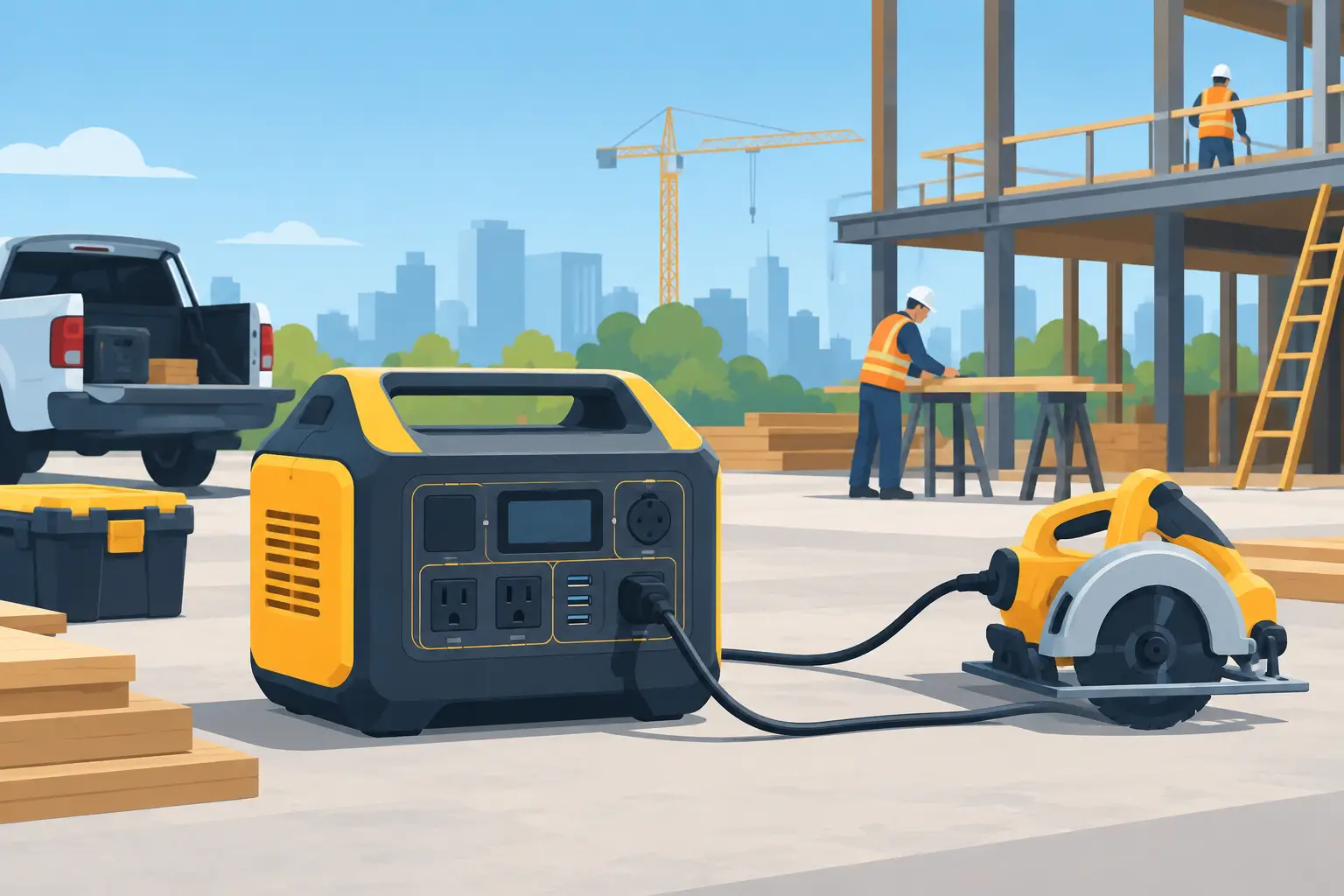
A stalled job site burns money fast. When the grid is down, a temporary connection is delayed, or work is happening beyond the reach of utility power, portable power for job sites keeps the essentials running: chargers, lighting, communications, laptops, diagnostic equipment, and selected tools. For contractors, property managers, and mobile crews, that means fewer lost hours and a stronger ability to meet commitments.
A portable power station is not meant to replace every piece of heavy equipment on a large construction site. It is a practical, quiet source of electricity for the work that cannot wait. Paired with portable solar panels, it can also recharge from the sun between tasks or support longer projects where fuel delivery and generator noise create added complications.
Power needs rarely arrive at convenient times. A crew may be repairing storm damage after an outage, preparing a rental property between guests, servicing equipment at a remote location, or finishing work in a space where electricity has not yet been restored. Extension cords and small gas generators have their place, but they are not always the safest, quietest, or most available answer.
Battery-powered portable power stations provide electricity without exhaust fumes, fuel storage, or constant engine noise. That makes them especially useful indoors, near occupied buildings, and in neighborhoods where generator noise can disrupt residents. They can be carried to the point of work, set up quickly, and used to keep a smaller crew productive while larger power arrangements are being handled.
For Bahamian worksites, the value is even clearer during hurricane season and recovery periods. Reliable backup power helps contractors communicate with clients, charge cordless tool batteries, run task lighting, and operate essential electronics when outages affect the wider area. In coastal conditions, choosing well-built equipment and storing it properly matters just as much as capacity.
The right power station begins with an honest look at what your crew needs to operate. Buying based only on the largest battery capacity can lead to unnecessary cost and weight. Buying too small can leave you with a dead unit before the workday is done.
First, separate equipment into two groups: devices that must stay powered and devices that would be useful to power. Critical loads often include phones, radios, tablets, laptops, Wi-Fi equipment, battery chargers, LED work lights, and inspection tools. These usually draw manageable amounts of power and are ideal uses for a portable station.
Then look at tool requirements. Every device has a watt rating, usually shown on its label or power adapter. Add the watts of the tools likely to run at the same time. A unit with a 1,000-watt AC output can handle a combined running load below that figure, but it cannot reliably power a 1,500-watt saw simply because its battery is large.
Also account for startup surge. Motors in pumps, compressors, refrigerators, and some corded tools may pull significantly more power for a few seconds when starting than they use while running. A station needs enough surge capability to handle that momentary demand. If the specifications do not clearly state both continuous output and surge output, do not assume it will run motor-driven equipment.
Battery capacity is measured in watt-hours, or Wh. This tells you how much energy is stored. As a simple planning example, a 1,000Wh power station might run a 100-watt load for roughly eight to nine hours after normal conversion losses. It will not power a 1,000-watt tool for a full hour in real conditions. Heat, inverter losses, battery age, and the actual tool draw all affect runtime.
A compact unit is often enough for a technician, estimator, or small repair crew. It can charge several cordless-tool batteries, phones, a laptop, and lights throughout the day. These models are easier to move between vehicles, job trailers, and upper floors.
Mid-size power stations are better suited to crews that need several battery chargers, more lighting, network equipment, or intermittent use of moderate-power tools. They offer a useful balance of capacity and portability, especially when paired with one or more portable solar panels.
Larger systems make sense for longer outages, field offices, property maintenance teams, and jobs where more demanding loads must run. But larger is not automatically better. A high-capacity station can be heavy enough to require two people to move safely, and its recharge time may be longer without sufficient solar input or access to AC charging.
The practical question is not, “What can this power station run?” It is, “What must our crew be able to run for the next four, eight, or twelve hours?” That answer creates a much more dependable setup.
A charged power station is valuable. A power station that can recharge on site is a stronger backup plan. Portable solar panels turn available sunlight into useful power for remote work, extended repairs, and recovery operations where grid access remains uncertain.
Solar is most effective when expectations are realistic. Panel output changes with cloud cover, shade, panel angle, temperature, and the time of day. A panel rated at 200 watts may produce less than its rating in everyday conditions, particularly when it is laid flat, partially shaded, or exposed to haze. Plan for solar to extend runtime and replenish lighter loads, rather than assuming it will continuously support high-draw tools.
On a job site, placement matters. Set panels where they receive direct sun, keep them clear of foot traffic and vehicle routes, and secure them against sudden gusts. This is especially important in coastal areas, where wind can shift quickly. Bring panels indoors or secure them well before severe weather arrives. They are energy equipment, not storm-proof outdoor fixtures.
A useful approach is to charge the power station fully before leaving for the site, use solar to replace energy throughout the day, and reserve stored battery power for the work that cannot stop. That order protects the most important loads when weather changes or the day runs longer than expected.
Portable power stations are simple to use, but they still require disciplined handling. Keep the unit on a dry, stable surface with clearance around its vents. Do not operate it in standing water, leave it exposed to rain, or bury it beneath tarps, tools, and materials that trap heat.
Heat deserves special attention. Battery systems work best within their stated operating range. In hot climates, avoid leaving a unit in a closed truck or direct afternoon sun for extended periods. If the station feels unusually hot, reduce the load, move it to shade, and allow airflow. Protecting the battery from extreme heat supports better performance and a longer service life.
Inspect cables before each use. Use properly rated cords, avoid damaged adapters, and do not overload outlets or power strips. For tools with high startup demand, test compatibility before relying on the power station for a critical job. A short test at the shop is far better than discovering a limitation halfway through a repair.
The strongest portable power setup is assembled before an emergency or deadline. Assign one person to keep the station charged, label the cords and charging equipment, and store everything together in a clean, dry location. Make sure the crew knows which devices have priority when capacity is limited.
For a small field kit, that may mean a portable power station, folding solar panels, LED work lights, a charging hub, approved extension cords, and a weather-resistant storage case. For a property management team, it may also include dedicated backup equipment for routers, access systems, and maintenance communications.
SOL242 helps customers choose solar and battery equipment that supports real work in island conditions, where outages, humidity, and storm recovery are part of the planning process. The goal is not to carry more equipment than necessary. It is to have dependable power ready when the job cannot wait.
Before your next remote project or storm-season callout, run a one-day test with the tools your crew actually uses. Measure what runs, how long it runs, and what needs solar support. That small exercise turns portable power from a last-minute purchase into a reliable part of how work gets done.
As the shadow of Hurricane Helene still lingers, the storms of 2025 are already on the horizon. Hurricane Helene, a
The Bahamas: turquoise waters, sun-kissed beaches, gentle trade winds, and a relaxed pace of life. It’s one of the most

The Bahamas is blessed with sunshine almost all year round, making it one of the best places on earth to
All rights reserved sol1242.com © 2025


