
How to Prepare Your Home for the 2026 Hurricane Season
As the shadow of Hurricane Helene still lingers, the storms of 2025 are already on the horizon. Hurricane Helene, a

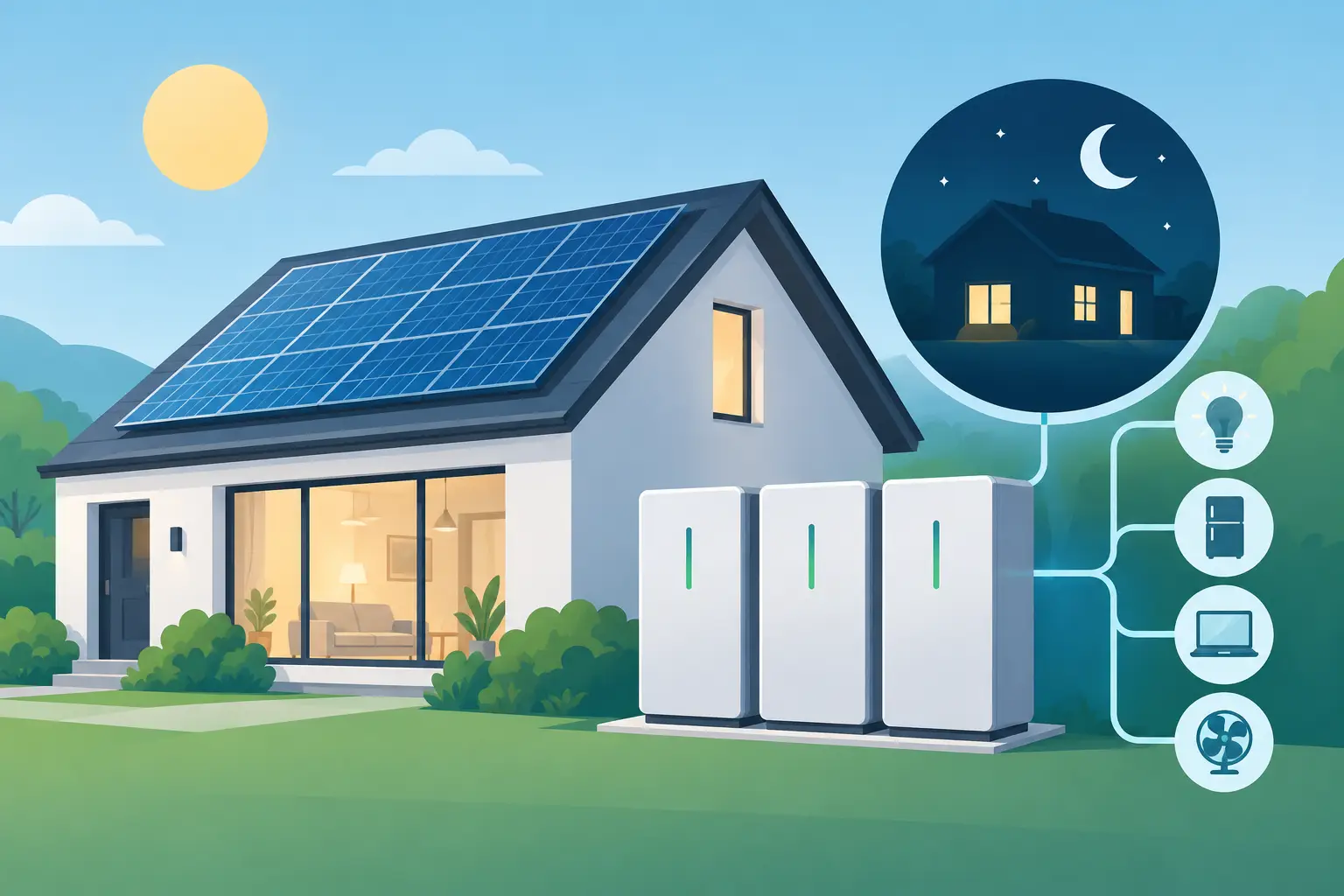
A battery that runs a few lights but not the refrigerator is not real outage protection. Learning how to size solar batteries starts with one clear decision: what must keep working when utility power fails, and for how long? For a home in a storm-prone area, that answer may include refrigeration, fans, internet, phones, lighting, and a small water pump. For another household, it may only mean essential communication and medicine storage.
Battery sizing is not about buying the largest system available. It is about matching your essential loads, expected outage length, solar charging ability, and budget to a backup plan you can rely on when the grid is down.
Every battery calculation begins with energy use. Look at the appliances and devices you intend to run during an outage, then find their wattage on the label, user manual, or power adapter. Watts tell you how much power an item needs while it is running. Watt-hours tell you how much battery energy it uses over time.
Use this basic calculation:
Watts x hours used = watt-hours per day
A 100-watt refrigerator that effectively runs for eight hours over a day uses roughly 800 watt-hours, or 0.8 kilowatt-hours (kWh). A 50-watt fan used for 10 hours uses 500 watt-hours, or 0.5 kWh. Add the daily energy use of every essential item to establish your target.
Consider a practical overnight-and-next-day backup plan:
That household needs about 2.6 kWh per day for core loads. Actual refrigerator use varies with the appliance, room temperature, and how often the door opens. In hot, humid conditions, refrigeration can consume more energy than a label estimate suggests. When in doubt, build in room for real-world use.
Do not size from your entire utility bill unless you want whole-home backup. Air conditioners, electric water heaters, dryers, ovens, and pool pumps can quickly turn a modest battery plan into a large, costly system. Many homes get better value by creating an essential-loads plan first, then expanding later if needed.
Once you know your daily essential energy use, multiply it by the number of days of backup you want.
For example, if your essential loads need 2.6 kWh per day and you want two days of battery-only backup:
2.6 kWh per day x 2 days = 5.2 kWh of usable battery capacity
This is a starting point, not necessarily the battery capacity you should buy. Batteries lose a small amount of energy through inverter conversion, wiring, and normal system operation. You should also avoid planning to drain a battery completely every time the power goes out.
A sensible planning formula is:
Daily energy use x backup days ÷ usable battery percentage ÷ system efficiency = battery capacity needed
Using the same 5.2 kWh example, with 90% usable battery capacity and 90% efficiency:
5.2 ÷ 0.9 ÷ 0.9 = about 6.4 kWh
A battery system around 6 to 7 kWh would be a reasonable target for that two-day essential-load plan before considering solar recharging. A 10 kWh system gives more reserve, more flexibility, and less pressure to ration power during a long outage.
The right autonomy period depends on your situation. A portable power station may be enough for a short blackout or a weekend away from the grid. A home battery system should be sized more conservatively if it supports a family, rental property, business operations, medical equipment, or hurricane-season preparedness.
A battery can have enough stored energy yet still fail to start a demanding appliance. This is where power output matters.
Capacity is measured in kWh and answers, “How long can it run?” Power is measured in watts or kilowatts and answers, “What can it run at one time?” A 5 kWh battery with a 1,000-watt inverter may run a refrigerator, lights, and electronics, but it may not handle a microwave, pump, or power tool at the same time.
Check both continuous output and surge output. Refrigerators, freezers, pumps, and air conditioners can draw a higher surge of power for a few seconds when their motors start. If your refrigerator needs 150 watts while running but briefly needs 1,200 watts to start, the inverter must support that surge.
For basic essential loads, a system with 1,500 to 3,000 watts of continuous output often provides useful flexibility. Larger homes and equipment-heavy backup plans may need substantially more. Avoid guessing here. List the appliances likely to run simultaneously, add their running watts, then account for the largest motor-starting surge.
Solar panels change the battery-sizing conversation because they can replenish energy during the day. But solar is not a promise of full production every day. Cloud cover, storm conditions, shade, panel angle, salt buildup, and short winter days all reduce output.
If your essential loads use 2.6 kWh daily, your solar array should produce more than 2.6 kWh on a typical usable day so the battery can recover after nighttime use. A rough planning approach is to divide your daily energy requirement by expected peak sun hours, then add a margin for losses.
For example, if you receive five peak sun hours:
2.6 kWh ÷ 5 hours = 0.52 kW of panels
After allowing for real-world losses and faster recharging, a solar array closer to 700 to 1,000 watts may be more practical for this small essential-load setup. If you are preparing for extended storm outages, additional panel capacity can be more valuable than simply adding batteries. More stored energy eventually runs out. More solar production helps you recover each clear day.
Portable solar panels are useful for charging compatible power stations and supporting flexible backup plans. Fixed rooftop or ground-mounted arrays are better suited to larger, repeatable household loads. Either way, make sure the battery, charge controller, inverter, and solar input limits are compatible.
Heat, humidity, salt air, and severe weather deserve a place in your battery plan. High temperatures can affect battery performance and longevity, while poor placement can expose equipment to moisture or flooding. Install stationary battery equipment in a dry, ventilated, protected location that follows manufacturer clearance requirements and local electrical standards.
During hurricane season, do not assume you will have ideal solar weather immediately after a storm. A larger battery reserve helps bridge cloudy days, but so does a disciplined load plan. Run refrigeration, fans, communications, and lighting first. Delay high-wattage comfort loads until the system has recovered.
Small businesses and property managers should also consider the cost of downtime. A battery that keeps a point-of-sale system, internet equipment, security cameras, or a small office refrigerator running may protect more than convenience. It can keep operations moving and reduce losses while utility restoration is underway.
The first mistake is buying by battery capacity alone. A large kWh rating does not guarantee enough inverter power for your equipment. The second is ignoring surge loads, especially pumps and compressors. The third is planning around perfect sunlight instead of the weather conditions most likely during an outage.
Another common issue is forgetting future needs. If you expect to add another refrigerator, a home office, a well pump, or more solar panels later, choose an expandable system when possible. Expansion does not mean you need to overspend on day one. It means your first purchase supports a practical path forward.
Finally, do not treat every outage the same. A four-hour evening interruption calls for a different setup than a three-day storm recovery. Decide whether your goal is convenience, essential-load continuity, or near whole-home independence. That decision determines the right battery size more accurately than any one-size-fits-all chart.
A properly sized solar battery system gives you more than stored electricity. It gives your household or business a plan: protect the loads that matter, recharge when the sun returns, and stay prepared when the grid is not.
As the shadow of Hurricane Helene still lingers, the storms of 2025 are already on the horizon. Hurricane Helene, a
The Bahamas: turquoise waters, sun-kissed beaches, gentle trade winds, and a relaxed pace of life. It’s one of the most

The Bahamas is blessed with sunshine almost all year round, making it one of the best places on earth to
All rights reserved sol1242.com © 2025


