
How to Prepare Your Home for the 2026 Hurricane Season
As the shadow of Hurricane Helene still lingers, the storms of 2025 are already on the horizon. Hurricane Helene, a

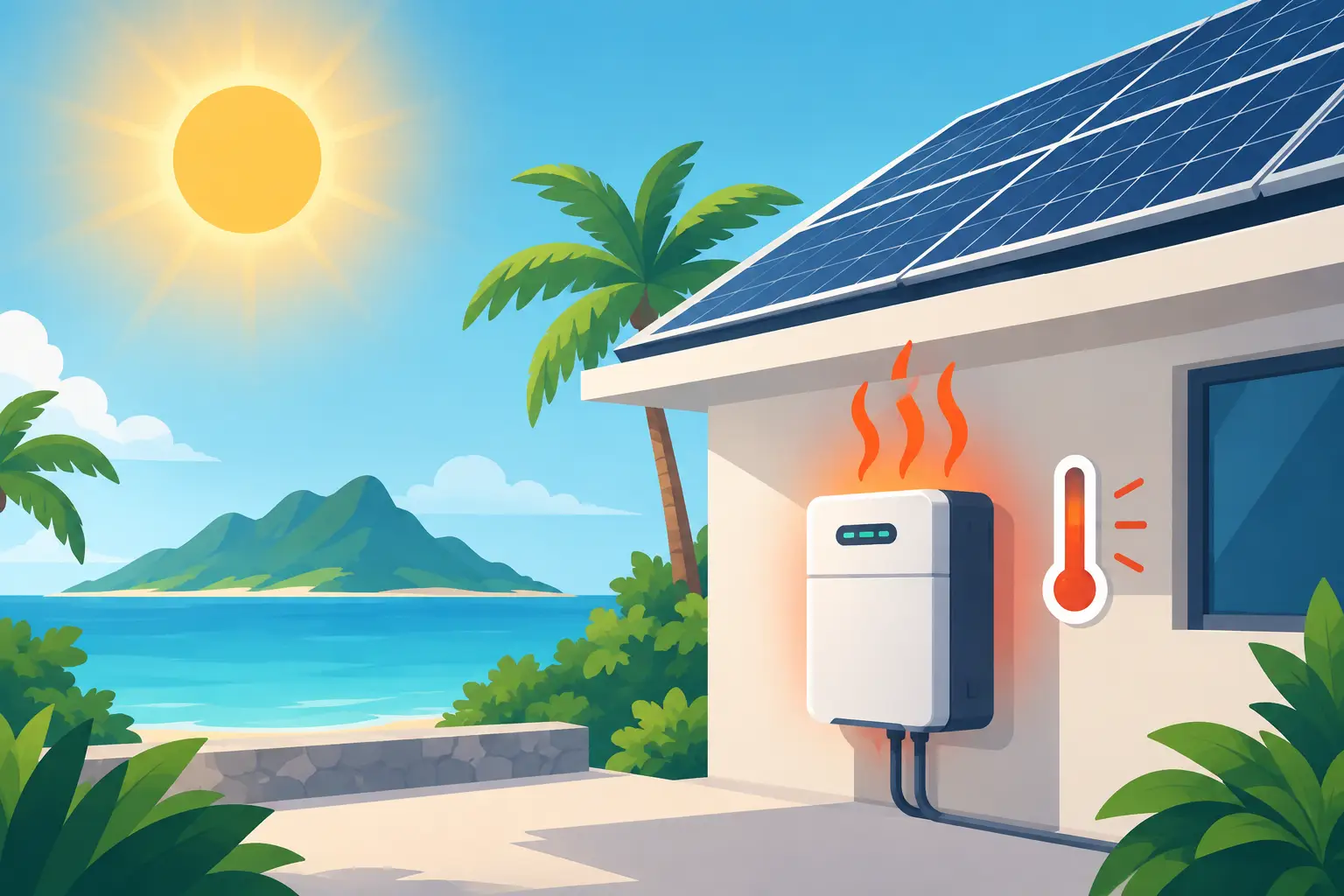
A battery room that feels warmer than usual during an outage is not something to ignore. Understanding why solar batteries overheat helps you protect the equipment that keeps your lights, refrigeration, communications, and essential appliances running when the grid is down.
Heat is one of the biggest threats to battery life, especially in the Bahamas and other coastal climates where high temperatures, humidity, salt air, and long sunny days can work against poorly planned installations. A quality solar battery system is built to manage normal operating heat. But when temperatures rise beyond the manufacturer’s limits, performance can drop, charging may slow or stop, and the system can face permanent damage.
Solar batteries produce some heat whenever they charge or discharge. That is normal. The concern begins when heat cannot escape, the battery is working harder than it was designed to, or an electrical problem creates excessive resistance.
For most home backup systems and portable power stations, overheating is caused by a combination of the installation environment, system settings, and how much power is being demanded. The hottest part of the day can expose a weakness that was not obvious during lighter use.
A battery installed in a hot garage, utility closet, shed, attic, or direct sunlight starts at a disadvantage. If the room is already near or above the battery’s recommended operating temperature, charging from solar panels or powering a heavy appliance can push it over the limit.
Lithium batteries generally handle heat better than older battery technologies in many ways, but they still have strict temperature ranges. Their battery management systems may reduce output or stop charging as protection. That safeguard is useful, but it also means less backup power precisely when you may need it most.
Batteries, inverters, and charge controllers all release heat. Placing them in a tight cabinet, against a wall with no clearance, or in an enclosed outdoor box with little airflow traps that heat around the equipment.
A common mistake is choosing an enclosure only for rain protection or hurricane protection without accounting for thermal management. A sealed box may keep out wind-driven rain, dust, and salt spray, but it can become dangerously hot in full sun. The right setup balances weather protection with the clearances and ventilation specified by the manufacturer.
A battery can overheat when it is asked to charge too quickly, deliver too much power, or do both repeatedly. For example, a small battery bank may struggle if it must support a refrigerator, freezer, water pump, air conditioner, and other heavy loads at the same time.
The same issue can happen during charging. An oversized solar array, an incorrectly configured charge controller, or a generator charger set too aggressively can send more charging current than the battery can safely accept. The battery management system may intervene, but relying on that protection as a normal operating strategy shortens the margin for error.
Solar batteries, inverters, charge controllers, and chargers must be configured for the correct battery chemistry and capacity. A charging profile intended for lead-acid batteries is not automatically safe for lithium iron phosphate batteries. Incorrect voltage, current, temperature-compensation, or low-voltage settings can create heat, reduce battery life, and trigger faults.
Equipment compatibility matters too. A dependable system is not simply a collection of solar components. It is a matched backup-power system designed so the battery, inverter, solar input, cables, breakers, and loads work within their rated limits.
Heat is often a warning sign of resistance. Loose terminals, corroded connectors, damaged cables, and undersized wiring can get hot when high current moves through the system. In a coastal setting, corrosion can progress faster than many owners expect, particularly where salty air reaches terminals or enclosures.
A warm cable may point to a problem. A cable, connector, breaker, or terminal that is too hot to touch safely needs immediate attention from a qualified installer or electrician. Do not continue operating a system that shows signs of electrical overheating.
A battery does not have to be smoking to be in trouble. Modern systems often show alerts before a serious failure occurs. Pay attention if you notice any of these signs:
If there is smoke, swelling, leaking, hissing, a strong chemical odor, or visible damage, stop using the equipment if it is safe to do so and follow the manufacturer’s emergency instructions. Keep people away from the area and contact a qualified professional. Never spray water on an energized battery system or attempt to open the battery case.
The best protection begins before installation. Choose battery equipment rated for the climate and expected workload, then give it a location that supports long-term performance.
Install the battery out of direct sunlight and away from heat-producing equipment. A shaded indoor utility area is often preferable to an attic, metal shed, or sun-facing exterior wall. The location should stay dry, remain accessible for inspection, and meet the manufacturer’s clearance requirements.
For outdoor-rated systems, use an approved enclosure or mounting approach rather than improvising. In hurricane-prone areas, secure mounting matters, but do not block required air paths in the name of storm protection. A properly designed installation can be both firmly anchored and adequately ventilated.
A battery bank sized only for phone charging and a few lights is very different from one intended to run refrigeration, pumps, business equipment, or critical medical devices. List the appliances you truly need during an outage, their starting power requirements, and how long you want them to run.
This prevents a common problem: buying a smaller system, then asking it to operate like a whole-home backup solution. If your critical loads are substantial, adding battery capacity or using load management may be safer than pushing one battery at its limit every evening.
Every battery chemistry has its own charging requirements. Verify that the inverter, charge controller, and any generator or AC charger use the battery manufacturer’s approved settings. If your system includes temperature monitoring, make sure the sensor is installed correctly and functioning.
Some systems allow you to limit charge current. That can be a useful trade-off in extreme heat. Charging more slowly may mean less energy stored by late afternoon, but it can reduce thermal stress and support better battery health over time. The right choice depends on your solar production, battery size, backup needs, and local temperature conditions.
Ventilation should be planned, not assumed. Leave the recommended space around the battery and inverter. Do not stack boxes, cleaning supplies, or stored items around the equipment, and keep vents free of dust, insects, and debris.
If the system uses cooling fans, listen for changes. A fan that never runs when equipment is hot, or one that runs constantly because the room is too warm, deserves attention. Regular visual checks are especially valuable after storms, flooding, or long periods of heavy generator and battery use.
Backup power is most valuable when conditions are hardest. Before hurricane season, inspect accessible connections for corrosion, loose hardware, discoloration, or moisture intrusion. Confirm that breakers operate correctly and that mounting hardware remains secure.
A professional inspection is the right call if you see corrosion inside an enclosure, recurring fault codes, abnormal heat, or reduced battery capacity. Small corrections made before an outage can prevent a larger failure when the grid is unavailable.
A solar battery may feel mildly warm while charging or supplying power. That alone is not necessarily a problem. What matters is whether the temperature is within its rated operating range and whether the system is showing warnings, reducing output, or heating up more than usual.
Trust the battery’s temperature readings and alerts over guesswork. If a system consistently reaches high temperatures on sunny afternoons, do not just reset it and carry on. Find the cause. It could be as simple as improving shade and airflow, or it could reveal a sizing, wiring, or configuration issue that needs professional correction.
Reliable backup power depends on more than having a battery on hand. Give your system a cool, secure place to operate, size it for the loads that matter, and respond early when it signals stress. That preparation helps keep your power ready for the moments when you cannot afford to lose it.
As the shadow of Hurricane Helene still lingers, the storms of 2025 are already on the horizon. Hurricane Helene, a
The Bahamas: turquoise waters, sun-kissed beaches, gentle trade winds, and a relaxed pace of life. It’s one of the most

The Bahamas is blessed with sunshine almost all year round, making it one of the best places on earth to
All rights reserved sol1242.com © 2025


