
How to Prepare Your Home for the 2026 Hurricane Season
As the shadow of Hurricane Helene still lingers, the storms of 2025 are already on the horizon. Hurricane Helene, a

Your electricity bill just hit $180–$200 this month. Again, you experienced multiple power outages last week. You’re thinking, “What if I just cut the cord completely?” An off-grid solar power system could be your answer—but it’s not for everyone.
Here’s the truth about off-grid solar power systems: going completely off-grid means producing 100% of your electricity from solar panels and storing it in batteries. No connection to the utility company. No more monthly electricity bills. Complete energy independence.
However, this level of freedom comes with a price. Off-grid solar systems require a much higher upfront investment compared to standard grid-tied solar systems, especially for homes that already have reliable utility access. Let’s help you decide whether this major investment makes sense for your energy needs and lifestyle.
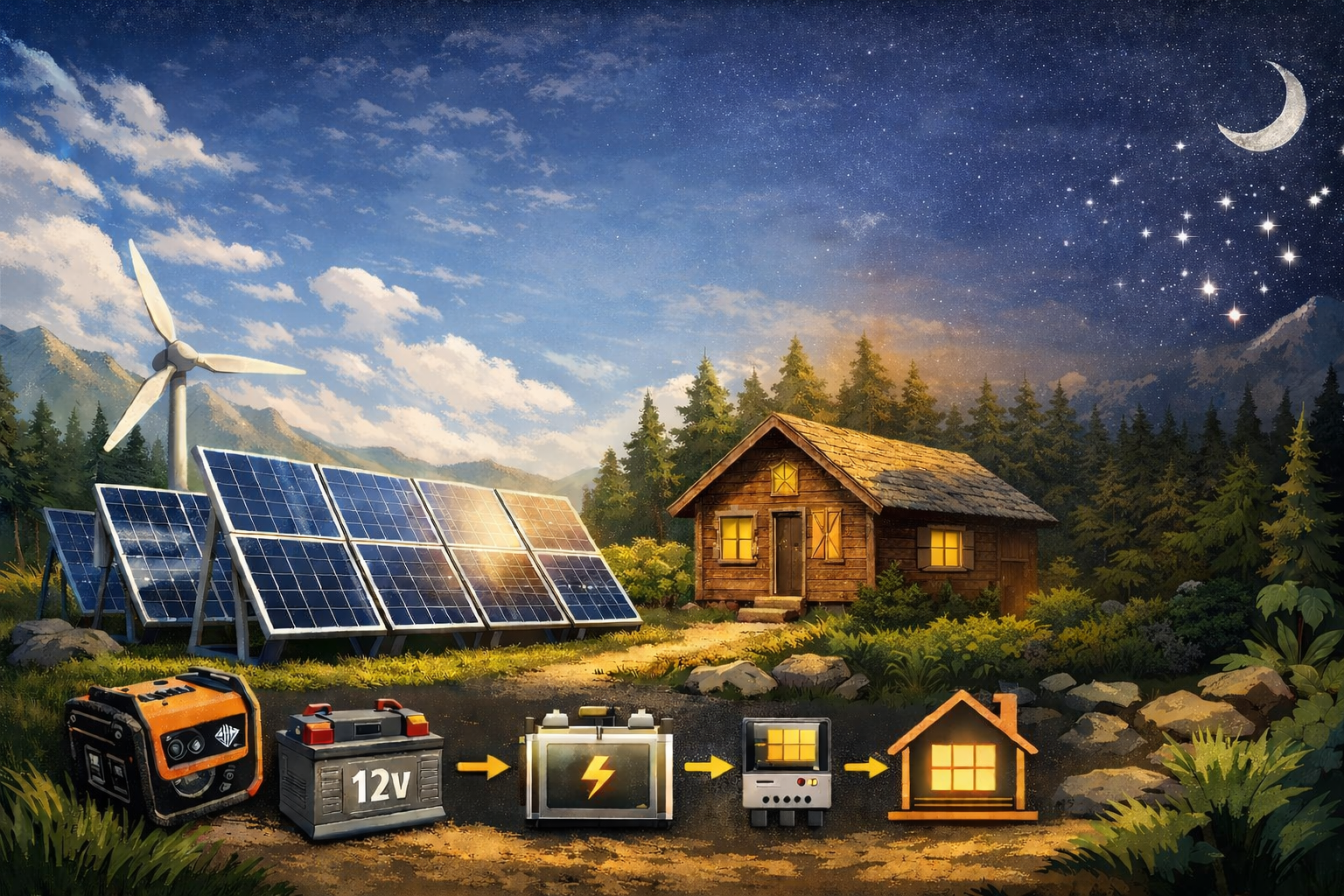
Think of it like this: regular grid-connected solar is like having a safety net. Off-grid solar systems are like walking the tightrope without one. A complete off-grid solar power system includes:
All these components work together to keep your lights on 24/7 without touching grid power.
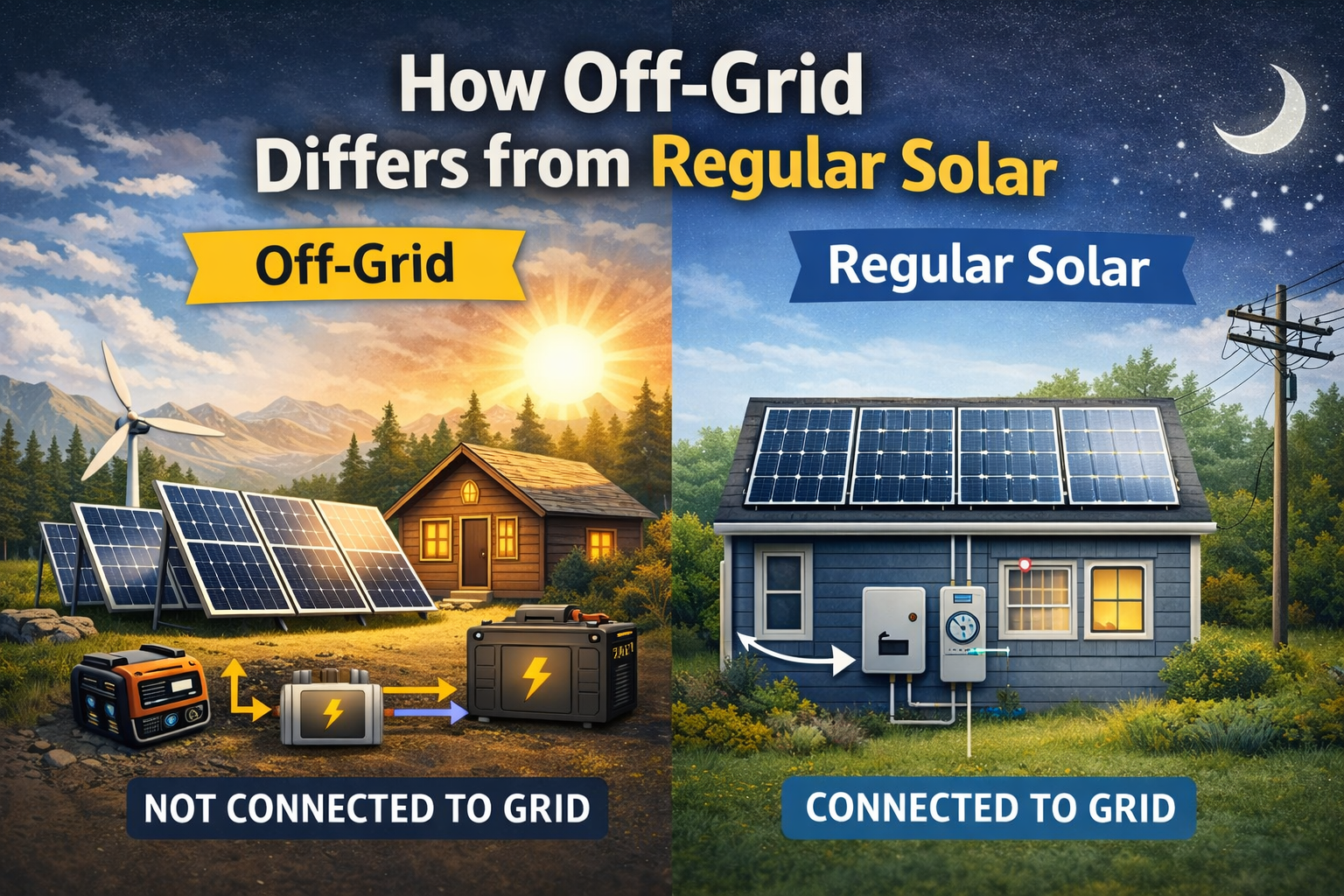
Most people who install solar panels for home choose grid-connected systems. These stay linked to the electricity company.
Grid-connected solar works like this: During the day, your panels generate power. Excess electricity flows back to the grid, earning you credits. At night, you pull power from the grid. Simple.
Off-grid solar energy operates differently. Every watt you use must come from your panels or batteries. Nothing comes from outside. If your batteries run empty, your power goes off unless you have a backup generator.
The grid-connected route is cheaper and easier. The off-grid route offers true independence but demands more planning and investment.
Despite the high costs, off-grid solar systems offer compelling benefits.
This is the big one. You control your power completely. No more utility company rate hikes. No more surprise electricity bill increases. No more dependency on external infrastructure. For people who value self-sufficiency, this peace of mind is priceless.
Once your system is running, sunlight is free. Your monthly electricity cost drops to zero. Let’s do the math. If you currently pay $131 monthly for electricity, that’s $1,570 yearly. Over 25 years (solar panel lifespan), you’d pay $39,240 to the utility company. Your ₹15 lakh off-grid system suddenly looks more reasonable.
Grid failures don’t affect you. Load shedding becomes someone else’s problem. During the 2023 grid collapse in several states, off-grid homes kept running smoothly while everyone else sat in darkness. For businesses or homes with critical power needs (medical equipment, refrigeration, home offices), this reliability is invaluable.
If you’re building in a rural area, connecting to the grid might cost $10,900–$16,350 per kilometer. For properties more than 2-3 km from grid lines, off grid solar energy becomes the more economical choice. You avoid installation delays, permission hassles, and ongoing dependency on unstable rural grid infrastructure.
You’re running on pure renewable energy. Zero carbon emissions. Zero contribution to grid demand. For environmentally conscious homeowners, this clean energy footprint matters deeply.
Now for the challenges. These are serious and shouldn’t be ignored.
That $13,080–$21,800 price tag is a barrier for most families. Even with government subsidies (which apply to some components), you’re looking at a significant investment that takes 8-12 years to pay back through saved electricity bills.
Three days of continuous rain? Your batteries might run low. Extended monsoon periods test off-grid solar power systems severely. You’ll need to either:
This isn’t an issue with grid-connected systems that have the utility as backup.
Batteries can only store so much power. Large loads like air conditioning, electric water heaters, or washing machines drain batteries quickly. You might need to change your lifestyle. Run power-hungry appliances during peak sun hours. Limit AC usage. Plan around weather conditions. This constraint frustrates people used to unlimited grid power.
If your system fails, maybe the inverter breaks or batteries die—you have no power until repairs are done. Grid-connected homes always have the utility as backup. Off-grid homes don’t. You’re completely dependent on your equipment working properly.
Everything is on you. Panel cleaning, battery maintenance, generator servicing, and troubleshooting problems. With grid power, the utility handles infrastructure maintenance. With off grid solar systems, you’re the utility company.
Battery banks are bulky. A home-sized lithium battery bank might need 10-15 square feet of ventilated space. Lead-acid batteries need even more room plus special ventilation for gases. Not every home has suitable space for proper battery installation.
Off-grid solar power systems make perfect sense for specific situations.
If grid connection costs exceed $8,720–$10,900, go off-grid. The math works in your favor.
Daily power cuts exceeding 8-10 hours? Unstable voltage damaging appliances? Grid infrastructure that fails monthly? Off-grid eliminates these frustrations completely.
Paying $163.88 monthly for electricity? Your payback period shrinks to 6-8 years, making the investment worthwhile.
Some people simply value self-sufficiency above cost considerations. If that’s you, off-grid delivers that independence.
Properties used occasionally don’t justify maintaining grid connections. Off grid solar energy provides power when needed without monthly standing charges.
Designing and installing off-grid solar power systems requires expertise. This isn’t a DIY project. Sol242 specializes in home energy storage solutions and complete off-grid installations.
Working with experienced providers like Sol242 ensures you get a system sized correctly, installed properly, and supported long-term.
Don’t rush this decision. Take time to understand what off-grid solar power systems truly require and whether you’re ready for that commitment. The right system, properly installed and maintained, provides decades of reliable, clean energy independence. The wrong system, poorly planned or installed, becomes an expensive frustration. Get it right from the start. Work with experienced providers. Plan thoroughly. Then enjoy the freedom of producing your own power.
As the shadow of Hurricane Helene still lingers, the storms of 2025 are already on the horizon. Hurricane Helene, a
The Bahamas: turquoise waters, sun-kissed beaches, gentle trade winds, and a relaxed pace of life. It’s one of the most

The Bahamas is blessed with sunshine almost all year round, making it one of the best places on earth to


1 thought on “Off-Grid Solar Power Systems Explained: Everything You Need to Know ”
[…] you live off-grid full-time or want serious independence from unstable utility service, stackable off-grid systems offer long-term control. These setups are built to manage daily cycling, renewable charging, and […]