
How to Prepare Your Home for the 2026 Hurricane Season
As the shadow of Hurricane Helene still lingers, the storms of 2025 are already on the horizon. Hurricane Helene, a

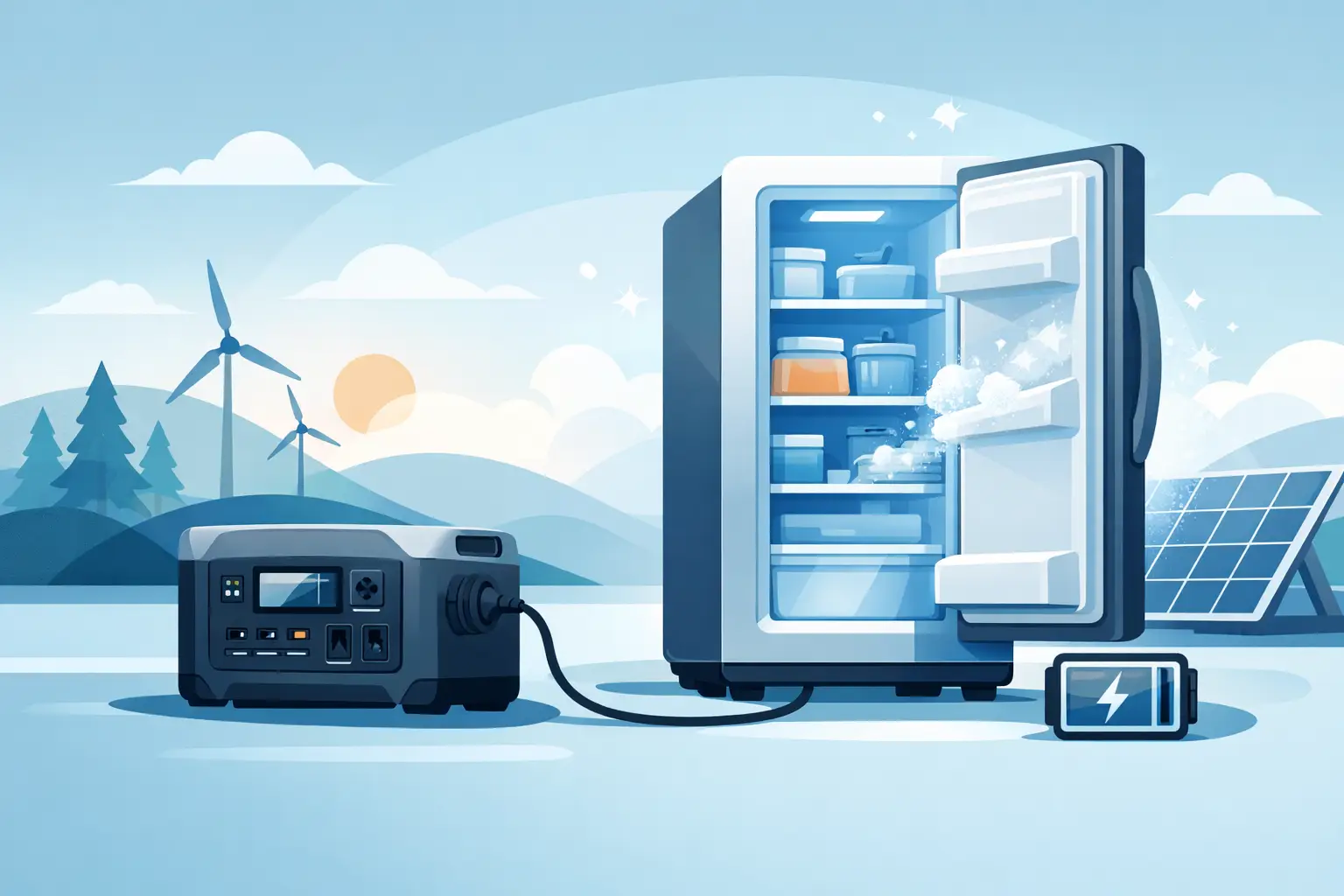
When the grid goes down, the freezer becomes a countdown clock. Every hour without power puts expensive food, medication, and peace of mind at risk. So, can a power station run a freezer? Yes – but only if the power station is sized for the freezer’s startup surge, running wattage, and the number of hours you need it to stay cold.
That answer matters most before storm season, not during it. A freezer is one of the smartest appliances to protect with battery backup because it stores high-value food and does not need constant compressor operation every second of the day. But it is also one of the appliances people underestimate. The label may look manageable, while the startup demand tells a different story.
In many cases, yes. Most modern chest freezers and upright freezers can run on a properly sized portable power station. The key is not just the freezer’s listed running watts. You also need enough inverter output to handle the brief startup surge when the compressor kicks on.
A small freezer may run at 60 to 150 watts once operating, while a larger unit may run at 150 to 300 watts or more. But startup can jump much higher for a second or two. If your freezer pulls 200 running watts, it might need 600 to 1200 watts at startup. If the power station cannot handle that surge, the freezer may fail to start even though the running wattage seems well within range.
That is why battery capacity alone is not enough. You need to look at two numbers together: inverter output and watt-hours. One gets the freezer running. The other keeps it running long enough to matter.
The right size depends on the freezer, the temperature around it, and how often the door gets opened. For most homeowners, a power station in the 1000Wh to 2000Wh range with a pure sine wave inverter and strong surge capacity is a practical starting point for freezer backup.
If you are powering a compact freezer, a smaller unit may work. If you are protecting a full-size upright or chest freezer, especially in a hot garage or utility room, you should expect higher energy use. Heat and humidity make compressors work harder, which matters in coastal climates and summer outages.
As a rough guide, a power station should comfortably exceed the freezer’s startup surge and offer enough stored energy for the duration you care about. If your goal is to bridge a short outage of a few hours, you can often size smaller. If your goal is overnight protection or outage coverage during hurricane season, you will want more battery capacity and ideally solar recharging as a backup plan.
First is running wattage. This is the steady power the freezer uses after startup. Second is surge wattage, sometimes called starting watts. This is the short spike required when the compressor starts. Third is battery capacity, measured in watt-hours, which tells you how long the power station can supply energy.
People often focus on just one of these numbers and get caught short. A unit with plenty of battery but weak surge output may not start the freezer. A unit with strong output but limited battery may only run it for a short window.
Runtime depends on battery size and the freezer’s actual energy use over time, not just the number printed on the label. Freezers cycle on and off. They do not pull full power nonstop unless conditions are working against them.
For example, if a freezer averages 80 watts over time and your power station has 1000Wh of usable energy, you might get around 10 to 12 hours in ideal conditions, accounting for inverter losses and cycling behavior. If the freezer averages closer to 150 watts in a hot room, runtime drops significantly.
Real-world performance changes with several factors. A full freezer stays cold better than an empty one. A chest freezer is usually more efficient during outages because cold air does not spill out as quickly when opened. A freezer placed indoors in a cooler room will also use less energy than one sitting in a hot shed or garage.
If your plan is food protection through an all-day outage, you should build in margin. If your plan is outage coverage for a full day or longer, pairing the power station with solar panels becomes much more practical.
Start with the freezer label or owner’s manual. Look for voltage and either amps or watts. If only amps are listed, multiply amps by volts to estimate watts. In the US, that is usually 120 volts for a standard freezer.
Next, confirm the power station’s continuous AC output and surge rating. The continuous output should cover the freezer’s running wattage with room to spare. The surge rating should handle compressor startup without tripping. Pure sine wave output is the safer choice for compressor appliances because it delivers cleaner power and reduces compatibility issues.
Then look at battery capacity. Think about the outage window you are trying to cover. A short backup need and a full-day backup need are two very different buying decisions.
If you want a safer margin, choose a power station that is a step above the bare minimum. That extra headroom helps when temperatures rise, batteries age, or you need to power a second critical device like a router, light, or phone charger.
The biggest mistake is assuming any portable battery will do. Small power banks and entry-level power stations may charge electronics just fine but fail immediately on a freezer’s startup demand.
Another mistake is ignoring ambient heat. In warm climates, freezer runtime estimates can look generous on paper and disappointing in practice. If your backup power is meant for real outage protection, plan for less-than-perfect conditions.
There is also the issue of extension cords and placement. If the power station is used indoors, keep ventilation clear and avoid tight spaces that trap heat. Use a proper heavy-duty cord if one is needed. And do not wait until an outage to test everything. A dry run before storm season tells you whether the freezer starts cleanly and how fast the battery drops under normal operation.
It depends on your priorities. A gas generator can usually run longer as long as you have fuel, and it may power multiple large appliances more easily. But it also brings noise, fumes, maintenance, and fuel storage problems. During severe weather, fuel may not be easy to get when everyone needs it.
A portable power station is quieter, cleaner, and easier to use right away. That makes it especially attractive for indoor-safe backup planning, overnight operation, and households that want dependable emergency power without engine maintenance. For freezer backup, it is often the simpler and more practical choice if you size it correctly.
The trade-off is runtime. Once the battery is depleted, you need grid charging, vehicle charging, or solar input to refill it. That is why many preparedness-focused buyers prefer a setup that combines a capable power station with portable solar panels. It gives you a path to recharge during extended outages instead of just waiting for the utility to come back.
Yes, but every added device reduces runtime and increases the demand on the inverter. A freezer plus a few small essentials is often realistic. A freezer plus a microwave, coffee maker, or air conditioner is a different category entirely.
If your goal is food protection first, dedicate the backup system to the freezer and only add low-draw devices if capacity allows. That approach is more reliable than trying to stretch one battery across half the house.
For households in storm-prone areas, that reliability matters. Preparedness is not about powering everything. It is about protecting the appliances and essentials that cost the most to lose when the grid fails.
If you are shopping for backup power, think beyond the question of whether a power station can run a freezer. Ask whether it can run your freezer, for your outage pattern, in your environment. That is the difference between a system that looks good online and one that performs when the lights go out.
For many homes, the best fit is a power station with enough surge power for compressor startup, enough battery for meaningful runtime, and the option to recharge from solar when outages drag on. That gives you more than temporary convenience. It gives you control over one of the most important appliances in the house.
If you prepare before the next outage, your freezer does not have to be a weak point. It can be one less thing to worry about when conditions turn rough.
As the shadow of Hurricane Helene still lingers, the storms of 2025 are already on the horizon. Hurricane Helene, a
The Bahamas: turquoise waters, sun-kissed beaches, gentle trade winds, and a relaxed pace of life. It’s one of the most

The Bahamas is blessed with sunshine almost all year round, making it one of the best places on earth to
All rights reserved sol1242.com © 2025


