How to Prepare Your Home for the 2026 Hurricane Season
As the shadow of Hurricane Helene still lingers, the storms of 2025 are already on the horizon. Hurricane Helene, a
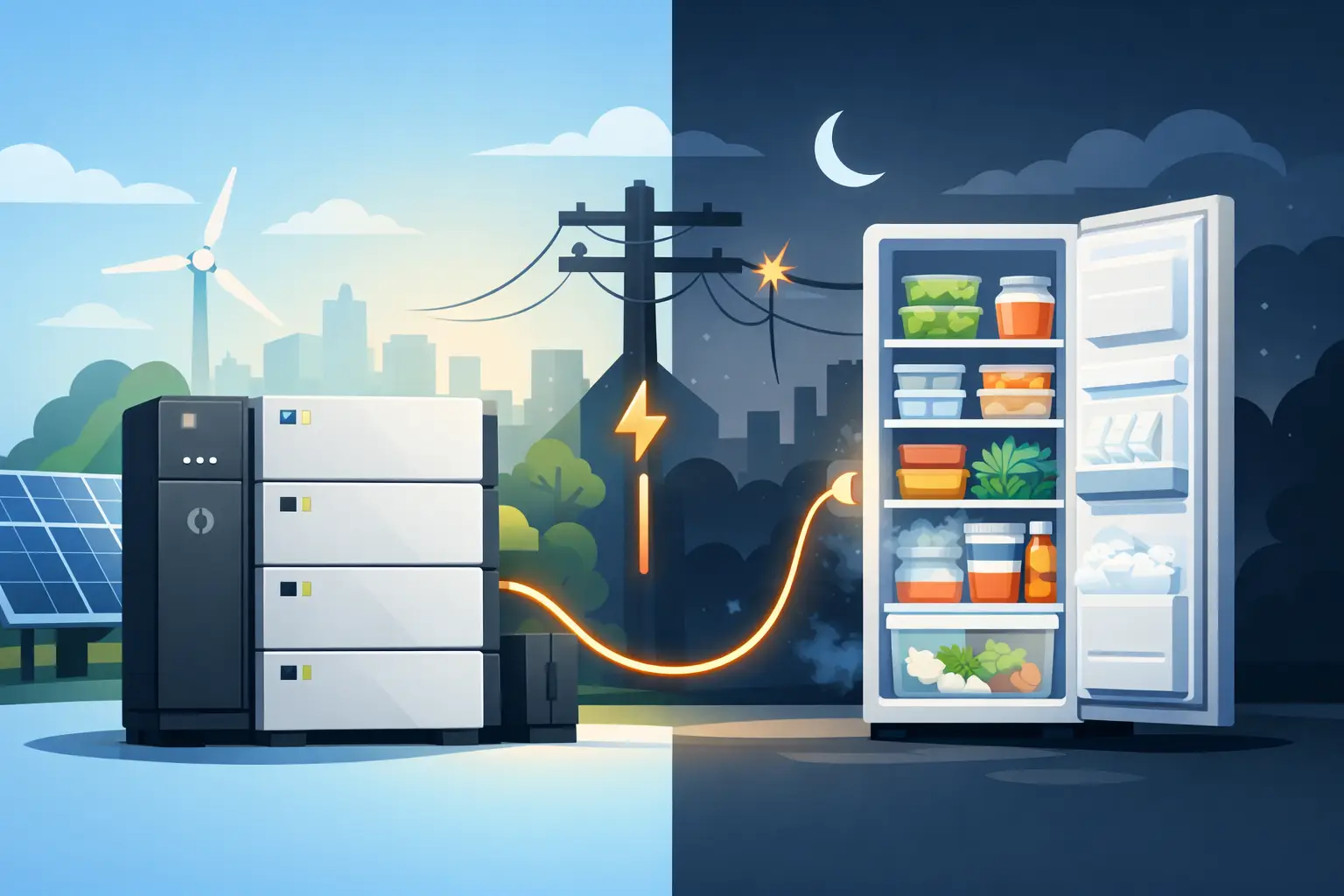
A freezer full of groceries, fish, or prepared meals can represent hundreds of dollars in food. When the power drops during a storm, the question becomes urgent: can battery systems power freezers long enough to protect it? In many cases, yes. The right battery backup can run a freezer for hours or even days, but the result depends on the freezer’s energy use, its startup surge, the battery capacity, and how carefully you manage power during the outage.
For homeowners, property managers, and small businesses, freezer backup is not a luxury. It is a practical part of storm readiness. A properly sized portable power station, solar generator, or home battery system can keep cold storage running while the grid is down and help you avoid the cost, waste, and disruption of spoiled food.
Battery systems can power most modern chest freezers and upright freezers reliably, provided the inverter can handle the appliance’s startup demand and the battery holds enough usable energy. Freezers do not draw their maximum power every minute. Their compressor cycles on and off to maintain temperature, which makes them a more achievable backup load than appliances with continuous heating elements.
The complication is compressor startup. A freezer that uses 100 to 200 watts while running may briefly require two to five times that amount when the compressor turns on. This is called surge power. If your power station has enough battery capacity but not enough surge capability, it may shut down the moment the compressor tries to start.
That is why battery backup selection should begin with two numbers: the freezer’s running watts and the power station or inverter’s continuous and surge ratings. A unit rated for 1,000 watts of continuous output with a healthy surge rating will support many household freezers. Larger commercial units, older appliances, and multiple refrigeration loads may require a more powerful home battery inverter.
The label on a freezer may show amps, watts, or annual kilowatt-hour consumption. Any of these can help you estimate the battery size you need, although a plug-in watt meter gives the most realistic answer. It measures what the freezer uses in your actual environment, including hot weather, frequent door openings, and compressor cycles.
A compact freezer may use roughly 0.5 to 1 kilowatt-hour per day. Many average chest freezers fall around 1 to 2 kilowatt-hours daily, while a larger upright freezer in a warm garage or utility room can use more. Heat and humidity make a real difference. In the Bahamas and other coastal climates, a freezer has to work harder when it sits in a hot space or when warm air enters each time the lid or door opens.
For a quick estimate, find the freezer’s annual energy use in kilowatt-hours and divide it by 365. A freezer rated at 438 kWh per year uses about 1.2 kWh per day on average. For backup planning, add a cushion for inverter losses, higher ambient temperatures, and unexpected use. Planning for 1.5 kWh per day would be more realistic than assuming perfect conditions.
Battery capacity is usually listed in watt-hours (Wh) or kilowatt-hours (kWh). One thousand watt-hours equals one kilowatt-hour. However, not every watt-hour printed on a battery is available to your freezer. The inverter uses some energy, and a battery system may reserve a small portion of its capacity to protect battery health.
As a simple planning rule, use about 80 to 90 percent of a quality battery system’s stated capacity as usable energy unless the manufacturer provides a different usable-capacity figure.
A 1,000Wh portable power station may provide roughly 800 to 900Wh to connected appliances. That could run an efficient freezer for part of a day, potentially longer if the freezer remains closed and is already cold. A 2kWh battery system offers more meaningful overnight protection. For multi-day outage coverage, a larger expandable battery bank or home battery backup system is usually the smarter choice.
Consider these practical examples:
These are planning ranges, not guarantees. Your freezer’s condition, room temperature, battery age, and outage habits all affect actual runtime.
A battery system needs more than enough watt-hours. It must also have an AC inverter that can start the compressor. Check the freezer’s nameplate for amperage, then multiply amps by 120 volts for a rough wattage estimate. For example, a freezer labeled 3 amps may have a running draw around 360 watts, although its real operating draw can be lower and its startup draw can be higher.
Avoid choosing a power station based only on a freezer’s average daily energy use. A small battery with a weak inverter may technically hold enough energy but still fail to start the appliance. Choose a system with continuous output comfortably above the running load and a surge rating built for motor-driven appliances.
Also pay attention to the outlet arrangement. If a single power station is supporting a freezer and refrigerator, both compressors could start close together. That brief overlap can create a much larger surge than either appliance needs alone. A higher-capacity unit, staged startup, or a dedicated circuit in a home battery system can prevent nuisance shutdowns.
A battery-only system is limited by stored energy. Solar changes the equation by replenishing the battery during daylight hours. For an outage that lasts more than a night, portable solar panels or a fixed solar array can help maintain freezer power without depending on fuel deliveries or generator run time.
Solar performance still depends on weather. Hurricane conditions, heavy cloud cover, shade, salt buildup, and panel orientation can reduce output. Plan for less than the panel’s advertised maximum rating, especially during storm season. A 400-watt solar array will not produce 400 watts all day, but it can make a major difference when paired with a battery system sized to carry the freezer through the evening and overnight.
For island homes, solar-backed battery power offers another advantage: quiet operation. There is no engine noise, exhaust, or need to store gasoline near the house. A generator can remain a useful part of a larger emergency plan, but batteries and solar are often the easier solution for essential loads that need steady, unattended power.
The simplest way to protect runtime is to start before the outage. Set the freezer to its normal safe temperature, make sure the battery is fully charged, and freeze containers of water to create thermal mass. A full freezer stays cold longer than a half-empty one, and frozen water containers also provide usable ice if needed.
Once power is out, keep the freezer closed. Every opening lets cold air escape and forces the compressor to run longer later. Move only essential items, and avoid repeatedly checking whether food is still frozen. If your battery system has an app or display, monitor power use there rather than opening the freezer.
Use the battery for priority loads. During an extended outage, plugging in televisions, coffee makers, microwaves, or other high-draw appliances can drain the reserve needed for food protection. Set a clear priority: freezer first, then refrigeration, communications, lighting, and other critical equipment.
Food safety matters alongside power planning. A full, unopened freezer can generally hold a safe temperature for about 48 hours, while a half-full freezer may hold for about 24 hours. Battery backup gives you a much better margin, but it should not replace safe food handling. If food has thawed completely or has been above safe temperatures too long, use caution.
A portable power station is a practical choice for a single freezer, apartment, rental property, or short outage. It is easy to store, simple to deploy, and can be paired with folding solar panels for daylight recharging. For a home with several critical loads or regular utility interruptions, an expandable solar generator or installed home battery backup system provides greater capacity, stronger surge performance, and more dependable multi-day coverage.
The best system is not always the biggest one. It is the one sized around the freezer you own, the outage duration you need to cover, and the other loads that truly matter. SOL242 focuses on backup power built for real-world heat, humidity, and storm preparation because equipment that performs on a calm day must also be ready when conditions are not calm.
Before hurricane season or your next expected outage, test your setup with the freezer connected. Verify that the compressor starts, measure how much energy it uses over a day, and charge your batteries while the grid is still available. That small test turns a hopeful backup plan into dependable protection for the food and supplies your household relies on.
As the shadow of Hurricane Helene still lingers, the storms of 2025 are already on the horizon. Hurricane Helene, a
The Bahamas: turquoise waters, sun-kissed beaches, gentle trade winds, and a relaxed pace of life. It’s one of the most

The Bahamas is blessed with sunshine almost all year round, making it one of the best places on earth to
All rights reserved sol1242.com © 2025


