
How to Prepare Your Home for the 2026 Hurricane Season
As the shadow of Hurricane Helene still lingers, the storms of 2025 are already on the horizon. Hurricane Helene, a

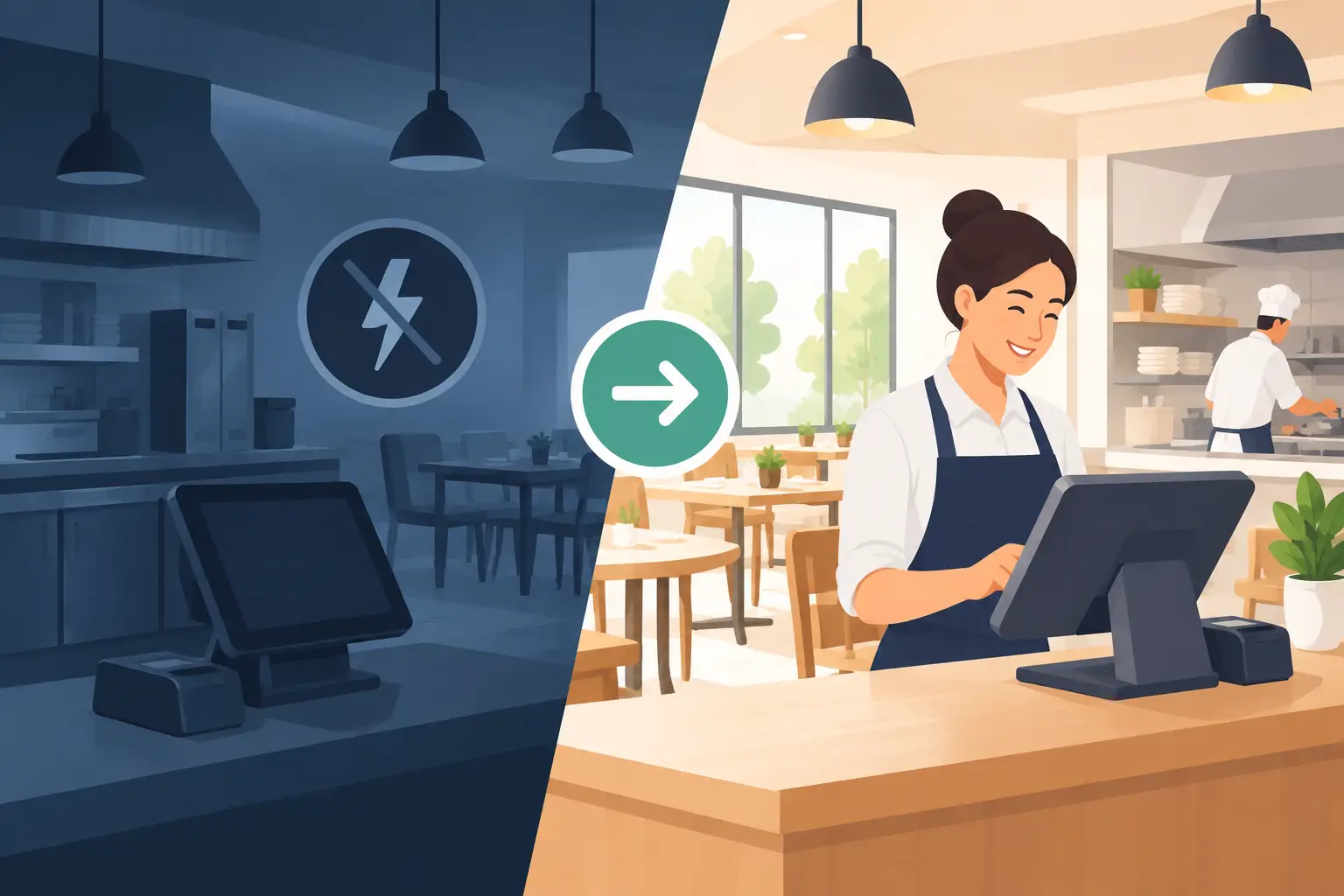
A dinner rush can turn into a costly emergency the moment the grid fails. This restaurant outage recovery example shows how a small restaurant can protect refrigerated inventory, keep essential transactions moving, and reopen with confidence after a storm or local utility failure.
The goal is not necessarily to power every appliance at once. For most restaurants, the smart recovery plan protects the equipment that prevents immediate losses first, then restores the systems needed to serve customers safely. That distinction determines whether backup power becomes a practical investment or an undersized system that fails when it matters.
Consider a 70-seat coastal restaurant with one walk-in cooler, two reach-in refrigerators, a chest freezer, a point-of-sale system, internet equipment, security cameras, emergency lighting, and a small office. A severe storm knocks out utility power at 4:30 p.m., just before the evening shift.
The owner does not attempt to run the electric range, fryers, air conditioning, ice machine, and every kitchen outlet. Those loads can demand far more power than a portable backup system is designed to provide. Instead, the team switches to its outage menu: cold sandwiches, salads, pre-prepped items, bottled drinks, and limited cooked options that can be handled with propane equipment where permitted.
Within the first 15 minutes, staff members keep refrigerator and freezer doors closed, confirm the power outage is not isolated to the building, and turn on designated backup circuits. A battery backup system supports the POS terminal, router, card reader, lights at the register, and security equipment. A properly sized solar generator or portable power station supports selected refrigeration equipment, based on its starting surge and running wattage.
Service does not look exactly normal, but it continues. The restaurant can process card payments, communicate with customers, monitor inventory temperatures, and sell a limited menu without opening the doors repeatedly. That keeps revenue coming in while protecting the stock that would otherwise be at risk.
For most businesses, food safety comes first. Refrigeration losses can exceed a day of missed sales, especially after a storm when replacement deliveries may be delayed. If backup capacity is limited, assign it to refrigeration, a thermometer or temperature-monitoring device, communications, payment processing, and a few critical lights before considering comfort loads or high-draw cooking equipment.
This is where planning changes the outcome. A restaurant that knows its essential loads can move quickly. A restaurant that is guessing may overload its backup system, trip protection, and lose valuable time.
Every restaurant has different equipment, hours, menus, and utility constraints. A coffee shop may prioritize an espresso machine, refrigerated milk, POS equipment, and lighting. A takeout counter may need freezers, a router, receipt printer, and a small prep refrigerator. A full-service restaurant with electric cooking equipment may need a generator-based solution or a more substantial home or commercial battery backup system.
Start by identifying the equipment that must operate during an outage. Record the running watts, starting watts, voltage, and expected daily runtime from each item’s label or manual. Refrigeration is especially important because compressors often draw a higher surge when they start. The battery inverter must handle that surge, not just the appliance’s normal running load.
Then separate equipment into three categories: must run, useful if capacity allows, and wait until utility power returns. In many small restaurants, must-run loads include refrigeration, POS equipment, internet, communications, emergency lighting, and security. Useful loads may include fans, a beverage cooler, selected prep equipment, and staff charging stations. High-draw equipment such as electric ovens, fryers, griddles, water heaters, and central air conditioning usually require a larger system and should be evaluated separately.
A simple load plan also prevents a common mistake: buying based only on battery capacity. Capacity, measured in watt-hours or kilowatt-hours, determines how long power can run. Inverter output, measured in watts, determines what the system can start and operate at one time. Both figures matter.
At 7:00 p.m., the fictional restaurant closes early and consolidates refrigerated products where safe to do so. Staff log temperatures, limit door openings, charge radios and phones, and notify customers through their normal channels about the reduced menu and hours.
The next morning, solar panels begin recharging the battery system. That does not mean the restaurant has unlimited electricity. Solar production depends on panel size, sun exposure, weather, and the remaining battery level. After a hurricane or heavy storm, cloud cover can reduce output significantly. Still, portable solar panels can extend runtime, reduce dependence on fuel, and provide a valuable daytime charging source when the grid repair timeline is uncertain.
This is the advantage of pairing battery backup with solar rather than treating them as separate purchases. Batteries provide immediate, quiet power. Solar helps replenish that stored energy during extended outages. For a business in the Bahamas or another storm-prone coastal area, that combination can offer more control when fuel deliveries, roads, and utility restoration are unpredictable.
At noon on day two, the restaurant uses its stored and solar-recharged power for a controlled refrigeration schedule, POS operations, communications, and basic lighting. It continues the limited menu instead of burning through available energy trying to recreate a full normal service.
That operational discipline is as valuable as the equipment itself.
The strongest part of this restaurant outage recovery example is not a single product. It is the order of decisions. The owner protects food, keeps payment and communications available, reduces energy demand, and gives staff a clear procedure.
It also accounts for the reality that not every outage is the same. A two-hour interruption may only require closed refrigerator doors and a small portable power station for electronics. A multi-day outage after a tropical storm may justify solar charging, larger battery storage, or a hybrid plan that includes a fuel generator for heavy loads.
Battery systems are quieter and require less day-to-day maintenance than fuel-powered generators. They can be used indoors when installed and operated according to manufacturer instructions, and they avoid the need to store fuel on site. Their trade-off is finite stored energy and the need for thoughtful load management.
Fuel generators can support larger loads and longer runtimes when fuel is available, but they require outdoor operation, proper ventilation, safe fuel handling, and ongoing maintenance. They also create noise that can be difficult in dense commercial areas. Many restaurant owners find that a layered approach works best: battery and solar for critical electronics and limited refrigeration, with generator capacity reserved for heavier, approved loads if an extended outage demands it.
Recovery is much easier when the plan is tested on a regular business day. Run essential equipment from the backup system for a short period, check actual power draw, and confirm that staff know which circuits, cords, and appliances are approved. Label critical plugs and keep extension cords rated for the intended load.
Your written outage procedure should also include food temperature logs, a contact list for employees and suppliers, a limited-menu plan, and clear rules for when to discard food. Backup power can preserve safe conditions, but it does not replace proper food-safety practices or local health requirements.
For permanently installed systems, work with a qualified electrician to ensure transfer equipment, circuits, grounding, and code requirements are handled correctly. Never backfeed power into a building through an outlet, and never operate a fuel generator indoors, near doors or windows, or in enclosed areas.
A restaurant cannot control when the power goes out. It can control whether an outage becomes a complete shutdown or a managed interruption. With the right essential-load plan, reliable battery backup, and solar charging capacity sized for the real operation, your next recovery can protect both your inventory and your ability to serve the community.
As the shadow of Hurricane Helene still lingers, the storms of 2025 are already on the horizon. Hurricane Helene, a
The Bahamas: turquoise waters, sun-kissed beaches, gentle trade winds, and a relaxed pace of life. It’s one of the most

The Bahamas is blessed with sunshine almost all year round, making it one of the best places on earth to
All rights reserved sol1242.com © 2025


