
How to Prepare Your Home for the 2026 Hurricane Season
As the shadow of Hurricane Helene still lingers, the storms of 2025 are already on the horizon. Hurricane Helene, a

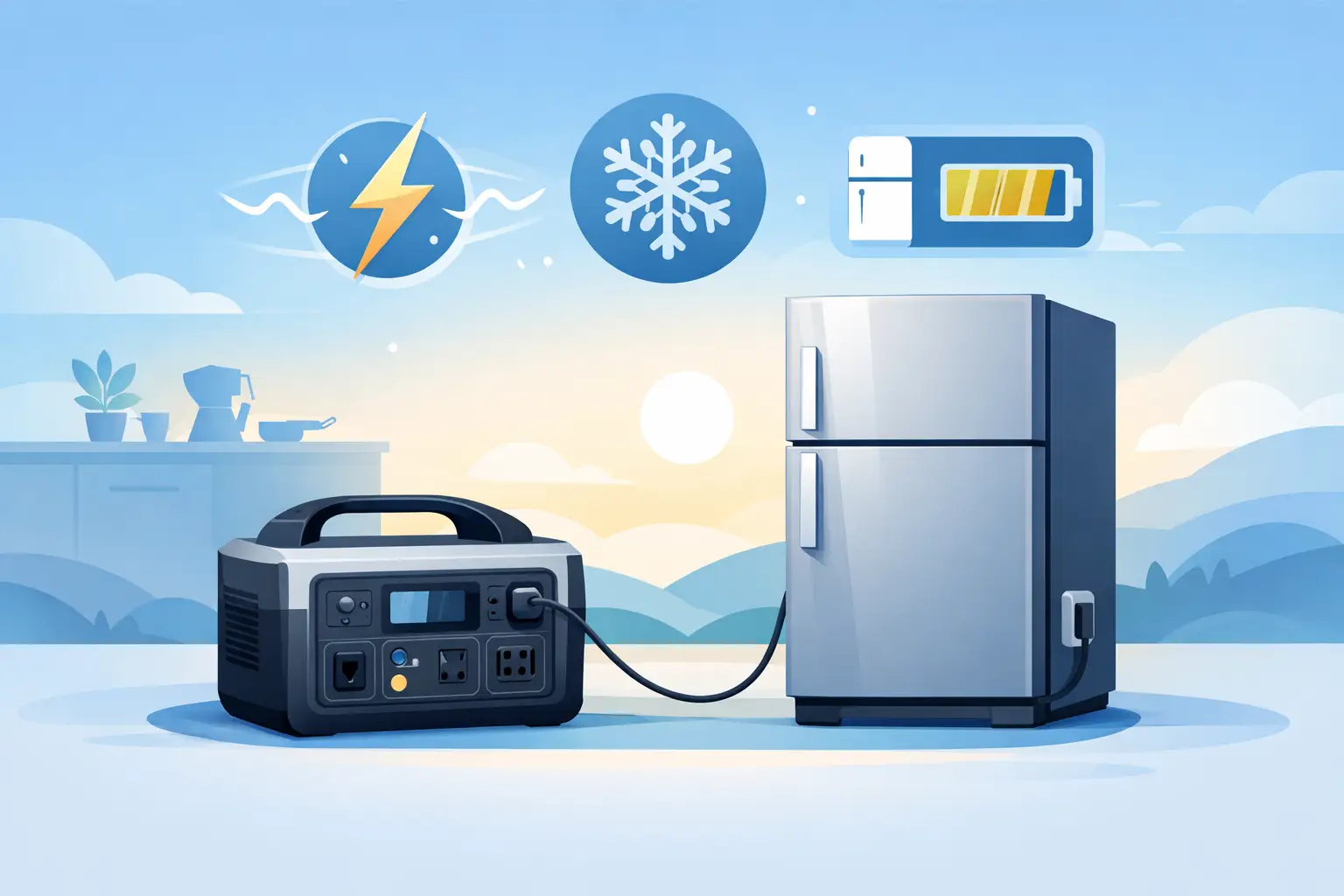
A refrigerator full of groceries becomes a countdown the moment the power goes out. In hurricane season, a few hours without electricity can mean spoiled food, lost medication, and unnecessary stress. So, can portable power stations run refrigerators? Yes, provided the station has enough output power, battery capacity, and the right setup for your particular refrigerator.
The key is not simply buying the largest battery you can find. It is matching your refrigerator’s real electrical needs to backup power that can carry it through an outage safely and predictably.
Most modern portable power stations can run a standard household refrigerator. Many can also support a compact fridge, freezer, or beverage cooler with room left for essentials such as phones, lights, a modem, or a small fan.
A refrigerator does not draw the same amount of electricity every minute. Its compressor turns on, cools the interior, then switches off until the temperature rises again. This cycling means its daily energy use is usually lower than the wattage shown on the label might suggest.
There is one important complication: compressor startup. When the compressor begins running, it can briefly require two to three times its normal operating wattage. A refrigerator that normally uses 150 watts may need a short surge of 600 watts or more at startup. Your portable power station must handle both the steady running load and that momentary surge.
For outage protection, this makes a quality power station a practical alternative to relying on ice, opening the refrigerator as little as possible, and hoping utility power returns before food is lost. It is especially useful when a generator is not practical overnight, in a condo setting, or during severe weather when fuel access is limited.
Before choosing a battery, look for the refrigerator’s electrical label. It is commonly located inside the fresh-food compartment, behind the unit, or near the compressor. You may see watts, amps, volts, or annual kilowatt-hour consumption.
If the label lists watts, that is your starting point. If it lists amps, multiply amps by 120 volts to get an approximate wattage. For example, a refrigerator rated at 2 amps uses roughly 240 watts while running. This is an estimate, but it helps establish the minimum inverter output you need.
Annual energy consumption is even more useful for estimating runtime. Divide the annual kWh figure by 365 to find average daily use. A refrigerator rated at 500 kWh per year uses about 1.37 kWh per day on average, or 1,370 watt-hours. Real-world use may be higher in a hot kitchen, a garage, or a humid coastal climate where the compressor has to work harder.
Do not overlook refrigerator type. A compact dorm-style fridge may use far less energy than a full-size side-by-side model. Older refrigerators, large freezers, ice makers, and models with through-the-door dispensers often consume more power than newer energy-efficient units. During a power outage, a chest freezer is also worth planning for separately if you need to protect stored food or business inventory.
For a typical full-size refrigerator, choose a portable power station with at least 1,000 watts of continuous AC output and sufficient surge capacity. This gives the compressor room to start without tripping an overload alarm.
Smaller stations in the 300- to 600-watt range may run a mini-fridge or highly efficient compact refrigerator, but they are less dependable for a standard kitchen unit. A station can have a large battery and still fail to start a refrigerator if its inverter output is too low. Battery capacity and output rating are two different specifications, and both matter.
Runtime depends on battery capacity, refrigerator efficiency, ambient temperature, and how often the door opens. As a quick planning estimate, multiply the power station’s watt-hour capacity by 0.85 to account for inverter and conversion losses. Then divide by the refrigerator’s average hourly energy use.
For example, a refrigerator averaging 60 watts across the day uses about 1,440 watt-hours over 24 hours. A 1,500Wh power station provides approximately 1,275Wh of usable AC energy after losses. In warm conditions, it may run that refrigerator for roughly 18 to 22 hours. A 2,000Wh station can often cover about a day or more, while a 3,000Wh or expandable system provides a stronger foundation for multi-day outages.
These numbers are planning estimates, not guarantees. A refrigerator in an air-conditioned home with full seals and limited door openings will use less energy than one sitting in a hot garage. In the Bahamas and other coastal climates, heat and humidity can shorten battery runtime because the compressor runs more often. Build in a margin rather than sizing your backup system to the absolute minimum.
If the station will also power a freezer, Wi-Fi equipment, lights, fans, or phone charging, add those loads before calculating runtime. It is better to know what you can run comfortably than to discover mid-outage that the battery is draining faster than expected.
A portable power station gives you stored energy. Adding compatible portable solar panels gives you a way to replenish it during daylight hours. That difference matters when an outage lasts beyond one night.
Solar will not necessarily run the refrigerator directly at full speed every hour of the day. Cloud cover, panel angle, shade, and heat affect output. But a properly sized solar setup can replace much of the energy your refrigerator uses, extend runtime significantly, and help preserve battery reserve for the evening.
For a refrigerator using around 1,200 to 1,500Wh per day, 400 watts of solar may be a reasonable starting point in strong sunshine, though actual production varies. More panel capacity gives you a better recovery window after a cloudy morning or a heavy overnight battery draw. Position panels where they receive clear sun, keep them free of salt spray and debris, and move them as needed to avoid shade.
This is why solar generators are valuable for hurricane preparedness and off-grid use. Fuel generators can be effective, but they require fuel storage, ventilation, noise management, and regular refueling. A battery-and-solar system operates quietly and can be used safely indoors, while solar panels remain outdoors in clear, secure conditions.
Plug the refrigerator directly into the portable power station’s AC outlet using its normal grounded cord. Avoid cheap extension cords, overloaded power strips, or daisy-chained adapters. If an extension cord is necessary, use a heavy-duty outdoor-rated cord of the proper gauge and keep it as short as practical.
Keep the power station indoors in a dry, ventilated area away from direct sun, standing water, and salt exposure. Portable power stations are not designed to be left outside in rain or storm conditions. Place solar panels outdoors only when conditions are safe, and bring them in when high winds are expected.
Also, let the refrigerator cycle normally. Turning it off and on repeatedly is harder on the compressor and wastes the cold air you have already paid to create. Keep the doors closed, group frozen items together, and avoid loading warm food during an outage. A full refrigerator stays cold longer than an empty one, while a full freezer holds temperature longer still.
For many households, a 1,000Wh station is a short-outage solution for a smaller or efficient refrigerator. A 1,500Wh to 2,000Wh model is a more practical range for protecting a standard refrigerator overnight and into the next day. For extended outages, larger expandable battery systems paired with solar panels offer more dependable continuity.
Small business owners and property managers should plan beyond one appliance. A convenience fridge, medication refrigerator, freezer, point-of-sale device, and communications equipment can quickly turn a simple battery calculation into a larger backup-power requirement. In those cases, separating critical loads from convenience loads helps protect what matters most.
SOL242 helps customers build backup power around real island conditions: heat, storms, uncertain restoration times, and the need to keep essential food and supplies protected. The right system is the one that starts your refrigerator without hesitation and gives you enough reserve to make clear decisions while the grid is down.
Before the next outage, check your refrigerator label, calculate its daily energy use, and test your power station while utility power is still available. That small preparation can turn a dark, uncertain night into a manageable one.
As the shadow of Hurricane Helene still lingers, the storms of 2025 are already on the horizon. Hurricane Helene, a
The Bahamas: turquoise waters, sun-kissed beaches, gentle trade winds, and a relaxed pace of life. It’s one of the most

The Bahamas is blessed with sunshine almost all year round, making it one of the best places on earth to
All rights reserved sol1242.com © 2025


