
How to Prepare Your Home for the 2026 Hurricane Season
As the shadow of Hurricane Helene still lingers, the storms of 2025 are already on the horizon. Hurricane Helene, a

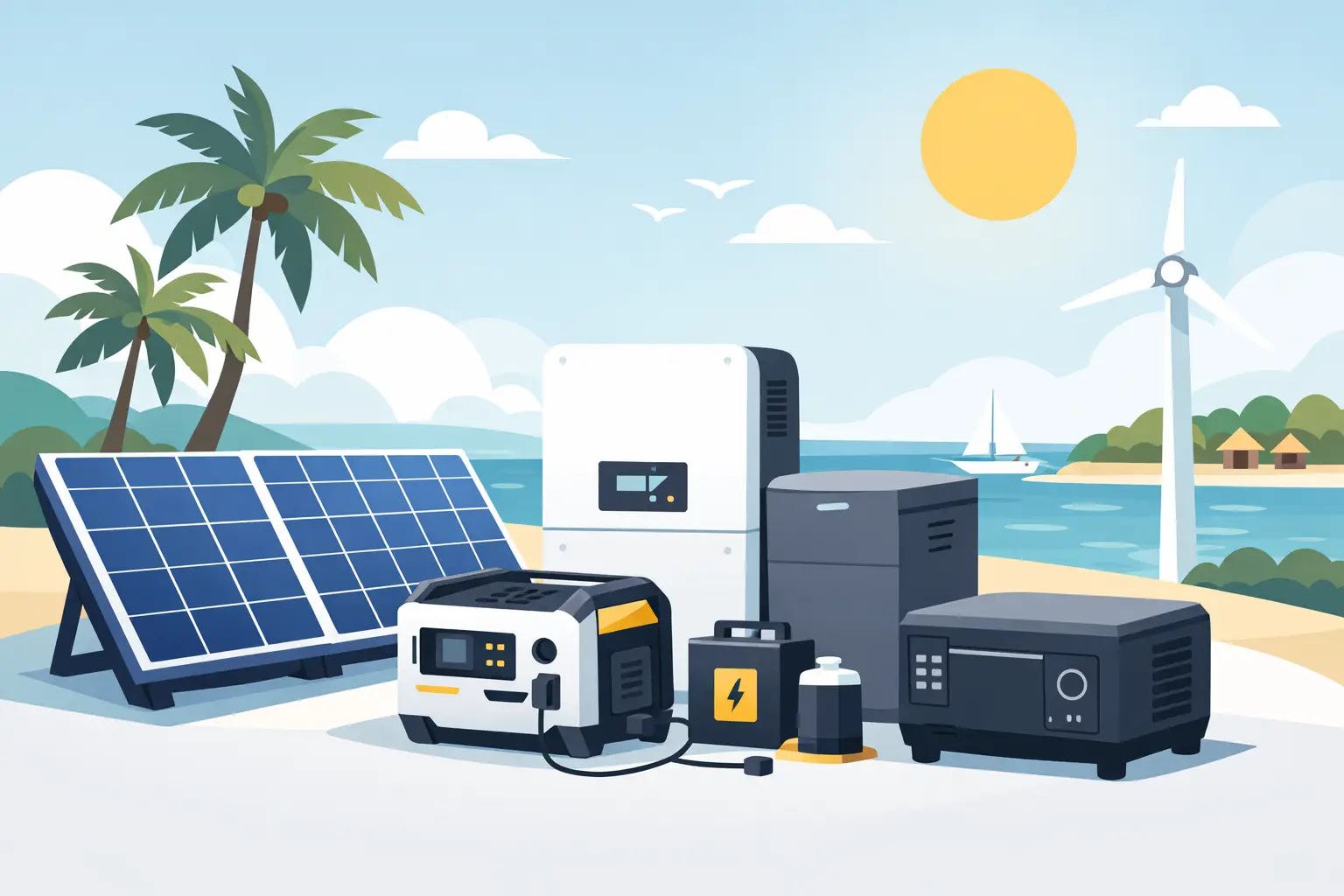
When the power cuts out, the question is not whether you own solar equipment. It is whether your equipment can keep the essentials running long enough to protect your home, business, or property. This Bahamas solar equipment guide helps you choose practical backup power for island conditions, where intense sun, heat, humidity, salt air, and hurricane season all affect what works best.
The right setup does not have to power every appliance in the building. It needs to support the loads that matter most: refrigeration, lights, internet, communications, medical devices, water pumps, security systems, and the ability to charge phones. Start with that priority list, then choose equipment that can carry it reliably.
Solar equipment should be selected around a real use case, not a product label. A compact portable power station is useful for charging phones, powering a modem, running lights, or keeping a small cooler operating. It is not designed to run central air conditioning or an entire large home for days.
For a household that needs refrigeration, fans, lights, internet, and selected outlets during an outage, a larger solar generator or home battery backup system is usually the better fit. Small businesses, vacation rentals, and property managers may need a system that protects point-of-sale equipment, routers, cameras, gate motors, lighting, or refrigeration. The more critical the load, the more important it is to size the battery and inverter correctly.
Think in two measurements: watts and watt-hours. Watts measure the power an appliance needs while it is running. Watt-hours measure how much energy it consumes over time. A refrigerator may use a modest amount of power once running but require a higher surge when its compressor starts. A battery system must handle both the continuous load and those brief startup demands.
Before purchasing, write down each essential device, its wattage, and the hours you expect to run it. This simple exercise prevents the most common disappointment in backup power: buying a unit that is excellent for charging electronics but too small for the appliances you need during a prolonged outage.
Portable power stations are the fastest route to practical emergency power. They combine a battery, inverter, charge controller, and outlets in one unit. They work well for apartment residents, renters, boaters, outdoor use, and homeowners who want a no-installation option ready for hurricane season. Keep one charged, store it in a dry accessible place, and pair it with portable solar panels for longer outages.
Portable solar panels add independence when grid power is unavailable. They are especially useful because the Bahamas has strong solar potential, but they need sensible handling. Panels should be positioned in direct sunlight, secured against wind, and brought inside before severe weather. Portable panels are not hurricane-proof when left deployed. Their value is flexibility: set them up after the storm has passed and use the sun to replenish your battery.
Solar generators are often described as a package of portable panels and a power station. They are a strong option for families who want one coordinated system for essential loads. The key is checking the actual battery capacity, AC output, solar input limit, and charging time rather than relying on the name alone. A larger capacity unit may provide more runtime, but it will also be heavier, more expensive, and slower to recharge if paired with too little solar input.
Home battery backup systems are built for a more permanent level of protection. These systems can connect to selected home circuits or, in larger designs, support much of the home. They are suitable for owners who want automatic or near-automatic backup, daily solar savings, and a cleaner alternative to relying solely on a fuel generator. A professionally installed system can be designed around critical loads, solar production, utility rules, and safe transfer equipment.
During a storm outage, your energy plan changes. Air conditioning, electric water heating, clothes dryers, and large cooking appliances can drain a battery quickly. That does not mean they can never be supported, but they require significantly more storage and solar capacity than basic household essentials.
A sensible first target is a critical-load plan. Prioritize a refrigerator or freezer, several LED lights, internet equipment, device charging, fans, and any health or safety equipment. If you have a well pump, sump pump, aquarium system, or security equipment, include it from the beginning. These are often the loads people forget until the grid is down.
For example, a small power station may cover communications and lighting for many hours, while a mid-sized unit can often support a refrigerator plus selected essentials. A larger battery system is appropriate when you need multiple appliances, overnight runtime, or dependable coverage for a business operation. Runtime always depends on how much power is being used at once and how often solar can recharge the battery.
Do not size only for a sunny afternoon. Plan for cloudy weather, days when panels cannot be deployed immediately, and the period just before and after a storm. Extra battery capacity provides breathing room when sunlight is limited or your household needs more power than expected.
Island conditions deserve more attention than a standard product checklist. Heat can reduce battery performance and shorten the life of electronics when equipment is stored or operated outside its recommended temperature range. Humidity and salt air can contribute to corrosion, especially around connectors, mounting hardware, and exposed metal components.
Keep portable power stations indoors or in a dry, shaded, ventilated area. Never operate battery equipment where it can get wet, and do not leave it in direct sun for long periods. A shaded porch may feel convenient, but wind-driven rain and salt exposure can create problems over time. Indoor storage is the safer choice.
For permanent systems, use equipment rated for the intended environment and have a qualified installer account for ventilation, clearances, electrical protection, and mounting. Coastal installations should use corrosion-resistant hardware where appropriate. Roof-mounted panels must be installed with a wind-load design suitable for the property, not simply attached as if they were in a low-risk inland location.
Battery chemistry matters too. Lithium iron phosphate batteries are widely valued for their long cycle life and thermal stability. They are often a practical choice for backup power, but every product still has operating, charging, and storage limits. Read those limits and follow them. Durability comes from both quality equipment and correct use.
Backup power is most useful when it is prepared before a named storm appears on the map. Charge portable batteries regularly, test the equipment under real loads, and make sure everyone responsible for the property knows how to use it. A power station that has never been tested with your refrigerator, modem, or pump is not yet a complete emergency plan.
Keep charging cables, adapters, extension cords, and any required transfer equipment organized in one place. Use appropriately rated cords and avoid overloading them. If a device has a high startup surge, confirm that the inverter can handle it before an emergency. This is especially important for refrigerators, pumps, power tools, and some window air conditioners.
Portable panels should be folded and stored safely as a storm approaches. Do not try to collect solar power during dangerous winds or heavy rain. Once conditions are safe, inspect panels, cables, and connectors before setting up. Clean salt spray and debris off panels with care, then position them securely where they receive direct sunlight without creating a wind hazard.
A battery system reduces dependence on fuel, but it should be part of a broader preparedness plan. Keep flashlights, water, food, medical supplies, and communication options ready as well. Power continuity supports safety, but it cannot replace basic storm readiness.
There is no single best solar setup for every Bahamian property. A renter may get the greatest value from a portable power station and folding panel. A homeowner with frequent outages may benefit from a larger solar generator or installed home battery. A small business with revenue-sensitive equipment may need dedicated backup circuits and more capacity than a typical household.
Start with the problem you want to solve, then build upward. Buying the biggest system available is not always the smartest move if much of its capacity will go unused. On the other hand, choosing the cheapest option can leave you without enough runtime when an outage lasts longer than expected.
Look for clear capacity and output specifications, compatible solar input, dependable warranty coverage, and equipment designed for repeated use. SOL242 focuses on solutions that make sense for island life, where backup power is not a luxury purchase but a practical layer of protection.
The best time to choose your system is while the grid is working, the sun is out, and you can test every essential load without pressure. Build around the devices that protect your household or business first, and your solar equipment will be ready when reliability matters most.
As the shadow of Hurricane Helene still lingers, the storms of 2025 are already on the horizon. Hurricane Helene, a
The Bahamas: turquoise waters, sun-kissed beaches, gentle trade winds, and a relaxed pace of life. It’s one of the most

The Bahamas is blessed with sunshine almost all year round, making it one of the best places on earth to
All rights reserved sol1242.com © 2025


