



How to Prepare Your Home for the 2026 Hurricane Season
As the shadow of Hurricane Helene still lingers, the storms of 2025 are already on the horizon. Hurricane Helene, a
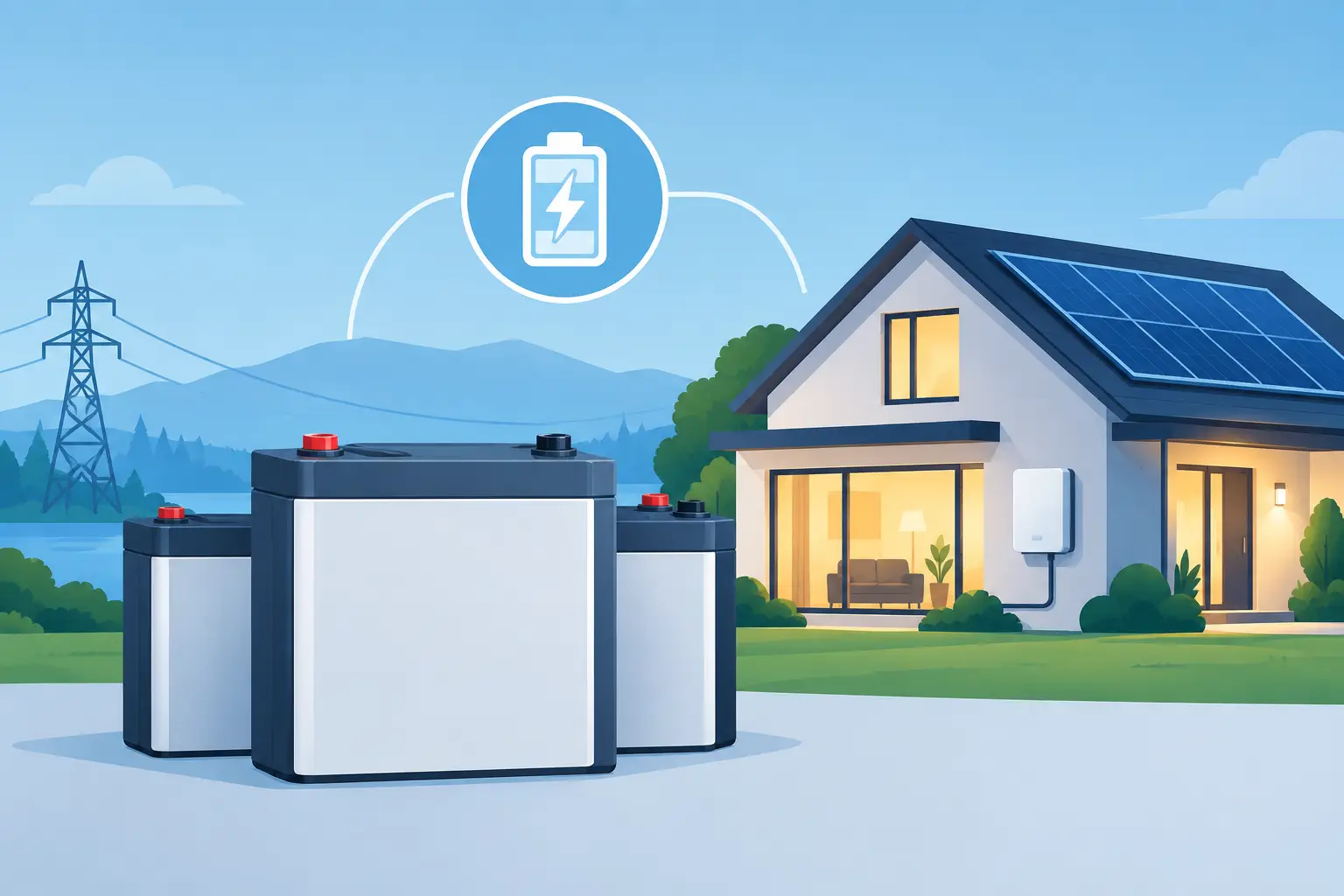
A battery that works perfectly on paper but cannot carry your refrigerator, internet, lights, and phone charging through an overnight outage is not real backup power. The best LiFePO4 batteries are sized for what matters in your home or business, matched to the right inverter and solar equipment, and installed where heat, humidity, and storm conditions will not shorten their life.
For households preparing for hurricane season, off-grid properties, and small businesses protecting essential equipment, lithium iron phosphate batteries offer a practical path to dependable energy independence. They are not all the same, though. Capacity, discharge capability, battery management, warranty support, and system compatibility determine whether a battery becomes a reliable power reserve or an expensive weak point.
LiFePO4 stands for lithium iron phosphate, a lithium battery chemistry widely used for solar storage, portable power stations, RVs, marine applications, and home backup systems. Compared with traditional lead-acid batteries, LiFePO4 batteries typically provide more usable energy, recharge faster, weigh less, and last through far more charge cycles.
That longer cycle life matters when outages are frequent or when solar is charging and discharging the battery every day. A lead-acid battery often performs best when only partially discharged. A quality LiFePO4 battery can usually supply a much larger share of its rated capacity without the same penalty. In practical terms, a 100Ah lithium battery is often far more useful than a 100Ah lead-acid battery for the same backup job.
Safety is another reason this chemistry is popular. Lithium iron phosphate is generally more thermally stable than several other lithium chemistries. Still, every battery system needs correct wiring, properly sized fuses or breakers, ventilation around equipment, and protection from water intrusion. No battery should be treated as maintenance-free simply because it is lithium.
The right choice begins with more than a large Ah number on the label. The best LiFePO4 batteries deliver the energy you expect, support the load you need, and communicate clearly about their operating limits.
Battery capacity is often shown in amp-hours, but watt-hours provide a clearer comparison. Multiply nominal battery voltage by amp-hours to estimate stored energy. A 12.8V 100Ah LiFePO4 battery stores roughly 1,280Wh, or 1.28kWh.
That can be enough for modest essentials, but it will not run a whole home for long. A refrigerator may use around 1 to 2kWh per day depending on its age and conditions. Add a router, several fans, lights, phone charging, a television, and occasional kitchen use, and energy needs climb quickly.
For short outages, a portable power station or one 12V battery may be a sensible solution. For overnight backup or solar self-consumption, a larger battery bank is usually the better investment. For whole-home support, 48V battery systems are commonly more efficient and practical than building a large bank of 12V batteries.
Stored energy tells you how long a battery may run. Continuous discharge current tells you whether it can start and support the appliance at all. This is where many buyers get caught off guard.
A battery may have enough total energy for a refrigerator, yet its built-in battery management system, or BMS, may shut down if the compressor startup surge exceeds the battery’s discharge limit. The same issue can arise with pumps, power tools, air conditioners, and other motor-driven equipment.
Check both continuous and peak discharge ratings. Then compare them with the inverter’s demand and the startup surge of the loads you plan to run. A properly designed system does not force one small battery to do a job meant for a larger bank.
Every quality LiFePO4 battery includes a BMS. This internal protection system monitors cell voltage, temperature, current, and charging conditions. It can disconnect the battery if it is overcharged, over-discharged, overheated, or asked to provide more current than it safely can.
A BMS is essential, but it is not a substitute for good planning. Repeatedly tripping a BMS because the inverter is oversized or the load is too high means the system is mismatched. Look for clear specifications, dependable low-temperature charging protection when relevant, and a manufacturer that explains how its BMS handles parallel or series battery configurations.
A battery must work with the equipment around it. Verify its nominal voltage, charging voltage range, maximum charge current, maximum discharge current, and communication requirements before buying.
Some rack-mounted 48V batteries are designed to communicate with compatible hybrid inverters through CAN or RS485 connections. That communication can improve charging control and state-of-charge reporting. Other batteries work through standard voltage-based settings, which can be perfectly effective when configured correctly.
If you are replacing lead-acid batteries in an existing solar setup, do not assume the old charge controller settings are safe for lithium. LiFePO4 batteries need appropriate charging profiles, and equalization settings used for lead-acid batteries should not be applied to lithium batteries.
The best battery size depends on the equipment you refuse to lose during an outage. Begin by separating essential loads from convenience loads. Essentials may include refrigeration, lighting, communications, fans, a security system, medical equipment, and selected outlets. Large central air conditioning, electric water heating, clothes dryers, and full electric cooking usually require much more storage and inverter capacity.
A useful planning method is to estimate each essential device’s watts, multiply by expected hours of use, and total the result in watt-hours. Then add a margin for inverter losses, changing usage, and cloudy days if solar will recharge the battery.
For example, a 1,280Wh battery may be useful for charging electronics, running a router, powering lights, and keeping a small fan going. It is not a realistic all-night solution for several high-draw appliances. A 5kWh battery system can cover a much more meaningful group of essentials, while 10kWh or more may be appropriate for longer runtimes, larger homes, or small business continuity.
Runtime is never guaranteed by battery size alone. A refrigerator cycling in a cool kitchen consumes less than one working hard in a hot room. Solar production also changes with weather, panel orientation, and shading. Plan for your most demanding likely outage, not the ideal sunny-day estimate.
In the Bahamas and other coastal areas, battery performance is tied closely to where and how the system is installed. High temperatures can reduce long-term battery life, while salt air and humidity can corrode terminals, connectors, and nearby electrical equipment.
Keep batteries in a dry, shaded, protected location that remains within the manufacturer’s stated temperature range. Avoid direct sun, enclosed outdoor boxes that trap extreme heat, and areas vulnerable to flooding. Elevating equipment above possible water entry levels is a practical storm-preparedness step, especially for ground-floor installations.
Inspect terminals and cable connections periodically for corrosion or looseness. Use appropriately rated enclosures and hardware for the environment. A battery bank may be durable, but the connections around it need the same attention.
Before selecting a LiFePO4 battery, confirm these four points with the product specifications and your system plan:
Also consider expandability. If your needs may grow, choose a battery platform that allows approved parallel expansion. Mixing old and new batteries, different capacities, or different brands can create charging and balancing problems. When building a multi-battery bank, identical batteries purchased together and installed according to manufacturer guidance are usually the safest route.
A portable power station is often the fastest way to protect a few critical devices. It combines a battery, inverter, charge controller, outlets, and display in one unit. For apartments, renters, short outages, outdoor work, and quick hurricane preparation, that simplicity is valuable.
A dedicated LiFePO4 battery bank is better suited to larger solar arrays, longer outages, and fixed backup systems. It can support more energy storage, higher loads, and customized solar charging. The trade-off is that it requires more planning and professional installation may be appropriate, particularly for transfer switches, electrical panels, and larger 48V systems.
SOL242 customers should think of portable and fixed systems as different layers of preparedness. A portable unit can keep communications and small essentials alive immediately, while a properly sized home battery system can protect the loads that keep a household or business operating through a prolonged outage.
The best LiFePO4 battery is not automatically the highest-capacity model or the lowest-priced one. It is the battery that supports your essential loads, works with your equipment, handles your climate, and has enough capacity to give you time instead of stress when the grid goes down.
Build your backup plan around the appliances, communications, and comfort you need most. When the next outage arrives, a battery system chosen with that real-world purpose in mind can keep your home or business steady when conditions outside are anything but.
As the shadow of Hurricane Helene still lingers, the storms of 2025 are already on the horizon. Hurricane Helene, a
The Bahamas: turquoise waters, sun-kissed beaches, gentle trade winds, and a relaxed pace of life. It’s one of the most

The Bahamas is blessed with sunshine almost all year round, making it one of the best places on earth to
All rights reserved sol1242.com © 2025


