
How to Prepare Your Home for the 2026 Hurricane Season
As the shadow of Hurricane Helene still lingers, the storms of 2025 are already on the horizon. Hurricane Helene, a

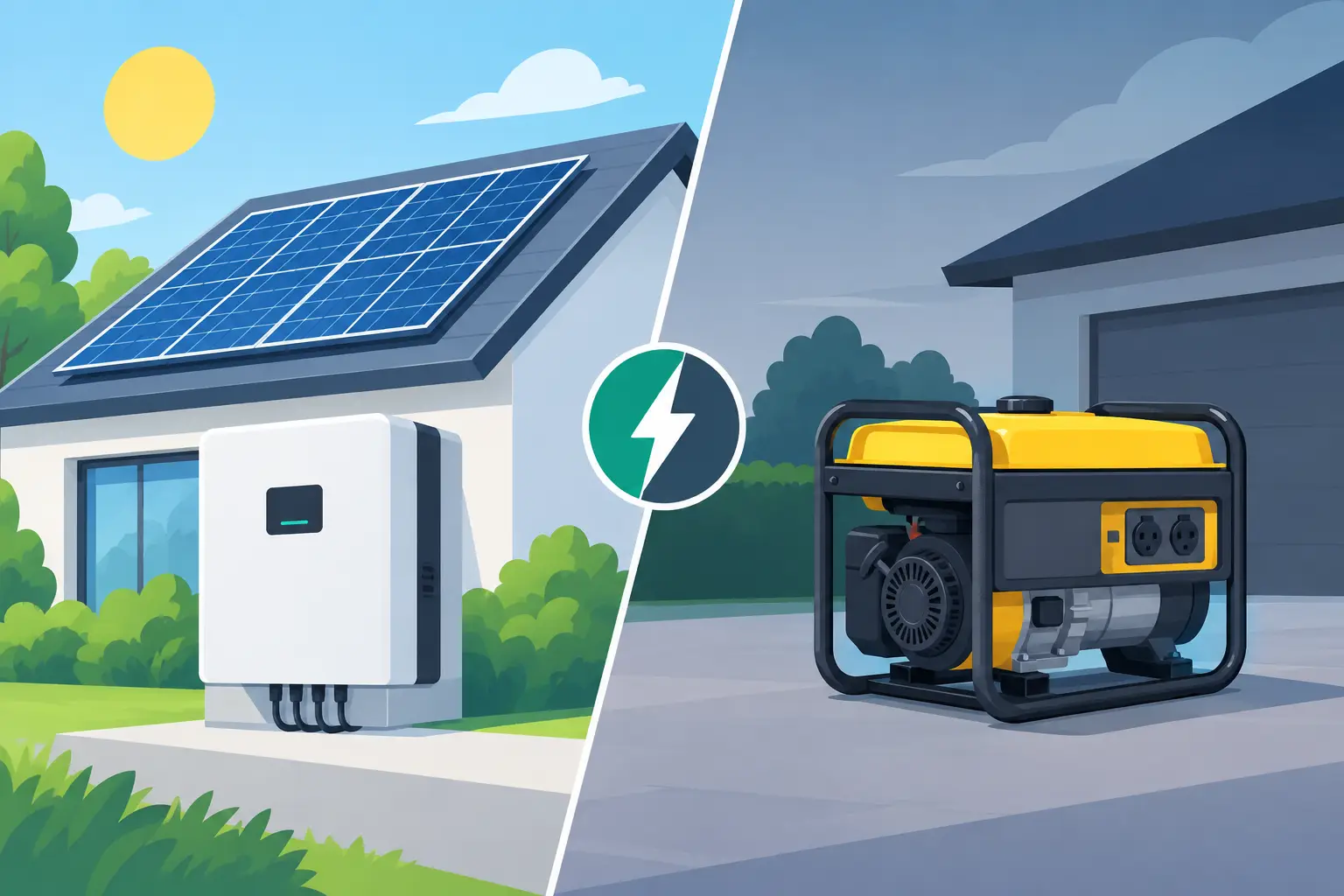
When an outage stretches from a few hours into several days, the question is not whether you have backup power. It is whether that power will be safe, affordable, and available when you need it most. Choosing a solar inverter versus gas generator is a practical decision for households, businesses, and property managers who cannot afford to be left in the dark after a storm or grid failure.
Gas generators have been the familiar answer for decades. They can deliver substantial power quickly, provided you have fuel. Solar inverter systems, paired with batteries and solar panels, offer a quieter path to backup power that does not depend on a fuel run during an emergency. Neither option is automatically right for every property. The better choice depends on what you need to power, how long you need it to run, and how prepared you want to be before the next outage.
A gas generator creates electricity by burning gasoline, propane, or diesel. You add fuel, start the unit, and it produces power as long as the fuel supply lasts. This makes generators useful for high-demand loads and short-term emergency use, but they require active management every time the grid goes down.
A solar inverter does not produce energy on its own. It converts direct-current electricity from batteries and solar panels into the alternating-current electricity used by household outlets and appliances. In a complete backup setup, solar panels recharge the battery during daylight, while the inverter supplies usable power to selected circuits, appliances, or plug-in devices.
That difference changes the experience of an outage. A generator is a fuel-powered machine you operate. A battery and inverter system can switch on automatically or provide ready-to-use power at the press of a button, depending on the equipment installed.
A gas generator is often the stronger choice when you need a large amount of power immediately and only expect to use it occasionally. A properly sized unit can run central air conditioning, a water pump, refrigeration, tools, and other demanding equipment. For construction sites, large commercial loads, or a property with heavy motor-driven appliances, generator capacity can be difficult to match with a small portable battery system.
The trade-off is fuel. During hurricane season, fuel stations may be closed, out of stock, damaged, or facing long lines. Gasoline also needs to be stored safely, kept away from living areas, and rotated so it does not degrade. A generator cannot help if you cannot refuel it.
Solar inverter and battery systems are especially effective for essential loads: refrigerators, freezers, lights, internet equipment, phones, fans, televisions, medical devices, security systems, and many smaller appliances. They operate quietly, produce no exhaust at the point of use, and can be used indoors when designed for indoor operation. With solar charging, they can continue replenishing during extended outages instead of drawing down a limited fuel supply.
For Bahamian homes and coastal properties, that can mean a more dependable plan after the initial storm has passed. Sunlight is a local resource. A well-matched battery, inverter, and solar panel setup can turn it into daily backup power without repeated trips for gasoline.
A portable gas generator may cost less upfront than a complete solar backup system with batteries and panels. That makes it appealing when budget is the only consideration. But the purchase price is only the beginning.
Generators need fuel, oil changes, air-filter service, spark plugs, periodic test runs, and repairs over time. Fuel costs rise exactly when demand is highest, and emergency fuel storage adds another expense and responsibility. The longer the outage, the more expensive generator power becomes.
A solar inverter system usually requires a greater initial investment, particularly if it is sized for multiple appliances or whole-home backup. Yet once installed, sunlight does not come with a fuel bill. Battery systems also have fewer moving parts than combustion engines, which reduces routine maintenance. Over years of regular outages, solar can offer more predictable operating costs and greater long-term value.
The best comparison is not simply what each system costs this month. Ask what it will cost to keep your essentials running through several outages, several hurricane seasons, and several years.
Generator safety is non-negotiable. A gas generator must run outdoors, far from doors, windows, vents, and enclosed spaces because its exhaust can create a deadly carbon monoxide hazard. It also needs protection from rain, secure placement, proper extension cords or transfer equipment, and careful fuel handling.
Noise is another real consideration. Even inverter generators, which are quieter than conventional models, make sound and can disturb neighbors, guests, or tenants. Running one overnight may be impractical in a dense neighborhood or near sleeping areas.
Battery power through a solar inverter is silent. It has no exhaust, no fuel spill risk, and no need for outdoor operation in the same way a generator does. That makes portable power stations and home battery systems well suited for apartments, condos, indoor business spaces, bedrooms supporting medical equipment, and properties where noise is a concern.
Solar equipment still needs sensible installation. Batteries and electronics should be kept dry, protected from direct weather exposure, and installed according to product guidance. In salty, humid island environments, choosing equipment designed for demanding conditions and keeping connections clean matters just as much as choosing the right capacity.
Generator runtime depends on the size of its fuel tank, its efficiency, and the power demand you place on it. A generator can keep running for days if fuel remains available. This is its major advantage for large loads during prolonged cloudy weather or when solar production is limited.
Battery runtime depends on stored watt-hours and the appliances you use. A refrigerator, lights, Wi-Fi router, and fan use far less energy than central air conditioning, an electric stove, or a clothes dryer. Reducing unnecessary loads can greatly extend battery life. Solar panels add the ability to recharge during the day, making the system more useful over a multi-day outage.
This is why sizing matters more than product labels. Before buying either system, identify your essential loads, estimate their running watts, consider surge requirements for motors, and decide how many hours or days of backup you need. A small portable power station can protect communications and refrigeration. A larger home battery and inverter system can support selected household circuits. Whole-property backup requires a more detailed plan.
For some properties, the most resilient answer is not solar or gas alone. It is both.
A solar inverter and battery system can handle everyday outages, nighttime essentials, and quiet indoor power. A generator can serve as a secondary charging source or cover unusually heavy loads during long periods of poor weather. This approach can reduce fuel consumption without leaving you dependent on sunlight alone.
A hybrid plan is particularly useful for small businesses, vacation rentals, and homes that need continuity for refrigeration, communications, water systems, or security. Instead of running a generator continuously, you can use it strategically while the battery system handles lower-demand periods.
Choose a gas generator if your priority is powering large, high-wattage equipment for limited periods and you can safely store and reliably access fuel. It is often a practical starting point for properties with high surge loads, provided you are prepared for maintenance, noise, and refueling.
Choose a solar inverter, battery, and panel system if you want quiet power, lower ongoing operating costs, indoor-safe backup options, and greater independence during fuel shortages. It is a strong fit for essential household loads, remote properties, storm preparation, and anyone who wants backup power that can recharge from the sun.
For many households, the smartest first step is protecting the essentials rather than trying to power everything. Keep food cold, lights on, phones charged, internet available, and fans running. From there, you can build a backup system that matches your budget and your risk level.
Power outages are stressful enough without having to search for fuel, listen to a generator all night, or decide which appliance to unplug. The right backup system gives your home or business a steadier response when the grid cannot deliver – and that is the kind of preparation that pays off long before the next storm arrives.
As the shadow of Hurricane Helene still lingers, the storms of 2025 are already on the horizon. Hurricane Helene, a
The Bahamas: turquoise waters, sun-kissed beaches, gentle trade winds, and a relaxed pace of life. It’s one of the most

The Bahamas is blessed with sunshine almost all year round, making it one of the best places on earth to
All rights reserved sol1242.com © 2025


