
How to Prepare Your Home for the 2026 Hurricane Season
As the shadow of Hurricane Helene still lingers, the storms of 2025 are already on the horizon. Hurricane Helene, a

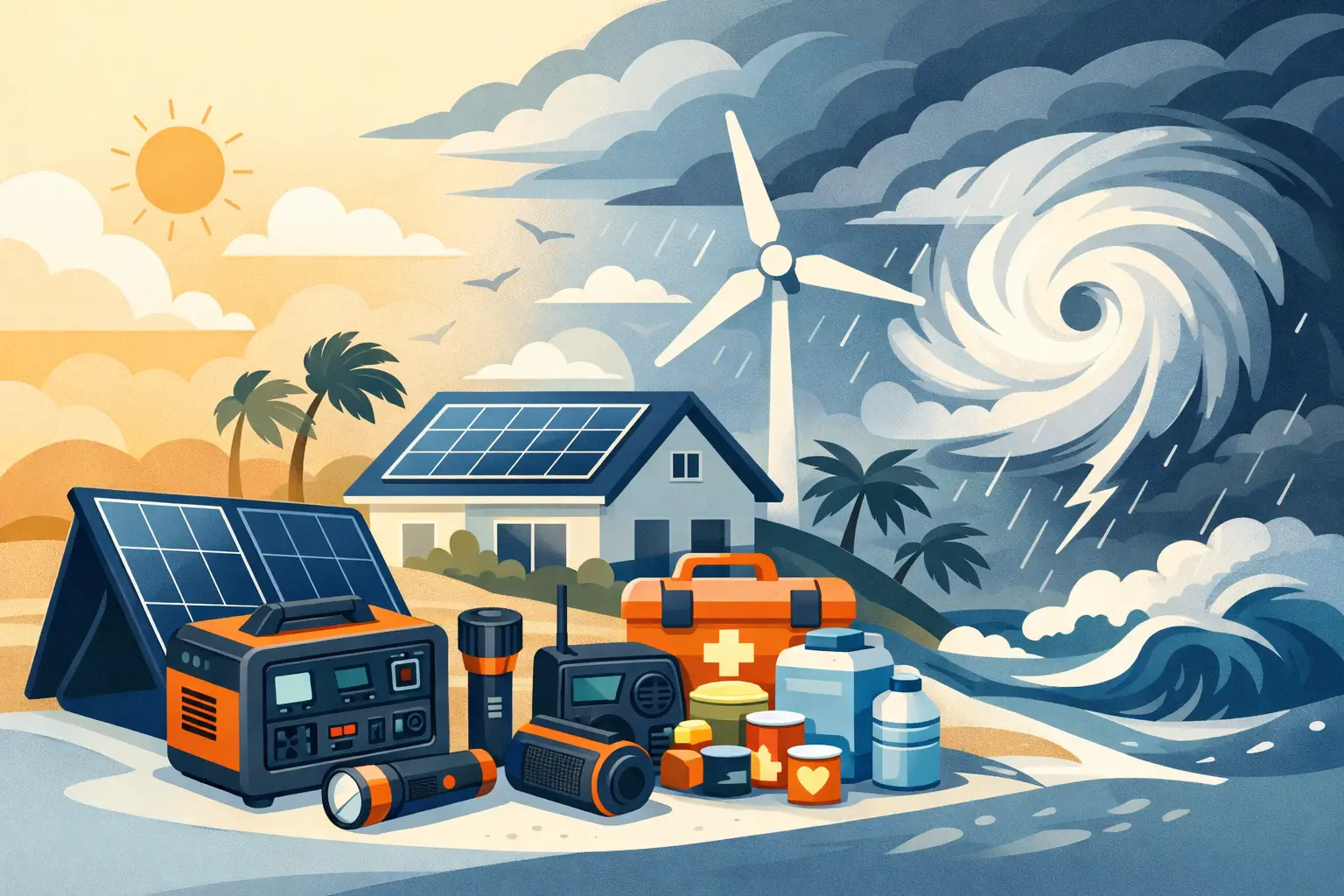
When the power goes out after a hurricane, the first hours are about more than convenience. You may need to keep phones charged, preserve food and medicine, run lights, and stay connected to weather updates. The top solar tools for hurricanes give your household a practical source of backup power without relying solely on fuel deliveries, crowded gas stations, or an uncertain restoration timeline.
For homeowners and businesses in coastal areas, solar backup is most useful when it is planned around the loads that matter most. A small setup can support communications and essentials for a short outage. A larger battery and solar system can keep critical circuits running for days, provided the sun returns and the equipment is protected before the storm arrives.
The right equipment depends on whether you need portable power for a few devices, backup for a refrigerator and medical equipment, or continuity for an entire property. These are the core tools worth considering before hurricane season begins.
A portable power station is the fastest way to create quiet, indoor-ready backup power. It stores electricity in a lithium battery and provides AC outlets, USB ports, and often a 12V vehicle-style outlet. Unlike a conventional generator, it produces no exhaust, so it can be used safely indoors in a dry, ventilated space.
For a short outage, a compact unit can charge phones, tablets, flashlights, radios, and a Wi-Fi router. Mid-size and larger stations can also run a CPAP machine, television, fan, small medical device, or refrigerator for a limited period. Capacity matters: watt-hours tell you how much energy is stored, while output watts tell you what appliances the unit can start and run.
A common mistake is buying based on outlet count alone. If a refrigerator needs 150 watts while running but draws a much higher surge when its compressor starts, the power station must handle that surge. Check both the appliance label and the station’s continuous and surge ratings before relying on it for essential equipment.
A charged power station is valuable on day one. A portable solar panel extends that value when an outage lasts longer than expected. Once the storm has passed and conditions are safe, panels can recharge compatible batteries using the sun that is abundant across the Bahamas and much of the southern United States.
Portable panels are especially useful because they can be stored inside before a storm, then placed outside afterward where they receive clear sunlight. Look for durable panels with weather-resistant construction, stable kickstands or mounting options, and connectors that match your power station. Higher-wattage panels can recharge faster, but real output changes with cloud cover, heat, shade, panel angle, and cable length.
Do not leave portable panels outside as a hurricane approaches. Fold them, disconnect them, and bring them indoors well before tropical-storm-force winds arrive. Solar panels are energy equipment, not storm debris. Protecting them is part of protecting your backup plan.
A solar generator is generally a portable power station paired with one or more solar panels. It is a practical package for households that want a straightforward emergency setup without installing a permanent system immediately.
For hurricane readiness, this combination works well for apartment residents, renters, small businesses, and homeowners who need flexible backup power. You can charge the battery from the grid ahead of a storm, use it during the first outage period, and recharge with solar when skies clear. It also serves year-round for outdoor work, family islands, mobile vendors, and off-grid activities.
The trade-off is scale. A portable solar generator can be excellent for selected loads, but it may not support central air conditioning, electric water heating, or every circuit in a large home. Treat it as a way to protect priorities, not a substitute for unlimited power.
A home battery backup system is the stronger option for property owners who need dependable power through recurring outages. It stores energy in stationary batteries and connects through professional electrical equipment to support selected circuits or, in some cases, much of the home.
A properly sized system can keep refrigeration, lighting, internet, security equipment, fans, water pumps, and other priority loads operating without the noise and refueling demands of a gas generator. When paired with solar, it can recharge during daylight and reduce dependence on the grid after the storm.
This is not a one-size-fits-all purchase. Your battery capacity should reflect the appliances you need, how long outages typically last, whether solar will be available for recharging, and whether you want partial-home or whole-home backup. A property with a well pump, multiple refrigerators, or a small business with refrigeration will need a different design than a home focused on lights, communications, and medical equipment.
For permanent backup systems, safe connection equipment matters as much as battery size. A transfer switch or critical-load panel allows approved circuits to receive backup power while preventing dangerous backfeeding into utility lines.
Do not attempt to power a home by plugging a power station or generator into a wall outlet. That practice can damage equipment, create a fire risk, and endanger utility workers. A licensed electrician can identify priority circuits and install the appropriate equipment for your system.
Start with your non-negotiables. For many households, that means a phone, radio, lights, refrigerator, fan, internet equipment, and medication-related devices. For others, water pumping, security systems, cash registers, or communication equipment may be essential.
Then estimate how much power those items use over 24 hours. A phone may require relatively little energy, while a refrigerator, freezer, pump, or medical device can consume far more. Running fewer appliances is often the most affordable way to make stored battery power last through an extended outage.
Consider these four questions before choosing equipment:
For a basic readiness plan, a portable power station and portable solar panel can cover communications, lighting, and small essentials. For a household with critical medical needs or frequent long outages, a larger solar generator or home battery system offers more security. Businesses and property managers should also account for revenue-impacting loads such as point-of-sale equipment, refrigeration, internet, and security cameras.
Solar backup works best when every component is charged, tested, and stored correctly before conditions deteriorate. Charge power stations to the manufacturer-recommended level several days before landfall. Test the outlets, confirm that charging cables are available, and make sure every adult in the household knows how to operate the equipment.
Bring portable panels, extension cables, adapters, and smaller accessories inside. Store batteries in a dry location away from flooding risk, direct heat, and windows that could break. If you have a permanent solar array or battery system, follow the shutdown guidance from your installer or equipment manufacturer. Never climb onto a roof or attempt electrical work as a storm approaches.
After the hurricane, inspect all equipment before use. Do not use batteries, panels, cables, or outlets that were submerged, visibly damaged, or exposed to standing water. Wait until wind, flooding, and electrical hazards have passed before setting up panels outside.
The best time to learn your backup system is on a calm day, not when the grid is down and your phone battery is at 8 percent. Run a practice session: power a refrigerator for several hours, charge your devices, and see how quickly your solar panels recharge the battery in real conditions.
SOL242 helps make that planning practical with solar and battery options built around the realities of heat, humidity, outages, and island living. Choose equipment for the loads you truly need, store it safely before the storm, and you will have a far steadier source of power when it matters most.
As the shadow of Hurricane Helene still lingers, the storms of 2025 are already on the horizon. Hurricane Helene, a
The Bahamas: turquoise waters, sun-kissed beaches, gentle trade winds, and a relaxed pace of life. It’s one of the most

The Bahamas is blessed with sunshine almost all year round, making it one of the best places on earth to
All rights reserved sol1242.com © 2025


