

Portable Power Station for Home: What Matters
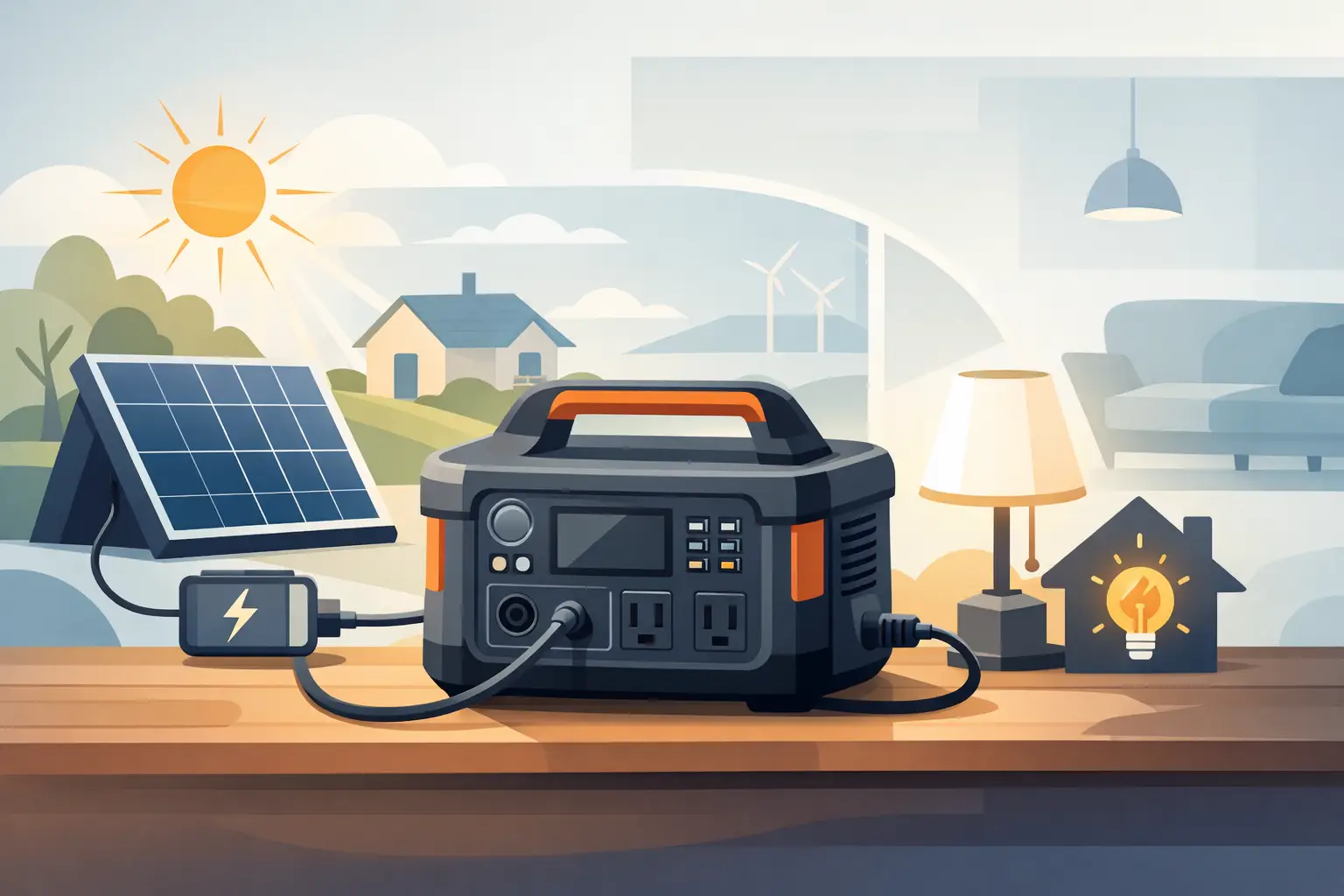
When the power drops in the middle of dinner, the question is never whether backup power matters. The question is whether your backup can keep the essentials running long enough to protect your home, your food, your devices, and your peace of mind. A portable power station for home gives you a practical way to stay powered during outages without the noise, fuel storage, and maintenance that come with a gas generator.
For many households, that matters most during storm season. But backup power is not only for major emergencies. It can cover short blackouts, support remote work, keep internet and phones online, and help reduce the stress that comes with unreliable service. The right unit turns a disruption into something manageable.
Why a portable power station for home makes sense
A portable power station stores electricity in a battery and delivers it through outlets you already use, including AC plugs, USB ports, and sometimes DC outputs. In plain terms, it is a compact backup system you can move where you need it. That flexibility is the main reason homeowners choose it.
Unlike a fixed whole-home battery, a portable unit does not require a permanent installation to be useful. You can keep it charged in a utility room, move it to the kitchen during an outage, or take it to a small office, apartment, workshop, or rental property. For homes that need dependable backup but are not ready for a larger installed system, it is often the smartest first step.
There is also a comfort factor. Gas generators still have their place, especially for heavy loads and long runtimes, but they bring trade-offs. They are louder, require fuel on hand, and cannot be used indoors. A battery-based portable power station is quiet, cleaner to operate, and easier for more people in the household to use safely.
What it can realistically power at home
This is where expectations matter. A portable power station for home can be extremely useful, but not every model can run every appliance. The right fit depends on battery capacity, output wattage, and how long you need power.
Smaller units are excellent for charging phones, powering Wi-Fi, keeping lights on, and running laptops, fans, and a TV. Mid-size models can often handle a full-size refrigerator for a period of time, plus communication devices and a few small appliances. Larger units can take on more serious loads, including freezers, microwaves, power tools, or multiple rooms of essentials, depending on surge requirements.
Air conditioners, electric dryers, and whole-home central systems are where many buyers overestimate what portable backup can do. Some larger stations can support a window AC or a portable AC unit, but central air usually pushes you into a much bigger backup solution. That is not a flaw. It just means the best setup starts with priorities.
Think in layers. During an outage, what absolutely must stay on? For most homes, that list includes refrigeration, lighting, phones, internet, fans, medical devices, and maybe a television or laptop. Start there, and you will buy more confidently.
How to choose the right size
Capacity is usually shown in watt-hours, and output is shown in watts. Capacity tells you how much stored energy the unit has. Output tells you how much power it can deliver at one time.
If you need to run a router, charge phones, power a few LED lights, and keep a laptop going, you do not need the biggest model on the market. If you want to keep a refrigerator cold, run fans overnight, and support work-from-home gear during a full-day outage, size becomes more important.
The simplest way to shop is to match the station to your outage plan, not just your wish list. A smaller unit may be enough for apartments or short outages. A larger one makes more sense for family homes, longer outages, or anyone preparing for hurricanes and grid instability.
It also helps to pay attention to surge power. Some appliances need extra power for a few seconds when they start up. Refrigerators and pumps are common examples. A unit that looks powerful on paper can still fall short if its surge capability is too low.
Battery type, ports, and charging speed
Not all power stations are built the same, and this is where quality shows up in daily use. Battery chemistry matters. Many buyers now prefer lithium iron phosphate batteries because they offer long cycle life and strong safety performance. For a home backup product that may sit charged for emergency use and then get used regularly, that long-term durability is a real advantage.
Ports matter too. Enough AC outlets are important, but USB-C, USB-A, and car-style outputs can be just as useful. If your household depends on phones, tablets, mobile hotspots, rechargeable lights, and laptops, a good mix of ports means fewer adapters and less hassle during an outage.
Charging speed is easy to overlook until the first back-to-back outage hits. A unit that recharges quickly from wall power gives you more flexibility between interruptions. If it can also recharge from solar panels, that adds another layer of security.
Solar charging adds resilience
A portable power station becomes much more valuable when paired with solar panels. During extended outages, especially after major storms, wall charging may not be available when you need it most. Solar gives you a way to keep replenishing stored energy during daylight hours.
That does not mean solar charging is instant. Weather, panel size, and sun exposure all affect performance. But even partial daily recharging can make a big difference when you are focused on essentials. It can keep communication devices online, maintain lighting, support fans, and extend refrigerator runtime depending on your setup.
For homes in sunny coastal climates, that pairing makes practical sense. It supports energy independence and reduces your reliance on fuel deliveries or crowded gas stations when conditions are already difficult.
What to look for in harsh environments
If you live in a place with heat, humidity, salt air, or storm exposure, product durability matters just as much as battery size. Backup power is only useful if it performs when conditions are less than ideal.
Look for solid build quality, clear battery management protections, dependable cooling design, and a brand that speaks directly to real-world backup use rather than just weekend recreation. Portable power stations often get marketed for camping first and home backup second, but the demands are different. Home users need reliability, predictable performance, and enough output to support serious essentials.
This is especially relevant in island and coastal areas, where storm preparation is not theoretical. Equipment may spend months waiting for the day it is needed most. That is why practical support, warranty coverage, and product guidance matter. SOL242 focuses on this kind of readiness because backup power in these environments is not a luxury purchase. It is part of protecting the household.
Common buying mistakes
The biggest mistake is buying too small because the lower price looks appealing. That often leads to disappointment when the unit cannot handle a refrigerator, a coffee maker, or multiple devices at once. The second mistake is buying too big without a clear plan, then paying for capacity you rarely use.
Another common issue is ignoring recharge options. If your station takes too long to recharge from AC or has no solar compatibility, it may be less useful during multi-day outages. Buyers also sometimes forget to check the total number of outlets and the spacing between them, which becomes annoying fast when larger plugs block nearby ports.
Finally, some homeowners expect one portable station to replace a full standby system. Sometimes it can cover enough to make a real difference. Sometimes the better answer is a layered setup, with a portable station for essentials and a larger home battery or generator plan for heavier loads.
Who should buy one now
If your home loses power several times a year, if you work from home, if anyone in the household depends on powered medical devices, or if storm season forces you to think ahead, a portable power station is worth serious consideration. It is also a smart fit for renters, seasonal homeowners, and small business owners who need backup without committing to permanent installation.
The key is to buy before the outage, not after the forecast. Once a storm is approaching, inventory tightens and decision-making gets rushed. Choosing your backup power in calm conditions usually leads to a better result.
A portable power station for home is not about chasing gadgets. It is about keeping the essentials steady when the grid is not. The best one is the unit that matches your real needs, recharges reliably, and gives your household one less thing to worry about when conditions turn against you.


