

Best Solar Generator for Apartment Living
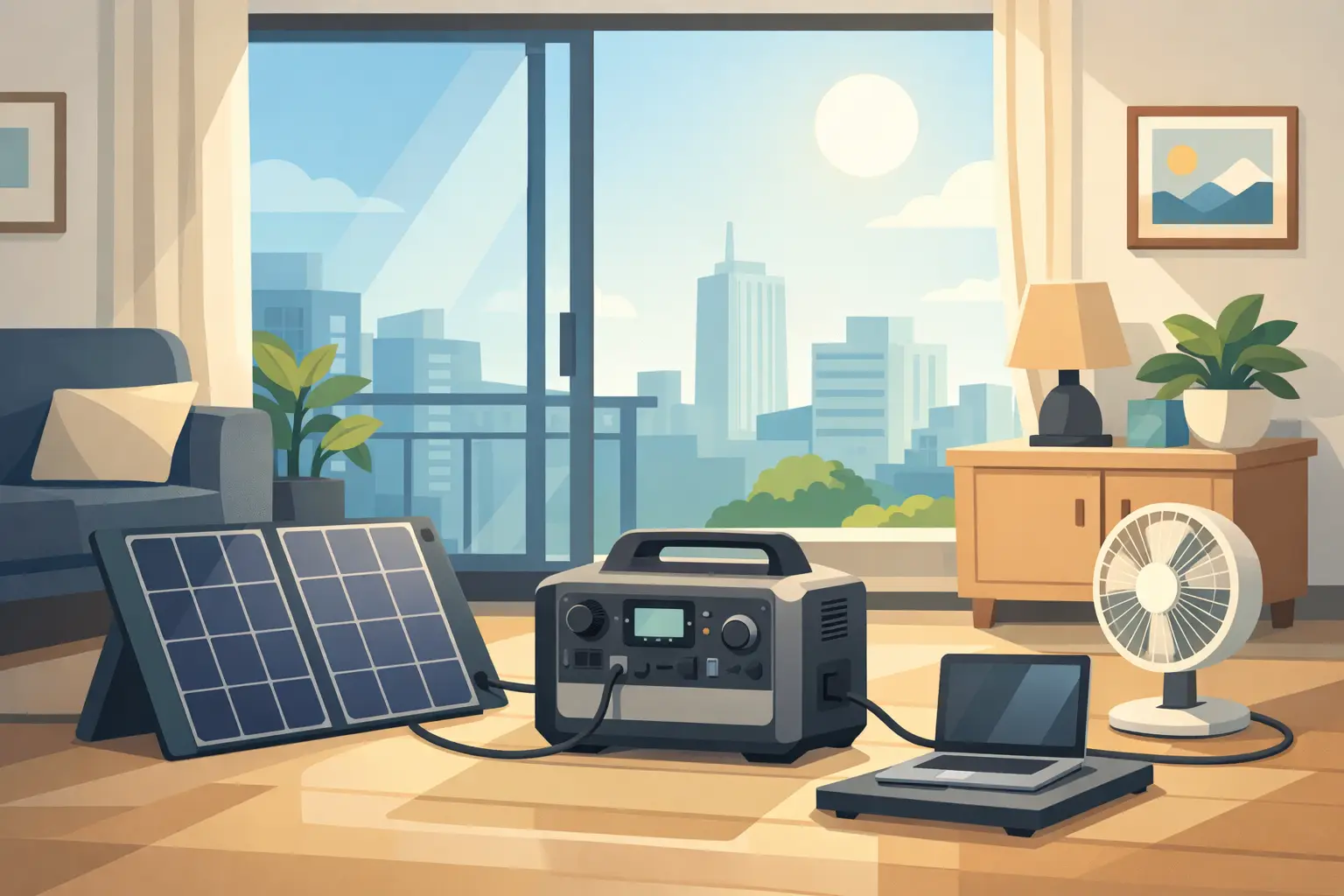
The lights go out, the elevator stops, the building generator only covers the hallway, and suddenly your apartment feels a lot smaller. That is exactly when a solar generator for apartment living stops being a nice idea and starts looking like essential backup power. If you rent, live in a condo, or simply do not have space for a full home battery system, the right portable setup can keep your phone charged, your router online, your medical device running, and your food colder for longer.
Apartment residents have a different set of power problems than homeowners. You usually cannot install permanent equipment, fuel storage is often restricted, and running a gas generator on a balcony is unsafe and against building rules in most cases. A battery-powered solar generator solves a lot of those issues because it is quiet, fume-free, and portable. The trick is choosing one that matches real apartment needs instead of buying too small and regretting it during the next outage.
Why a solar generator for apartment living makes sense
For apartment use, convenience matters just as much as raw power. You need something you can store in a closet, move without a struggle, and recharge without complicated installation. A solar generator gives you that flexibility. You can charge it from a wall outlet during normal days, top it off with solar panels when the sun is available, and use it indoors safely when the grid fails.
That matters even more in places where storms and grid instability are part of life. During hurricane season or extended weather events, apartment buildings may restore common-area power before individual units are fully back online. A portable power station gives you a layer of control when the building systems are out of your hands.
There is also an everyday value beyond emergencies. Many people use these systems for remote work, keeping internet service alive during brief outages, powering a fan during hot weather, or charging devices without relying fully on the grid. If utility costs are rising, having a small solar-ready backup system can also help you capture some of that sunlight instead of letting it go to waste.
What a solar generator can actually run in an apartment
This is where expectations need to stay realistic. A compact unit can usually handle phones, laptops, Wi-Fi routers, lights, CPAP machines, fans, and small electronics with no trouble. A mid-size unit may also support a mini fridge, television, modem setup, or work station for several hours. Larger systems can take on more, but apartment living usually rewards smart load management more than brute force.
Air conditioners, electric stoves, space heaters, and dryers are the problem appliances. They draw a lot of power and will drain most portable batteries fast. If your priority is comfort during hot weather, a fan and phone charging may be a much more practical goal than trying to run a full-size AC from a portable unit.
The best approach is to think in layers. First cover your essentials – communication, lighting, refrigeration support, and medical needs. Then consider comfort and convenience. That mindset keeps you from overspending while still building dependable outage protection.
How to choose the right size
Battery capacity matters more than marketing language. When shopping for a solar generator for apartment living, look at watt-hours first. That number tells you how much stored energy you have. Then check the inverter rating, which tells you how much power the unit can deliver at one time.
If your goal is just phones, laptops, a router, and a few lights, a smaller unit may be enough. If you want to keep a refrigerator running intermittently, support a home office, or power a CPAP overnight, you will likely want more capacity. The larger the battery, the more useful it becomes during a long outage, but also the heavier and more expensive it gets.
For most apartment users, the sweet spot is not the biggest model on the market. It is a unit large enough to handle essential circuits for one day with disciplined use, while still being portable enough to move and store easily. That balance matters in apartments, where every pound and every inch of storage space counts.
Charging options matter more than people think
A solar generator is only as useful as your ability to recharge it. In apartment settings, wall charging is often your main source. That is fine for short outages and day-to-day readiness. You keep the battery full, and when power drops, you are ready.
Solar charging is where apartment setups become more situational. If you have a balcony, terrace, or safe access to direct sun, portable folding panels can extend your runtime and help during multi-day outages. If your building has heavy shade, limited outdoor access, or strict rules about what can be placed outside, solar input may be limited. That does not make the power station a bad choice. It just means you should treat solar as a bonus rather than your only refill plan.
For coastal and island environments, panel durability matters. Heat, humidity, salt exposure, and sudden weather changes can wear down cheaper equipment fast. Choosing gear designed for tough conditions helps protect your investment and keeps your backup plan dependable when you need it most.
Safety and apartment-friendly use
One reason battery backup works so well in apartments is safety. Gas generators produce carbon monoxide and should never be used indoors, near open windows, or on enclosed balconies. A solar generator avoids that problem entirely because it has no fuel combustion.
That said, apartment-friendly does not mean careless. You still want proper ventilation around the unit, especially while charging. Keep it dry, avoid overloading it, and store it where temperatures stay within the recommended range. If you live in a hurricane-prone region, do not leave panels unsecured outdoors when weather turns.
Noise is another practical advantage. In a building where neighbors are only a wall away, quiet backup power is a real benefit. You can keep your essentials running at night without adding stress to an already stressful outage.
Features worth paying for
Not every extra feature is worth the price, but a few are genuinely useful for apartment residents. Fast wall charging is one of them. If a storm is approaching or outage risk is rising, being able to recharge quickly gives you more flexibility.
A clear display is also important. You want to see battery percentage, input wattage, output wattage, and estimated runtime without guessing. Multiple output ports help too, especially if you need to power phones, a router, lights, and a laptop at the same time.
Battery chemistry matters. Lithium iron phosphate batteries often make sense for backup use because they typically offer longer cycle life and better durability. For people buying with long-term preparedness in mind, that can be a smarter value than chasing the lowest upfront cost.
Expandable capacity can be helpful, but it depends on your apartment. If you have room and expect your backup needs to grow, expansion is attractive. If space is tight, a single well-sized unit may be the better fit.
Common mistakes apartment buyers make
The biggest mistake is buying based on vague promises instead of actual power needs. A product labeled as a solar generator sounds capable, but the real question is whether it has enough battery capacity and output for your essentials.
The second mistake is assuming solar panels will solve everything. In apartment living, sun access is not guaranteed. Your setup may depend far more on pre-charging from the wall than on daily solar production.
Another common issue is forgetting portability. A large unit may look great on paper, but if you cannot lift it safely, tuck it away, or reposition it during an outage, it becomes less practical. Reliability is not just about battery size. It is also about whether the system fits your space and routine.
When a bigger system is worth it
There are times when stepping up makes sense. If someone in the home relies on medical equipment, if you work remotely and cannot afford downtime, or if outages in your area tend to stretch for many hours, a larger-capacity unit earns its keep fast. The same is true if you want one solution that can move between apartment use, car travel, and emergency evacuation prep.
This is where buying from a company that understands storm readiness and harsh coastal conditions matters. A dependable backup system should not feel like a gadget. It should feel like part of your emergency plan. That is why many buyers look for practical support, tested equipment, and products chosen for real-world resilience, not just spec-sheet appeal.
For apartment residents, the best solar generator is rarely the flashiest one. It is the unit that fits your space, covers your essentials, recharges reliably, and stays ready when the grid does not. If you choose with that in mind, you are not just buying backup power. You are giving your household a steadier footing when normal power disappears.


