

Best Power Station for RV Travel
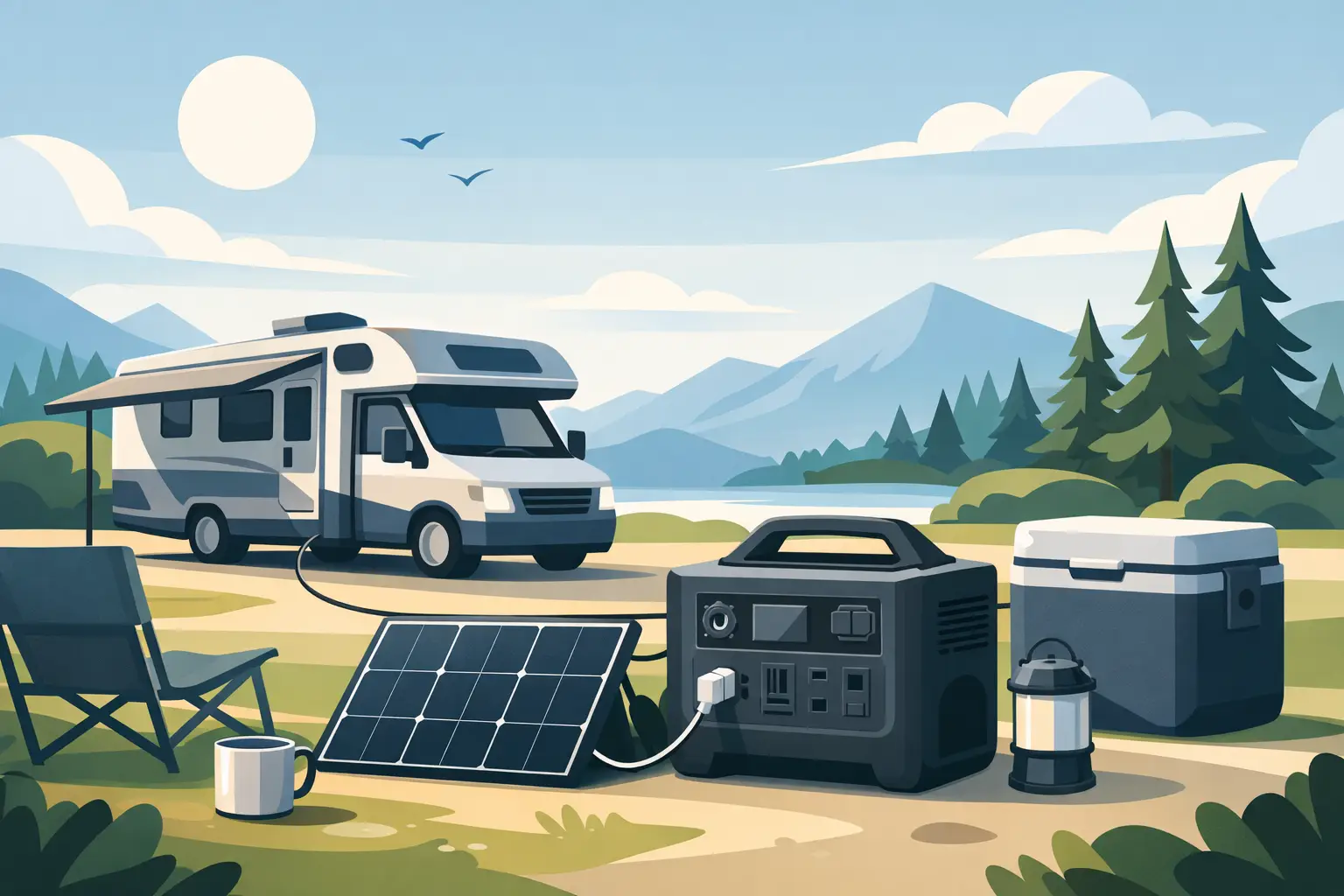
You notice your power setup matters most when the campground hookup fails, the weather turns, or you decide to stay somewhere quieter and farther out. A good power station for RV travel is not just about convenience. It is about keeping your refrigerator cold, your phones charged, your lights on, and your trip running on your schedule instead of the grid’s.
For RV owners, that matters even more in places where heat, humidity, salt air, and storm season are part of real life. A portable power station gives you backup power without the fuel storage, noise, and maintenance that come with a traditional generator. But not every unit is built for the same kind of travel, and bigger is not always better.
What a power station for RV travel really needs to do
A portable power station is essentially a large rechargeable battery with outlets. It can run devices directly, recharge from wall power, a vehicle, or solar panels, and give you a quieter way to stay powered off-grid. For RV travel, the real question is not whether you need one. It is what you need it to handle.
If your goal is light weekend use, a compact unit may be enough for phones, laptops, fans, lights, and a small cooler. If you want to support longer off-grid stays, work remotely from your RV, or keep essentials running during outages, you need more battery capacity, stronger inverter output, and faster recharging.
That is where many buyers get tripped up. They shop by price first, then realize the unit cannot handle a coffee maker, microwave, or portable AC. The better approach is to think in terms of real use, not just advertised numbers.
Start with your actual RV power habits
The best power station for RV travel depends on how you camp and what you expect to run. A couple taking short weekend trips has different needs than a family spending days off-grid.
Think about your must-have loads first. That usually means lights, phones, tablets, Wi-Fi gear, fans, a CPAP machine, or a 12V fridge. Then think about comfort items like a coffee maker, TV, blender, or microwave. High-draw appliances change the equation fast.
Battery capacity is usually measured in watt-hours. In plain terms, that tells you how much stored energy you have. Inverter output is measured in watts and tells you how much power the station can deliver at one time. You need enough capacity for runtime and enough output for startup demand.
For example, a 300 to 500Wh unit may work for charging devices and running lights overnight. A 1000 to 1500Wh unit starts to make more sense for serious RV use. If you want to support multiple appliances, longer stays, or some household-style comfort, you may be looking at 2000Wh or more.
Capacity matters, but so does recharge speed
A large battery sounds great until you have to refill it slowly. For RV travel, recharge speed matters almost as much as capacity because your travel days and weather conditions will not always cooperate.
If you drive often, vehicle charging can help top off the station between stops, but it is usually slow. Wall charging is faster when you have shore power. Solar charging is where things get especially useful, because it gives you a path to energy independence while you camp.
That said, solar performance depends on panel size, sunlight, and weather. In sunny coastal regions, portable solar panels can be a strong match for RV setups, especially if you want to stay off-grid longer without running a fuel generator. But you should treat solar as part of a system, not magic. A small panel paired with a large battery will not recharge quickly enough for heavy daily use.
If you expect to rely on solar regularly, choose a power station with strong solar input capability and pair it with enough panel wattage to make a real difference.
Choosing a unit that can handle harsh conditions
RV travel is not gentle on equipment. Heat builds up fast. Humidity lingers. Roads shake everything. In coastal environments, salt in the air can shorten the life of poorly built gear.
That is why durability should be part of the buying decision. Look for a unit with solid construction, quality battery chemistry, and a cooling system that can handle repeated use. Lithium iron phosphate batteries are often a smart choice because they generally offer longer cycle life and better thermal stability than older lithium options.
You should also pay attention to practical details such as carry handles, port covers, display visibility, and the overall footprint. In an RV, space is limited. A power station that is technically powerful but awkward to store can become a daily frustration.
For buyers in hurricane-prone or outage-prone areas, there is another advantage here. A good RV power station can pull double duty at home. When you are not traveling, it can serve as backup power for essentials during grid interruptions.
When a power station makes more sense than a generator
There is still a place for fuel generators, especially for long runtimes and very heavy loads. But many RV owners are moving toward battery power for good reason.
A portable power station is quieter, cleaner, and easier to use. There is no gasoline to store, no engine maintenance, and no exhaust to manage. That makes a difference at campgrounds, in enclosed storage areas, and during emergency use at home.
The trade-off is runtime and peak power. If you plan to run roof air conditioning for hours, a battery-only setup may require a large investment in capacity and solar. For lighter use or strategic backup of essentials, a power station is often the more practical choice.
For many RV travelers, the answer is not either-or. It is deciding which source fits the loads you care about most.
Features worth paying for
Some features sound nice in product listings but add little in real use. Others make a major difference.
Fast AC charging is valuable because it lets you recover quickly when you have access to shore power. Pass-through charging can help if you want to charge the station while running devices. A clear display matters more than people think, especially when you need to track input, output, and remaining runtime. Multiple AC, USB-A, USB-C, and 12V ports make the station more useful across different devices.
Expandability can also be worth considering. If your needs may grow, a system that supports extra battery capacity can protect your investment. That is especially helpful for RV owners who start with weekend travel and later move into longer off-grid trips.
App control is convenient, but it should never matter more than battery quality, inverter strength, and charging performance. Reliability comes first.
How to avoid buying too small or too big
Undersizing is the more common mistake. Buyers choose a cheaper unit, then overload it or run out of stored power halfway through the evening. The fix is simple: build your estimate around the devices you truly need, not the ones you hope to use rarely.
Oversizing can also be a mistake if it leaves you with a heavy, expensive unit that does not fit your RV lifestyle. If you mostly stay at powered sites and only want emergency backup for a few essentials, a massive system may be unnecessary.
A practical middle ground works for many travelers. Choose a station large enough for core overnight use, then add solar if you want more freedom between hookups. That gives you resilience without overcomplicating your setup.
Why this choice matters beyond the campground
The right power station for RV travel does more than support road trips. It gives you a flexible backup power source for outages, storms, roadside stops, remote workdays, and overnight parking where hookups are unavailable.
That kind of flexibility matters even more for households and travelers who already think in terms of preparedness. If you live in a region where outages are common or weather conditions can change quickly, battery backup is not just an upgrade. It is part of a smarter energy plan.
A dependable unit paired with portable solar can help you travel with more confidence and come home with a backup solution that is ready when the grid is not. That is the kind of equipment that earns its space.
If you are shopping now, buy for the trip you actually plan to take next, but leave enough room for the one after that.


