

Are Solar Batteries Worth It?
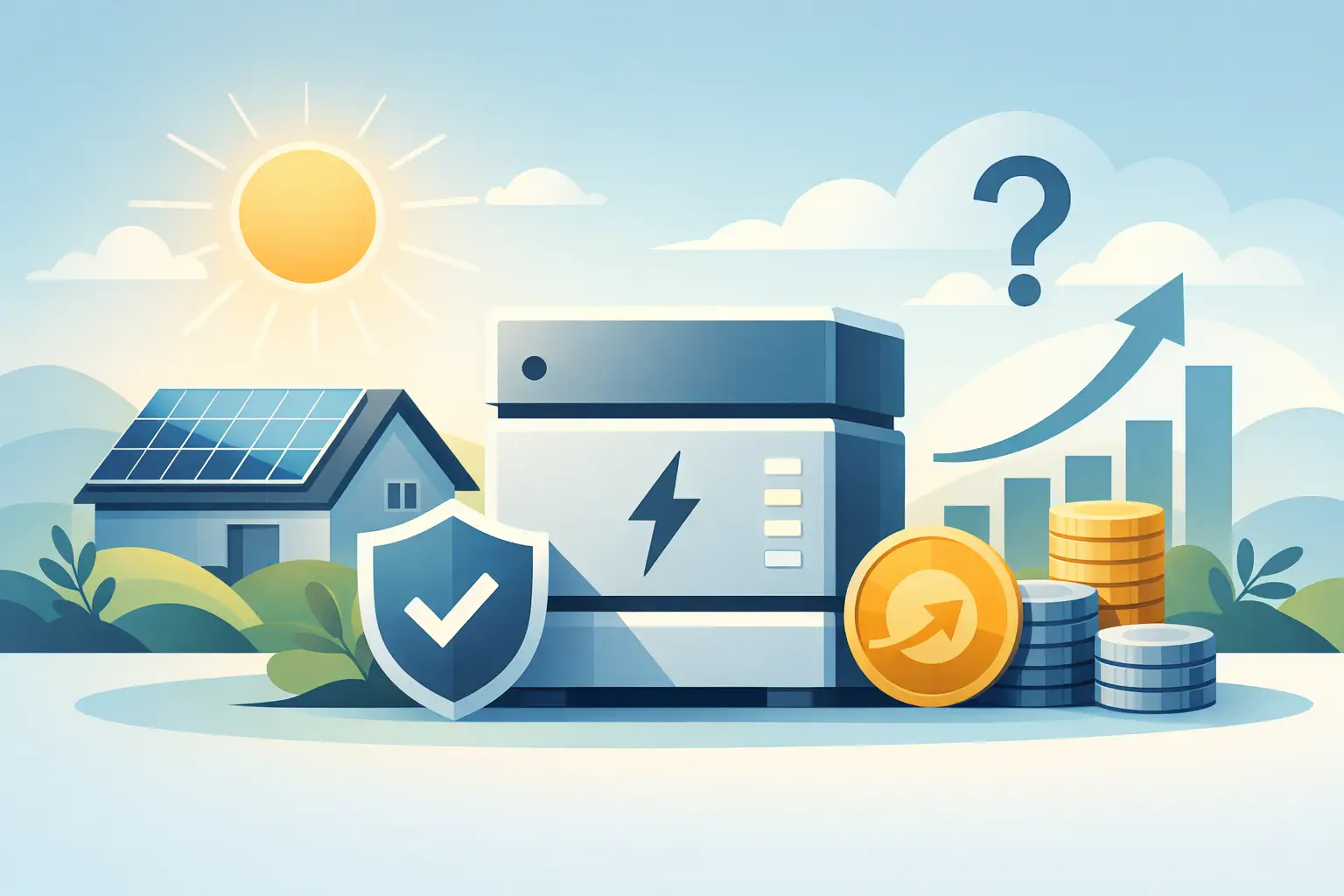
The question usually gets real when the power goes out at 2 a.m., the fridge goes quiet, the Wi-Fi drops, and you start thinking less about theory and more about what stays running by sunrise. That is exactly why so many homeowners and small business owners ask, are solar batteries worth it?
For many people, the answer is yes – but not for the same reason. Some want backup power during outages. Others want to use more of their own solar energy instead of sending it back to the grid. Some are trying to lower electric bills, while others care most about keeping lights, security systems, medical devices, or business equipment running when the grid fails. The value of a solar battery depends on what problem you need it to solve.
Are solar batteries worth it for backup power?
If your area deals with frequent outages, storm threats, or unstable grid service, battery storage can make immediate sense. A solar battery gives you stored electricity you can use when utility power goes down. That changes solar from a daytime savings tool into a real backup power system.
This matters even more in coastal and island environments, where grid disruptions can last longer and weather risk is part of normal planning. In that situation, a battery is not just about convenience. It is about continuity. You keep refrigeration, communications, fans, lighting, and other essentials available without needing to rely completely on fuel delivery or a noisy generator.
For homes, that can mean less food loss, less stress, and a safer response during hurricane season. For small businesses, it can mean protecting inventory, keeping payment systems alive, and avoiding a full shutdown over a short or medium-length outage.
If backup power is your top priority, the battery can be worth it even before you calculate every dollar of return.
When solar batteries make the most financial sense
The financial case is more variable. Solar batteries are not cheap, so the savings need to come from somewhere specific.
The strongest money-saving case usually happens when utility rates are high, power outages are costly, or net metering rules are weak. If your electric company gives little credit for excess solar sent to the grid, storing that energy for later use becomes more valuable. Instead of exporting power in the middle of the day and buying it back at a higher rate later, you can use your own stored electricity at night.
That is where batteries can help reduce bills over time. They let you shift your solar energy to when it is most useful, not just when the sun is shining.
There is another kind of financial value people often miss. Outages have a cost. Spoiled food, hotel stays, business interruption, damaged electronics, and emergency fuel purchases all add up fast. A battery may not always produce the fastest pure payback on paper, but it can reduce the hidden costs of unreliable power.
For many buyers, the calculation is not just monthly savings. It is monthly savings plus outage protection plus peace of mind.
When a solar battery may not be worth it
There are cases where the answer is no, or at least not yet.
If your grid is very reliable, your utility rates are low, and your solar setup already gets favorable net metering, a battery may take longer to justify financially. In that case, solar panels alone might deliver the better return first.
It may also be hard to justify a large home battery system if your actual backup needs are small. If all you really want is to charge phones, run a few lights, and power a laptop during occasional outages, a portable power station or compact solar generator may be the smarter buy. You get backup capability without the cost and installation complexity of a whole-home battery system.
The same goes for people who expect one battery to power everything in the house without compromise. That usually drives up system size and cost. If your expectations are unrealistic, the battery can feel disappointing instead of worthwhile.
A better approach is to match the system to the loads that matter most.
What you are really paying for
A solar battery is not just a box of stored electricity. You are paying for resilience.
You are paying for power at night, during outages, and during periods when solar production is low. You are paying for quieter backup compared with a generator. You are paying for automatic switchover in many systems, so critical circuits stay powered without extension cords and last-minute scrambling.
You are also paying for control. Instead of being fully exposed to grid failures or rising utility costs, you have another layer of independence.
That matters more in some places than others. In regions where storms, heat, humidity, and outage risk are part of everyday life, dependable storage has a practical value that goes beyond a spreadsheet.
Solar battery vs generator
A lot of buyers are not really deciding between a battery and nothing. They are deciding between a battery and a generator.
Generators still have a place. They can be effective for long outages, and fuel-based systems may offer lower upfront cost for high power output. But they also come with noise, exhaust, fuel storage, maintenance, and startup issues. During major weather events, fuel access can become a problem right when you need backup power most.
A solar battery is cleaner, quieter, and easier to live with day to day. It can also work continuously with solar panels to recharge from sunlight, which is a major advantage when grid restoration takes time. The trade-off is runtime and capacity. If you need to power heavy loads for extended periods, you may need a larger battery bank or a hybrid setup.
For many homes and small businesses, the best answer is not battery versus generator in absolute terms. It is choosing the right backup strategy for your risk level, energy use, and budget.
How to tell if a battery is worth it for your property
Start with one question: what must stay on when the power goes out?
If your answer includes refrigeration, internet, fans, lights, water pumps, security systems, or work equipment, battery backup moves up the priority list quickly. If your answer is the full home, then the next step is understanding how much storage that really requires.
Then look at how often outages happen, how long they last, and what they cost you. A neighborhood with rare short outages has different needs than a property that loses power several times a year during storms.
After that, look at your current electric bill and how your utility handles excess solar. If power is expensive and self-consumption has value, a battery has more room to pay back.
Finally, consider your environment. Heat, salt air, and severe weather are not minor details. They affect equipment performance and long-term reliability. That is why product quality and system design matter so much. A battery solution should be built for real-world conditions, not just ideal ones.
The right size matters more than the idea
One reason buyers hesitate is that they picture an all-or-nothing choice. It is not.
You can start with a smaller backup solution for essentials, especially if you want immediate protection without committing to a full-home system. Portable power stations, solar generators, and expandable battery systems can cover a lot of common outage needs. They are especially useful for renters, smaller homes, apartments, boats, job sites, and people who want emergency power they can also move or use outdoors.
A larger home battery system makes more sense when you want automatic backup for fixed circuits or a stronger long-term energy independence plan. The key is sizing for your actual priorities instead of buying too little to matter or too much to justify.
That is where a practical retailer like SOL242 can make a real difference, because matching the product to the outage scenario is what turns a battery from an expense into a dependable asset.
So, are solar batteries worth it?
If your goal is the cheapest possible solar setup, not always. If your goal is reliable backup power, better control over your energy, and more protection from outages and rising utility costs, often yes.
The strongest value usually comes when batteries solve a real problem: keeping essentials running, reducing dependence on an unreliable grid, and helping your property stay functional when conditions are not ideal. That is especially true in places where storm readiness is part of responsible planning, not a once-a-year thought.
A good solar battery should do more than sit on a spec sheet. It should keep your household safer, your business steadier, and your next outage far less disruptive. If that is the outcome you need, the investment starts to look a lot more worthwhile.


