

Expandable Battery Backup Systems Explained
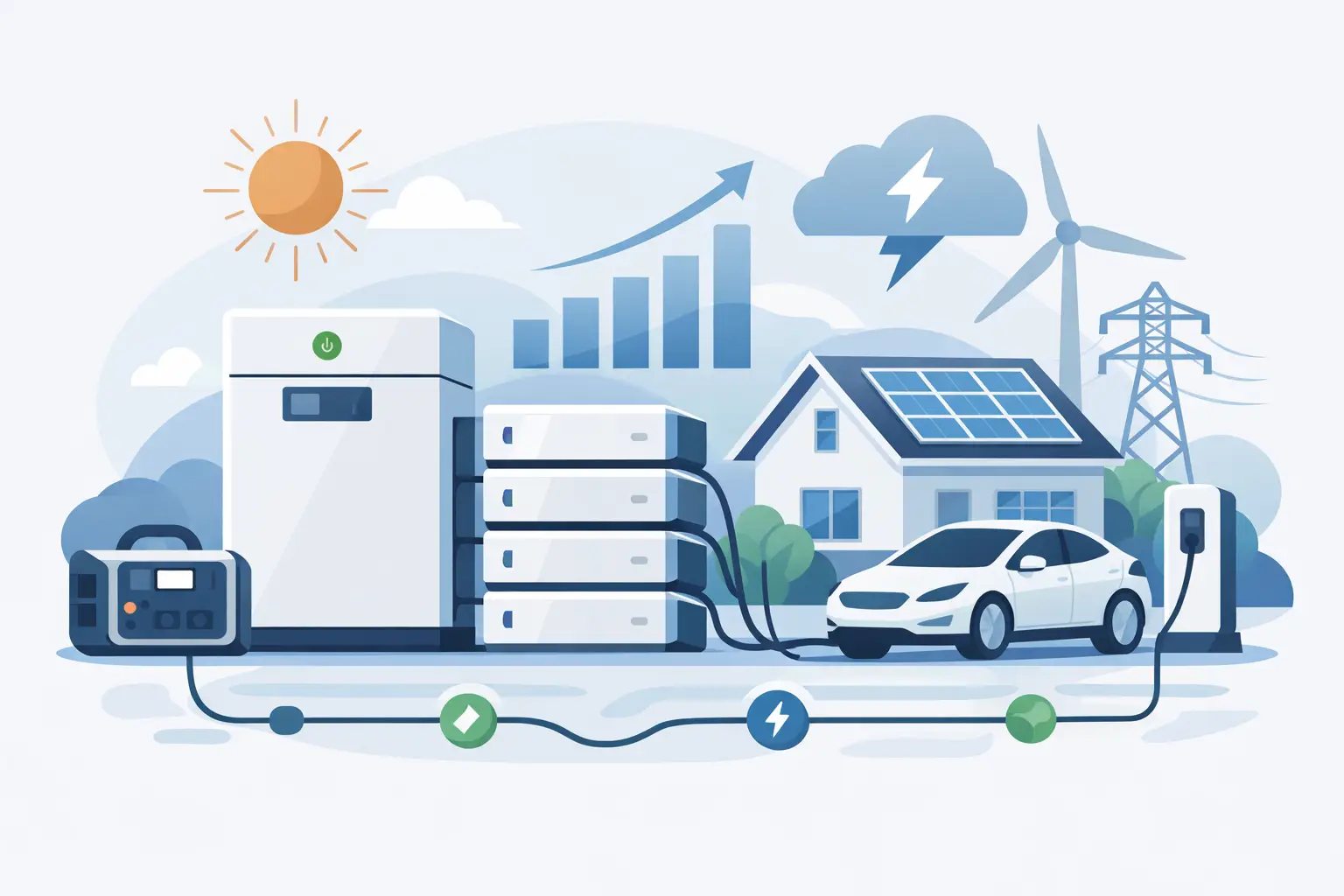
A one-box backup unit can keep a phone charged and a few lights on. That is helpful, but it is not the same as keeping a home office running through a long outage, protecting cold storage at a small business, or maintaining comfort after a storm. That is where expandable battery backup systems stand out. They give you a starting point you can actually live with today, then let you add capacity later as your needs grow.
For households and businesses that deal with unreliable power, storm season, or rising utility costs, that flexibility matters. You do not always know on day one exactly how much backup power you will want six months from now. You may start with the basics, then decide you also want refrigeration coverage, internet uptime, fan operation, or support for a medical device. An expandable setup leaves room for that decision.
What expandable battery backup systems actually are
Expandable battery backup systems are energy storage setups built around a main power unit that can be paired with one or more extra battery modules. Instead of buying all your storage capacity upfront, you begin with a base system and increase runtime by adding batteries over time.
The idea is simple. The inverter does the work of converting stored battery power into usable household electricity, while the battery modules hold more energy for later use. In practical terms, that means the same essential system can cover a short blackout today and be upgraded for longer outages tomorrow.
This matters for buyers who want real backup power without overspending on day one. It also matters for people who are still learning their usage patterns. A family that first wants to cover lights, internet, and device charging may later decide the system also needs to support a refrigerator, security equipment, or part of an air conditioning load.
Why expandable battery backup systems make sense in outage-prone areas
In places where power interruptions are not rare events, fixed-size systems can feel limiting. If your needs increase, replacing the whole unit is expensive and frustrating. Expandable battery backup systems reduce that risk because they are built with growth in mind.
That flexibility is especially valuable in coastal and storm-exposed environments. Outage length can vary wildly. One event may knock power out for two hours. Another may stretch into a full day or longer. A modular battery setup gives you a way to prepare in stages rather than trying to predict every future scenario perfectly.
There is also a budget advantage. Many homeowners and small business owners want dependable backup power, but they do not want to commit to the largest possible system upfront. Starting with a core unit and adding storage later is often a more practical path. You get immediate protection, then improve runtime when your budget or priorities allow.
The biggest benefit is not power – it is planning freedom
A lot of product discussions focus only on watt-hours and surge ratings. Those specs matter, but the larger benefit is planning freedom. You can build around your real priorities instead of forcing your needs into a fixed package.
If your first goal is keeping essentials online during outages, you can size around that. If your second goal is reducing generator use, you can add battery capacity later. If your third goal is pairing the system with portable solar panels for longer independence, an expandable design makes that transition easier.
That staged approach is a good fit for people who are preparing seriously but do not want to guess. It is also useful for rental properties, vacation homes, and small commercial spaces where energy needs may change seasonally.
How to know if an expandable system is better than a standard one
Not every buyer needs modular capacity. If you only want to charge phones, keep a router on, and run a lamp for a few hours, a simple portable power station may be enough. Expandability becomes more valuable when runtime matters as much as output.
For example, running a refrigerator is not just about whether the unit can start it. It is also about how long the battery can support it while other essentials stay powered. The same goes for office equipment, freezers, point-of-sale systems, fans, and communication devices. If your concern is lasting through a longer outage rather than surviving a short interruption, expansion starts to make sense.
It is also the better option when your load is likely to grow. Many people underestimate what they will want backup for once they experience their first extended outage. What begins as emergency coverage often becomes part of a wider energy plan.
What to look for before you buy
The first thing to evaluate is not the battery count. It is the power unit itself. Make sure the inverter can handle the appliances or circuits you actually need. A system with lots of battery storage but not enough output power will still leave important equipment offline.
Next, look at expansion limits. Some systems allow one extra battery. Others support several. That difference matters if your long-term goal is whole-room backup, small business continuity, or longer off-grid use. Check whether the system is designed for future scaling or just minor runtime extension.
Charging options matter too. If grid charging is your only plan, that may be fine for occasional outages. But if you want better resilience, choose a system that can recharge from solar as well. During extended outages, solar input can be the difference between a battery that buys time and a battery that keeps working day after day.
Build quality should not be treated as a minor detail. Heat, humidity, and salt-heavy air are tough on equipment. Buyers in coastal regions should pay close attention to storage conditions, operating temperature guidance, and overall product durability. A backup system is only useful if it performs when conditions are not ideal.
Sizing expandable battery backup systems the practical way
The easiest sizing mistake is shopping by product popularity instead of actual use. Start with your must-run items. Think in terms of essentials first: refrigeration, lights, communications, internet, fans, security systems, work equipment, and medical devices if applicable.
Then separate two questions. First, how much power do those items need at one time? Second, how long do you need them to run? The first question helps determine inverter size. The second determines battery capacity.
This is where expandable battery backup systems have an advantage. You do not have to solve every future need in one purchase. You can size your inverter for realistic use now and add more energy storage if your runtime target grows. That makes the buying process more forgiving.
A homeowner might begin with enough capacity to cover evening outages and overnight essentials. Later, they may add a battery to stretch coverage through a full day. A small shop may start with internet, lighting, and checkout equipment, then expand to support refrigeration or longer operating continuity during storm recovery.
Solar pairing makes the system far more useful
Battery backup without recharging is temporary by definition. Pairing your system with solar turns it into a more resilient power plan. Even portable solar panels can help maintain essential loads during long disruptions, especially when fuel access is limited or generator noise is not practical.
That does not mean solar replaces careful sizing. Weather conditions, panel placement, and daily consumption all affect performance. Still, for buyers who want more than short-term emergency coverage, a battery system that accepts solar charging is usually the smarter choice.
For island living and hurricane preparation, this combination is especially practical. You are not just storing power. You are creating a recovery tool that can support communication, food safety, and basic comfort when the grid is down.
Where expandable systems fit best
These systems are a strong fit for homeowners who want backup without committing to a fully built-out system on day one. They also make sense for small businesses that need continuity but may have changing load demands over time.
They are useful in apartments and condos where portability matters, in vacation properties that need flexible protection, and in off-grid or semi-off-grid setups where capacity may expand in phases. They also suit buyers who want to reduce dependence on gas generators, especially for overnight use or indoor-safe power access.
For many customers, the smartest move is not buying the biggest system available. It is buying the right foundation. That is the real value of expandability.
A backup plan should match the way real life changes. If your needs may grow, your power system should be able to grow with them.


