

What Size Solar Generator Do I Need?
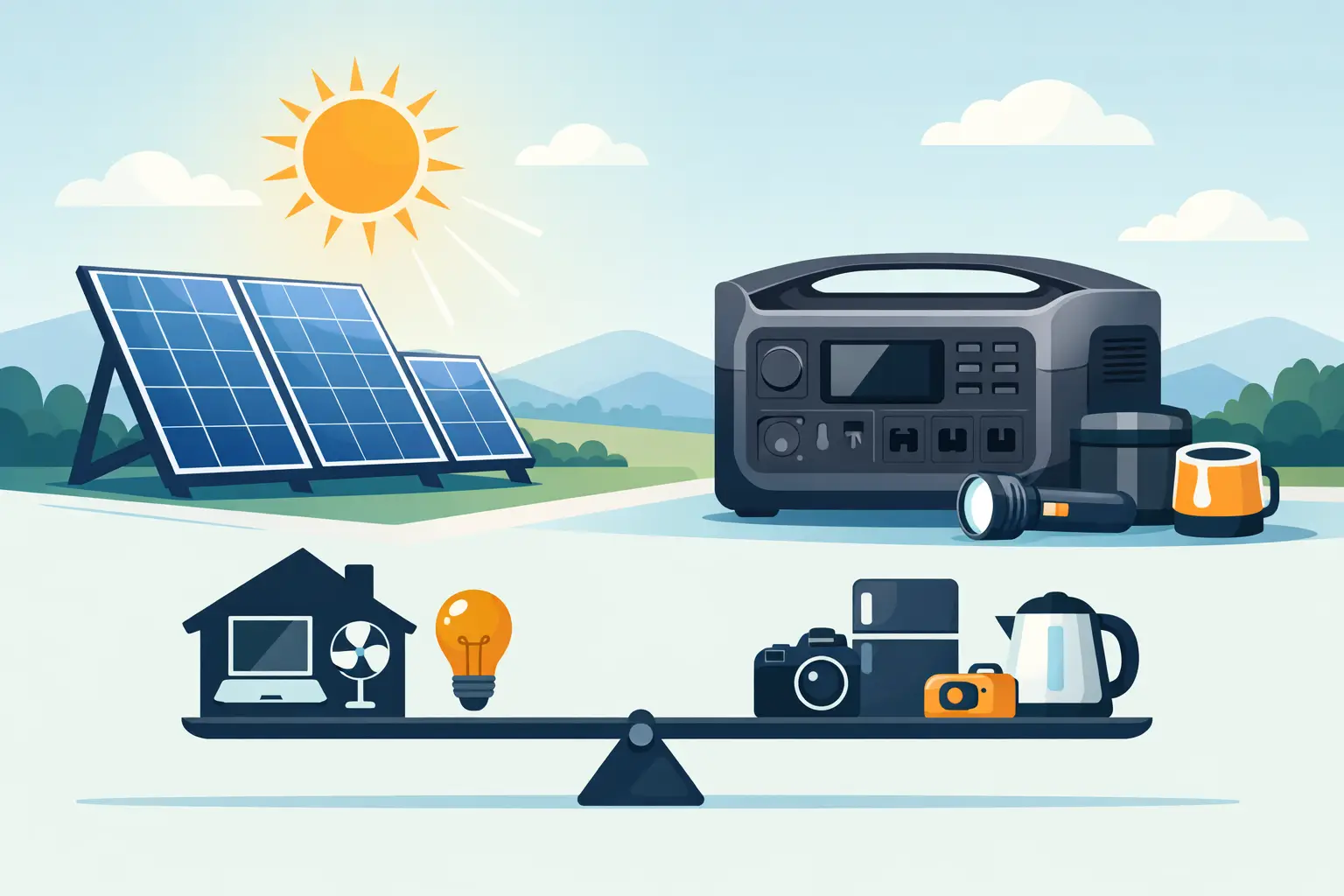
When the power goes out, size stops being a technical detail and starts being the whole game. If you are asking, what size solar generator do I need, the real question is how much power you need to keep life moving when the grid does not. That answer depends on what you want to run, for how long, and whether you are planning for a short outage, a long storm recovery, or everyday energy independence.
For most people, the biggest mistake is buying too small. A unit that can charge phones and keep a light on may sound useful, but it will not do much for a refrigerator, internet router, medical equipment, fans, or a small business point-of-sale system. On the other hand, going too large can mean paying for capacity you rarely use. The right size sits in the middle – enough backup power for your real priorities without overspending.
How to figure out what size solar generator do I need
Start with the appliances and devices that matter most during an outage. Think in terms of essentials, not everything in the building. In most homes, that means a refrigerator, lights, phones, Wi-Fi, a fan, and maybe a TV or laptop. In a small business, it could be internet equipment, a register, security systems, and a few lights.
There are two numbers that matter. The first is running watts, which tells you how much power a device uses while operating. The second is battery capacity, usually measured in watt-hours, which tells you how long the generator can keep those devices running.
If a refrigerator uses 150 watts on average and your router uses 15 watts, your basic running load is 165 watts before you add anything else. If your power station has 1,000 watt-hours of usable battery, that setup could run for roughly 6 hours, allowing for inverter losses and cycling. Add more devices and runtime drops. Increase battery capacity and runtime improves.
This is why shopping by vague labels like small, medium, or large usually leads to the wrong decision. You want to match your actual load to the generator’s output and storage.
Start with your outage priorities
A small solar generator is usually enough if your goal is personal backup. That means charging phones, powering lights, running a modem, keeping a laptop going, or supporting a CPAP overnight. In many cases, a unit in the 300W to 600W range with around 300Wh to 600Wh of battery capacity is enough for that kind of light-duty use.
A mid-size unit is where many households land. If you want to keep a refrigerator cold, run a few lights, power your router, charge devices, and maybe use a fan, you are often looking at 1,000W to 2,000W of output and at least 1,000Wh to 2,000Wh of battery storage. This is the range that makes sense for many storm-prep buyers because it supports actual continuity, not just convenience.
A large solar generator is better for heavier backup needs. If you want to run multiple appliances, support a freezer, use kitchen devices in short bursts, or cover part of your home office or small business during a long outage, you may need 2,000W to 3,600W or more, paired with expandable battery storage. That extra capacity matters in places where outages can last longer than expected and access to fuel is uncertain.
Output vs battery size: both matter
People often focus on the battery and forget the inverter. That is a problem because a solar generator can have plenty of stored energy and still fail to run your appliance if the output is too low.
Take a microwave or a coffee maker. These may only run for a short time, but they can draw 900W to 1,500W while in use. Some refrigerators and pumps also have startup surges that briefly demand more power than their normal running wattage. If your generator cannot handle that surge, the device may not start at all.
So when deciding what size solar generator you need, check three things: the continuous output, the surge capacity, and the battery storage. If any one of those falls short, your system will feel underpowered when you need it most.
Common sizing scenarios
If you only need emergency basics, such as phones, lights, a router, and a small fan, a compact unit can work well. This is a good fit for apartments, weekend cabins, and people who want a grab-and-go backup source.
If your goal is food protection and communication during outages, move up a size. Refrigeration changes the equation because it adds both startup demand and ongoing runtime needs. A power station around 1,500Wh with enough output for appliance startup is often a safer minimum.
If you are preparing for hurricane season or extended grid instability, think beyond the first six hours. Longer events favor larger battery banks, faster solar recharge, and the ability to prioritize loads over multiple days. A generator that looks large on paper can start to feel small when it has to carry a refrigerator, fans, lights, phones, and internet through repeated overnight cycles.
For off-grid or remote use, sizing depends on whether the generator is your backup or your main power source. If it is your main source, daily solar input becomes just as important as battery capacity. You need enough panel wattage to refill the battery in real conditions, not just perfect sunlight.
Solar charging changes the answer
A solar generator is not just a battery box. Its long-term value comes from being rechargeable by solar panels, especially when fuel supply is unreliable or costly. But solar input is not automatic unlimited power. The panels must be sized to match the battery and your daily use.
For example, a 1,000Wh battery drained overnight will need meaningful solar input to recharge during the day. If you only have a small panel, recovery can take far longer than expected. Cloud cover, heat, panel angle, and seasonal conditions all affect charging speed.
This matters even more in coastal and island environments where storm prep is a real purchasing decision, not a hobby. The right setup is not just the generator itself. It is a generator and solar pairing that can restore enough energy each day to keep your essentials online.
A simple way to calculate your size
First, list what you must run. Next to each item, note its wattage. Then estimate how many hours per day you need it during an outage.
If a router uses 15 watts for 24 hours, that is 360Wh per day. If a fan uses 50 watts for 8 hours, that is 400Wh. If your refrigerator averages 150 watts for 8 hours of compressor runtime across the day, that is about 1,200Wh. Add them together and you get roughly 1,960Wh per day.
That does not mean you must buy a 1,960Wh unit exactly. You also need a buffer for inefficiency, weather, battery aging, and surprise loads. In practice, many buyers are better off rounding up rather than trying to size perfectly on the edge.
When to size up
If you expect long outages, have medical needs, want refrigeration security, or need dependable backup for a home office or business operations, size up. If your area deals with storms, heat, and unstable service, size up. If you are buying one system to cover multiple roles like home backup, outdoor use, and emergency charging, size up.
The trade-off is cost, weight, and portability. Larger units are heavier and more expensive, and some people do not need that much capacity. But undersizing has its own cost. It can leave you rationing power, rotating devices constantly, or discovering too late that the system handles chargers but not the appliances that matter.
The best answer is usually based on use case
If you want a quick rule of thumb, a small solar generator is enough for devices and lights, a medium system is better for outage essentials including refrigeration, and a larger expandable system is the right move for extended backup, storm readiness, and partial home continuity.
For many households, the sweet spot is not the cheapest unit on the page. It is the one that can cover your core loads overnight and recharge effectively during the day. That is where backup power starts to feel dependable instead of limited.
A good solar generator should give you more than electricity. It should give you options when the grid is down, fuel is hard to get, or the next storm is already on the radar. Buy for the outage you cannot afford to lose, not the one you hope will stay short.


