

Whole Home Backup Versus Portable Power
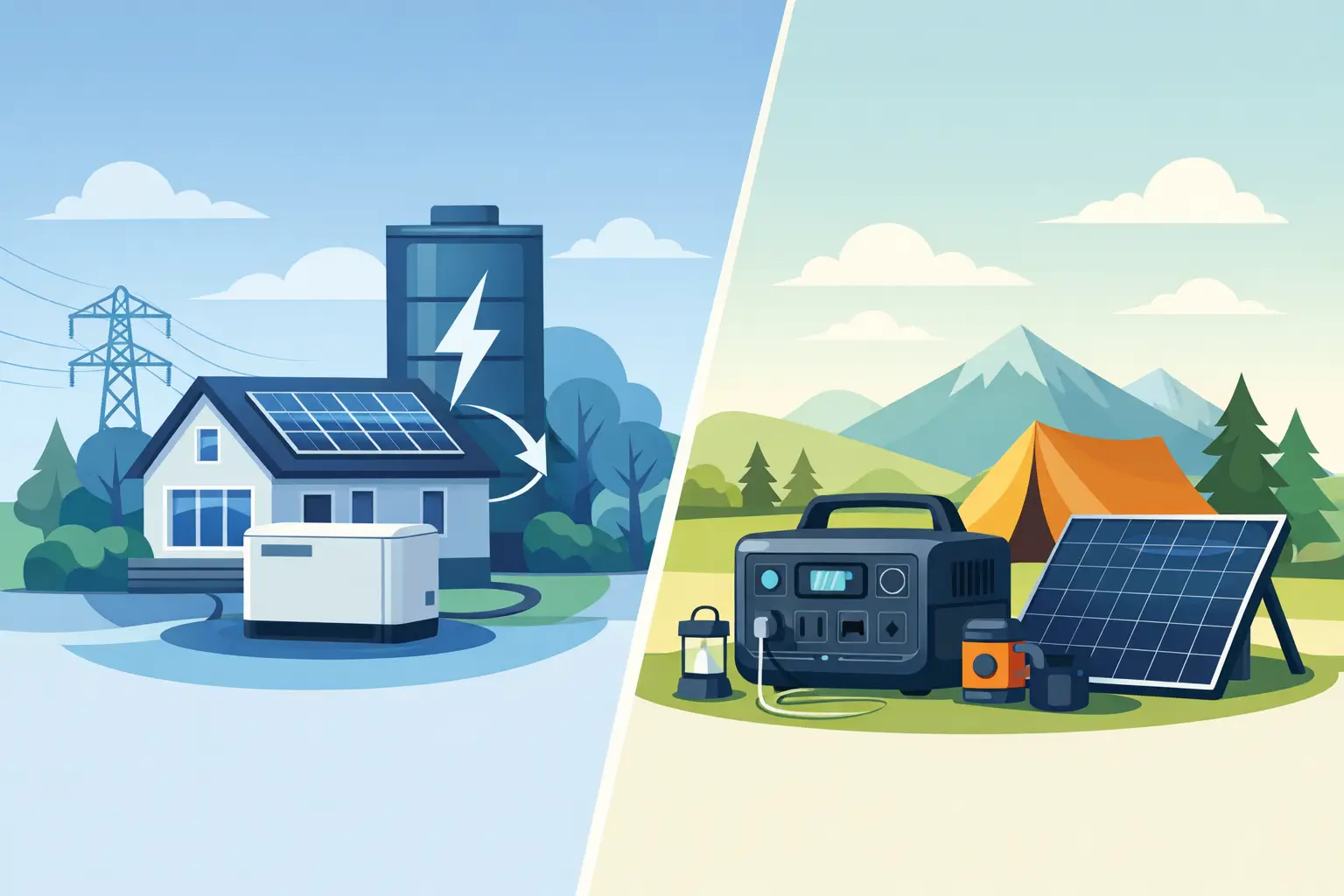
When the power goes out at 2 a.m., the question is not whether you have electricity. It is whether your refrigerator stays cold, your phone remains charged, your water pump keeps running, and your family has a safe place to wait out the outage. Choosing whole home backup versus portable power determines how much of your normal life can continue when the grid cannot.
For many homeowners and business owners, portable power is the fastest way to prepare. For others, a permanent battery system is the right answer because losing critical circuits for even a few hours creates real risk. The best choice depends on what you need to keep running, how often outages happen, and whether you want immediate flexibility or automatic protection.
Whole Home Backup Versus Portable Power at a Glance
A whole home backup system is a battery bank installed at a property and connected to the electrical panel through professionally designed equipment. Depending on system size and load management, it can support an entire home or a selected group of priority circuits. When paired with solar panels, it can recharge from the sun during extended outages and reduce reliance on utility power over time.
Portable power refers to power stations, solar generators, and portable solar panels that can be moved where they are needed. A portable station may run phones, lights, internet equipment, a television, a CPAP machine, a small refrigerator, power tools, or other essential devices. Larger units can handle more demanding loads, but they are not automatically connected to your home wiring.
The central difference is simple: whole home backup protects the property automatically, while portable power protects the devices you choose to plug in.
Choose Whole Home Backup When Continuity Is Non-Negotiable
A permanent home battery makes the most sense when your priorities involve fixed equipment or consistent power throughout an outage. Think refrigeration for a large household, medical equipment, security systems, internet service, water pumps, garage doors, lighting, and climate control. It is especially valuable when the property may be empty during an outage and nobody is available to set up equipment manually.
With the right installation, a whole home system can detect a grid failure and switch to battery power automatically. That matters during overnight outages, sudden storm events, and situations where every minute without power adds inconvenience or cost. A property manager may also see value in protecting common-area lighting, gate access, communications, or critical systems without relying on a tenant to operate a portable unit correctly.
Whole home backup has a higher upfront cost because it includes battery storage, electrical integration, permitting where required, installation, and often solar equipment. It also requires planning. You need to understand your major loads, especially air conditioning, electric water heating, electric cooking, pool pumps, dryers, and other equipment that can drain batteries quickly.
That does not mean a home battery must power every appliance at once. Many households choose a critical-load design. The system might keep refrigeration, lights, outlets, internet, fans, and a water pump available while pausing high-demand appliances. This approach can reduce cost while still delivering meaningful storm resilience.
A whole home system is often right for:
- Homes where outages regularly last many hours or days
- Families relying on medical, security, pumping, or refrigeration equipment
- Vacation homes and rental properties that need automatic protection
- Small businesses that cannot afford lost inventory or downtime
- Owners who want solar charging and less dependence on utility power
In the Bahamas and other coastal regions, permanent systems should be selected and installed with heat, humidity, salt exposure, and storm readiness in mind. Equipment placement, enclosure ratings, installation quality, and battery operating conditions are not minor details. They directly affect long-term performance.
Choose Portable Power When Flexibility Matters Most
Portable power stations are built for fast deployment. You can use one in a bedroom during an outage, bring it to a job site, move it between properties, take it camping, or keep it ready for evacuation. There is no permanent electrical work required to charge a phone, run a lamp, or power a router.
That flexibility is a major advantage for renters, apartment residents, boat owners, outdoor users, and households building their preparedness plan in stages. A portable power station can provide immediate backup without committing to a full installation. Add portable solar panels, and you have a practical way to recharge essential devices when the outage extends beyond one night.
Portable units also work well as a first layer of protection. A modest station can keep communications active and support a few essentials. A larger solar generator can run a refrigerator, freezer, fan, television, internet setup, and selected small appliances, provided you manage usage carefully.
The trade-off is that portable power requires hands-on decisions. You must move the unit if it is needed in another location, connect devices directly, monitor battery capacity, and plan recharging. It will not automatically energize your home circuits when utility power drops. For many people, that is completely acceptable. For a property with a pump, medical needs, or high-value refrigerated inventory, it may not be enough on its own.
Start With the Loads You Cannot Lose
Do not begin with a battery size. Begin with the consequences of losing power. Write down what must operate for the first four hours, the first day, and a multi-day outage. This makes the whole home backup versus portable decision much clearer.
For a household, the first priorities may be refrigeration, lights, phones, Wi-Fi, fans, and a CPAP machine. For a small business, priorities could include point-of-sale equipment, security cameras, communications, a freezer, or a water pump. An off-grid cabin may need lighting, a refrigerator, charging, and tools, while a larger home may need additional capacity for well pumps or select air conditioning.
Next, consider watts and runtime. A device’s wattage tells you how much power it uses while operating. Battery capacity tells you how long the battery can support that load. A refrigerator may use a manageable amount of energy over a day, but its startup surge can be much higher than its running wattage. Pumps and compressors behave similarly. This is why selecting equipment based only on a product’s peak output can lead to disappointment.
If your priority list is mainly plug-in devices and one or two appliances, portable power may be an efficient fit. If your list includes fixed circuits, large refrigeration, water pumps, or automatic operation, start evaluating a professionally installed battery system.
Hurricane Preparedness Changes the Calculation
Storm preparation is not only about battery capacity. It is about what happens before, during, and after severe weather. Portable stations should be fully charged well before conditions deteriorate, stored in a dry accessible location, and paired with an organized plan for cords, essential devices, and safe solar charging after the storm passes.
A whole home battery brings more built-in convenience, but it still needs a plan. Know which loads are backed up, how long they can run, and which appliances should remain off to preserve energy. If solar is part of the system, understand that cloudy weather, panel damage, debris, and limited daylight can reduce recharging production after a hurricane.
Fuel-free battery power avoids the noise, fumes, and fuel storage concerns of traditional generators. But batteries are not unlimited. Sensible energy use is what turns a backup system from a short-term convenience into dependable protection over several days.
A Hybrid Setup Can Be the Smartest Investment
This is not always an either-or purchase. A home battery can cover essential circuits, while a portable power station provides an independent source for bedrooms, an office, a vehicle, a boat, or a separate property. During a long outage, that extra flexibility can be valuable.
A hybrid approach also lets you build resilience over time. Start with a portable power station for immediate communications and essentials, then move to a critical-load home battery as budget and energy needs grow. SOL242 helps customers think in terms of practical backup layers rather than buying more equipment than their situation requires.
Before choosing, be honest about your habits. If you will reliably set up, recharge, and manage a portable unit, it can provide excellent value. If you need power to come on automatically because people, inventory, or property systems depend on it, permanent backup is worth serious consideration.
The right backup solution is the one that keeps your most important responsibilities protected when the lights go out. Build around those responsibilities first, and you will have power that serves you when you need it most.


