

Rigid Panels vs Portable Panels for Backup Power
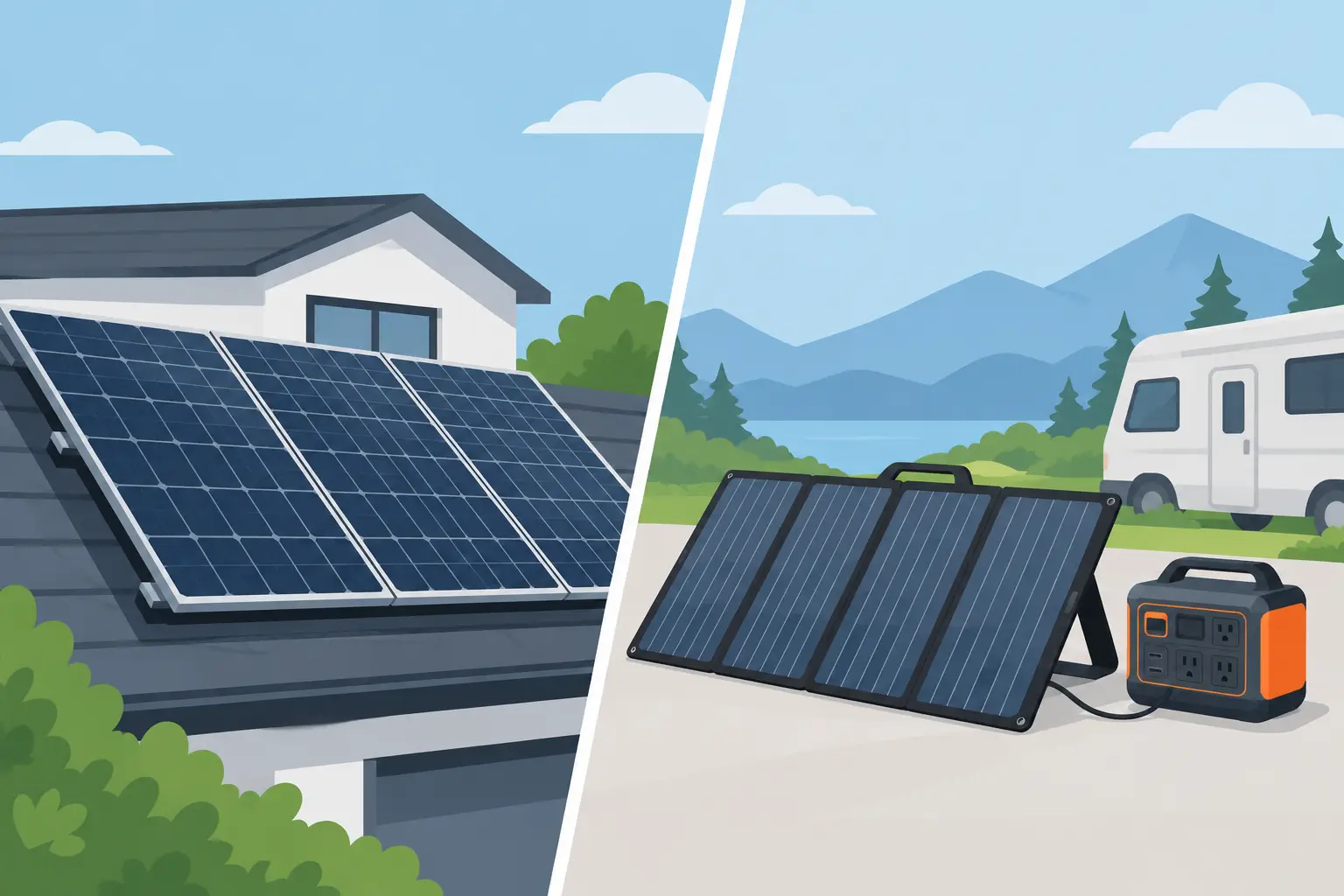
When the power goes out, the solar panel that helps most is not necessarily the one with the highest wattage. It is the one you can use safely, connect to the right battery system, and rely on when your household, rental property, or business needs power. That is the real question behind rigid panels vs portable panels: are you building dependable daily energy production, or do you need flexible charging power you can deploy when conditions change?
Both panel types can support backup power and lower dependence on the grid. The better choice depends on where you need electricity, how often you expect to use solar, the equipment you already own, and how much preparation you want completed before the next outage.
Rigid panels vs portable panels: the core difference
Rigid solar panels are fixed-frame panels designed for permanent or semi-permanent installation. They are commonly mounted on a roof, ground rack, carport, shed, or other stable structure. Once installed with the proper wiring, charge controller, inverter, and battery bank, they can produce power every day with little effort from the owner.
Portable solar panels are built to move. Many fold into a suitcase-style format or include adjustable kickstands so they can be placed in direct sun, connected to a portable power station, and stored when not in use. They are a practical match for temporary backup power, camping, job sites, boats, and properties where permanent installation is not possible.
The distinction is not simply fixed versus foldable. Rigid panels are part of an energy system. Portable panels are typically a deployable charging tool. A homeowner can use both, but each solves a different power problem.
When rigid panels make more sense
Rigid panels are usually the stronger option when your goal is long-term energy security. A properly designed fixed solar and battery system can keep charging through ordinary sunny days, whether you are home or away. That matters for essential loads such as refrigeration, internet equipment, security systems, lights, fans, medical devices, and selected outlets.
For a primary residence, vacation rental, small business, or property with repeated outages, fixed panels remove the need to carry equipment outside and reposition it throughout the day. They also make it easier to expand over time. You may begin with enough solar to support a battery backup for critical appliances, then add panels or storage as your budget and energy needs grow.
Rigid panels also tend to be the better fit for higher-wattage systems. More panel area generally means more charging potential, especially when paired with appropriately sized batteries and electrical equipment. If you want solar to contribute meaningful daily production rather than just recharge a small power station, permanent panels deserve serious consideration.
That does not mean rigid panels are automatically the right answer. They require a suitable mounting location, installation planning, and an honest look at wind exposure, roof condition, shading, and local electrical requirements. In coastal environments, mounting hardware and wiring methods need to be selected for heat, humidity, salt air, and severe weather conditions. A panel system is only as dependable as the structure holding it and the components connecting it.
Best uses for rigid solar panels
Rigid panels are a practical choice for homes seeking battery backup, businesses protecting essential operations, off-grid structures, and properties with reliable sun exposure. They are also the better route when electricity demand is consistent every day instead of occasional or seasonal.
For hurricane preparedness, fixed solar is most valuable when it is installed before storm season, paired with battery storage, and designed with safety in mind. Panels do not provide instant power during a blackout on their own. Your system needs stored energy and the proper equipment to deliver usable power to appliances.
When portable panels are the smarter choice
Portable panels are built for flexibility. You can bring them to a family island, use them at a remote work location, charge a power station during an outage, or take them with you when you move. There is no roof penetration, permanent racking, or major installation project required.
They are particularly useful for people who need targeted power rather than whole-home backup. A portable panel and power station can help keep phones, laptops, lights, small fans, routers, radios, and other lower-draw essentials running. Depending on the power station and solar input, portable solar can also support small appliances, but expectations should match the equipment’s capacity.
Portable panels are also a smart starting point for first-time solar users. They let you learn how solar charging performs at your location without committing to a permanent system immediately. You can see how panel angle, cloud cover, heat, and shade affect charging, then make a more informed decision about a larger backup setup later.
The trade-off is hands-on operation. Portable panels need to be carried outside, positioned toward the sun, checked for shade, and brought in when weather turns. A panel left unattended can be damaged by wind, rain, falling debris, or theft. During a storm, it should be stored safely, not deployed outdoors.
Best uses for portable solar panels
Portable panels work well for emergency kits, apartment living, temporary homes, RVs, boats, outdoor work, and short-term backup needs. They are especially helpful when you already own a compatible portable power station and want a way to recharge it without relying only on a wall outlet or generator.
For a Bahamian home preparing for outages, portable solar can add a valuable layer of resilience. Charge your power station before severe weather arrives, store the panels securely as conditions deteriorate, and deploy them after the storm when it is safe to do so. That approach can extend your available battery power while grid restoration is underway.
Output, charging, and the equipment around the panel
Panel wattage matters, but it is not the whole story. A 200-watt portable panel and a 200-watt rigid panel may have similar rated output under ideal conditions, yet real-world production can differ because of angle, temperature, cable losses, shading, and time in the sun.
Portable panels are often placed on the ground, where their angle can be adjusted several times a day. That can improve output when someone is available to manage them. Rigid panels are usually mounted at one fixed angle, but they can collect sunlight consistently without daily setup. Over months and years, that convenience often matters more than chasing peak output for an hour or two.
Compatibility is equally important. Check the solar input limit of your portable power station, battery system, or charge controller before choosing panels. Voltage, connector type, maximum input wattage, and recommended wiring configuration all affect whether the system will charge safely and efficiently. More solar panel wattage is not always better if your power station cannot accept it.
Battery capacity also determines what your solar setup can accomplish. Panels replenish energy. Batteries store it. If your battery is too small for your refrigerator, freezer, pump, or other essential loads, additional panels alone will not solve the problem. Start with the appliances you need to keep running, estimate their energy use, and size storage and solar charging around that priority list.
Durability and storm readiness are not optional details
Island sun is productive, but it is demanding. Heat can reduce solar panel output, salt air can accelerate corrosion, and high winds can turn poorly secured equipment into a hazard. Whether you select rigid or portable panels, durability begins with proper use and storage.
For fixed systems, use mounting and electrical components suitable for the installation environment. Keep panels clear of debris, inspect cables and connectors periodically, and have a storm plan that includes your battery system and critical loads. If a major storm is expected, follow the guidance for your specific equipment and do not take unnecessary risks around electrical components.
For portable panels, choose a protected storage location and avoid leaving them outside overnight or unattended in unstable weather. Keep connectors clean and dry, secure cables so they are not tripping hazards, and never force a panel to operate beyond the limits of the connected power station. Portability is an advantage only when the equipment remains protected and ready to use.
Which option should you choose?
Choose rigid panels when you want a permanent foundation for home or business backup power, predictable daily charging, and room to build a larger system. They require more planning upfront, but they deliver the strongest long-term path toward energy independence.
Choose portable panels when flexibility, easy storage, and fast deployment matter most. They are ideal for pairing with a portable power station, supporting essential devices after an outage, and bringing solar power to places where permanent installation does not make sense.
For many households, the most resilient answer is a combination. A fixed solar and battery system can handle regular essential loads, while a portable power station and portable panels provide backup that can move where it is needed. SOL242 helps customers build around that practical reality: power needs change, but preparedness should not.
The best time to choose your solar setup is while the grid is working and you can plan calmly. Identify the loads that matter most, select equipment that fits your property and lifestyle, and make sure your backup power is ready before the next outage asks more of it.


