
How to Prepare Your Home for the 2026 Hurricane Season
As the shadow of Hurricane Helene still lingers, the storms of 2025 are already on the horizon. Hurricane Helene, a

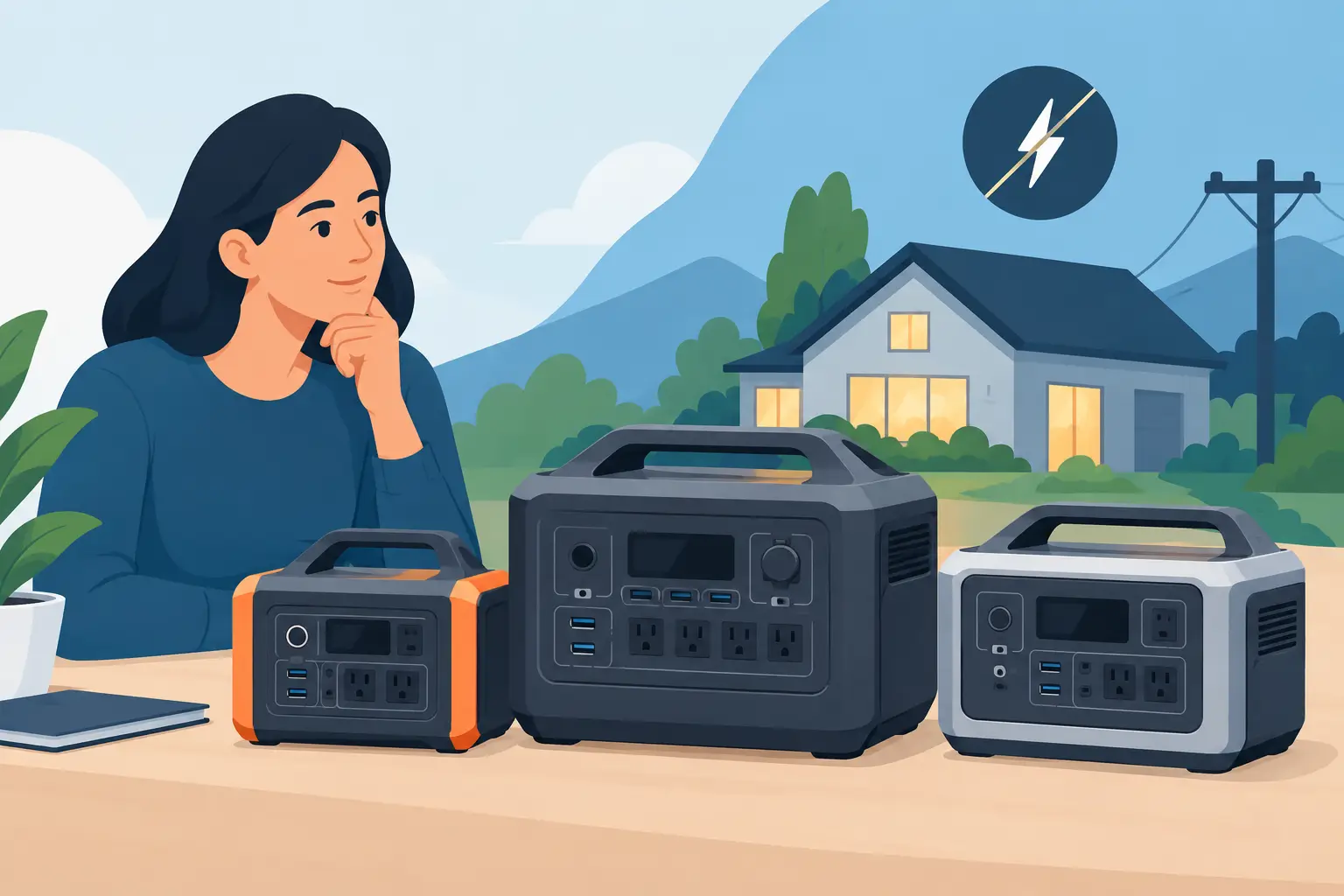
A power station can look impressive on a product page and still be the wrong answer when the lights go out. That is why power station reviews matter most when they describe real loads, real charging conditions, and real ownership over time. For a homeowner preparing for hurricane season, a small business protecting essential equipment, or an off-grid user relying on solar, the question is not simply whether a unit turns on. It is whether it can keep the right equipment running long enough to make a difficult situation manageable.
The best reviews help you separate useful backup power from big numbers and polished marketing. They also reveal where a product fits: a compact station for phones and a router, a mid-size model for a refrigerator and medical device, or a larger solar-ready system for longer outages.
Start with your own outage plan, not the star rating. A five-star review from someone charging a phone on a weekend trip does not tell you much about a station’s ability to support a chest freezer through a hot afternoon. Likewise, a critical review may reflect an expectation the product was never designed to meet.
As you read, look for reviewers who name the appliances they used, how long they ran them, and whether they charged the station from wall power, a vehicle, or solar panels. Specific details are more valuable than comments such as “works great” or “battery lasts forever.” A useful review tells you what happened when the power demand rose, how the display behaved, and whether the owner could recharge before the next need.
Pay close attention to the review date as well. Portable power station designs change quickly. A review from several years ago may refer to an older battery chemistry, fewer outlets, slower solar input, or a previous version of the product. Newer long-term feedback is especially useful because it can reveal battery performance after repeated charging cycles and regular use.
A family in a mild climate may use a station a few times a year. In the Bahamas, coastal Florida, or another storm-prone area, backup equipment can face heat, humidity, frequent charging, and extended utility interruptions. Look for feedback from people whose conditions resemble your own, particularly if the station will be stored in a garage, used during storm season, or carried between home and a business.
Reviews from RV owners and campers can be helpful for portability, solar charging, and noise comparisons. But they may not answer the questions that matter at home: Can the unit start a refrigerator? Does it support pass-through charging? Is the screen easy to read during an outage? Can one person move it safely? The right review is always the one tied to your intended use.
Reviews should support the specifications, not replace them. A portable power station is easier to compare when you understand four basic numbers: watt-hours, running watts, surge watts, and recharge input.
Watt-hours describe stored energy. In simple terms, they help estimate how long a station can run a device. A 1,000Wh unit does not deliver a full 1,000Wh to every appliance because power conversion uses some energy. Still, it offers a useful starting point. If a 100-watt load runs continuously, expect roughly eight to nine hours of usable runtime from a 1,000Wh station, depending on efficiency and conditions.
Running watts tell you how much power the station can provide continuously. Surge watts matter for appliances with a brief startup demand, including many refrigerators, pumps, and power tools. A station may have plenty of stored energy but still fail to start an appliance if its inverter cannot handle that initial surge.
Recharge input is often overlooked until the first long outage. A large battery is only as useful as your ability to refill it. Check wall charging speed, solar input limits, and the actual solar conditions mentioned in reviews. A panel’s rated output is measured under ideal test conditions. Passing clouds, panel angle, heat, and shade can reduce real-world production substantially.
Most portable stations are built for selected essentials, not central air conditioning, electric ranges, electric water heaters, or every outlet in a house. Reviews that claim a unit “powered the whole house” need context. The reviewer may have been running only a few circuits, using an interlock or transfer arrangement, or keeping loads very low.
For essential loads, a portable station can be an excellent layer of protection. It can keep communications, lighting, a modem, fans, medication refrigeration, laptops, and a small refrigerator available without the noise and fuel concerns of a generator. For broad home coverage or high-demand appliances, a professionally planned home battery system is usually the more suitable path.
Specifications cannot fully show whether a product is pleasant and practical to use under pressure. This is where owner feedback earns its place. Look for recurring comments about screen readability, outlet placement, charging noise, fan behavior, app reliability if applicable, and the weight of the unit when it is full-sized.
Weight deserves more attention than it gets. A higher-capacity station may offer meaningful runtime, but it is less helpful if the person who needs it cannot move it from storage to a safe, ventilated location. If a unit weighs more than you can comfortably lift, plan a permanent accessible location, a rolling cart, or a two-person move.
Also watch for discussion of battery type. Lithium iron phosphate, often called LiFePO4 or LFP, is popular for backup power because it is designed for many charge cycles and tends to suit frequent use. That does not make every LFP station identical. Build quality, thermal management, inverter design, warranty support, and charging practices still shape the ownership experience.
No product line is free of occasional defects, shipping damage, or user error. A single poor review should prompt a question, not an automatic rejection. Repeated reports of the same issue deserve more weight, especially when owners describe similar symptoms and the same use case.
Customer support feedback is also worth reading carefully. During an outage, support that responds clearly and honors warranty coverage is part of the product value. SOL242 focuses on backup solutions for demanding island conditions because equipment selection and dependable support both matter when power continuity is not optional.
Before using reviews to narrow your options, write down the equipment you need to protect. Include the wattage if available, and distinguish between must-run loads and nice-to-have loads. A phone, router, lights, fan, CPAP machine, refrigerator, and cash register do not require the same system.
Then ask whether you need hours of backup or days of renewable operation. For a short outage, stored capacity may be the main priority. For hurricane season or remote use, solar charging capacity becomes just as important. A station paired with correctly sized portable solar panels can extend independence, but only if panels can be placed in clear sun and managed safely as weather changes.
Finally, think about storage and readiness. Keep the station charged according to the manufacturer’s guidance, test it before storm season, and store it away from standing water, direct heat, and corrosive salt exposure. Do not wait until a warning is issued to learn which outlet runs the freezer or how long the router lasts.
A good review can point you toward the right product, but your own load plan makes the final decision clear. Choose the station that protects the essentials you cannot afford to lose, can be recharged under the conditions you actually face, and is simple enough to use with confidence when the grid does not come back on schedule.
As the shadow of Hurricane Helene still lingers, the storms of 2025 are already on the horizon. Hurricane Helene, a
The Bahamas: turquoise waters, sun-kissed beaches, gentle trade winds, and a relaxed pace of life. It’s one of the most

The Bahamas is blessed with sunshine almost all year round, making it one of the best places on earth to
All rights reserved sol1242.com © 2025


