
How to Prepare Your Home for the 2026 Hurricane Season
As the shadow of Hurricane Helene still lingers, the storms of 2025 are already on the horizon. Hurricane Helene, a

The lights go out, the fridge warms up, the Wi-Fi drops, and suddenly power is not an abstract utility bill issue. It is food, communication, security, and peace of mind. That is exactly why a beginners guide to solar backup should start with one simple truth: the right system is not the biggest one. It is the one that keeps your essential loads running when the grid does not.
For many homeowners and small business owners, solar backup sounds more complicated than it really is. Panels, batteries, inverters, watt-hours, surge loads – it can feel technical fast. But the buying decision gets much easier once you separate backup power into a few practical categories and match them to what you actually need during an outage.
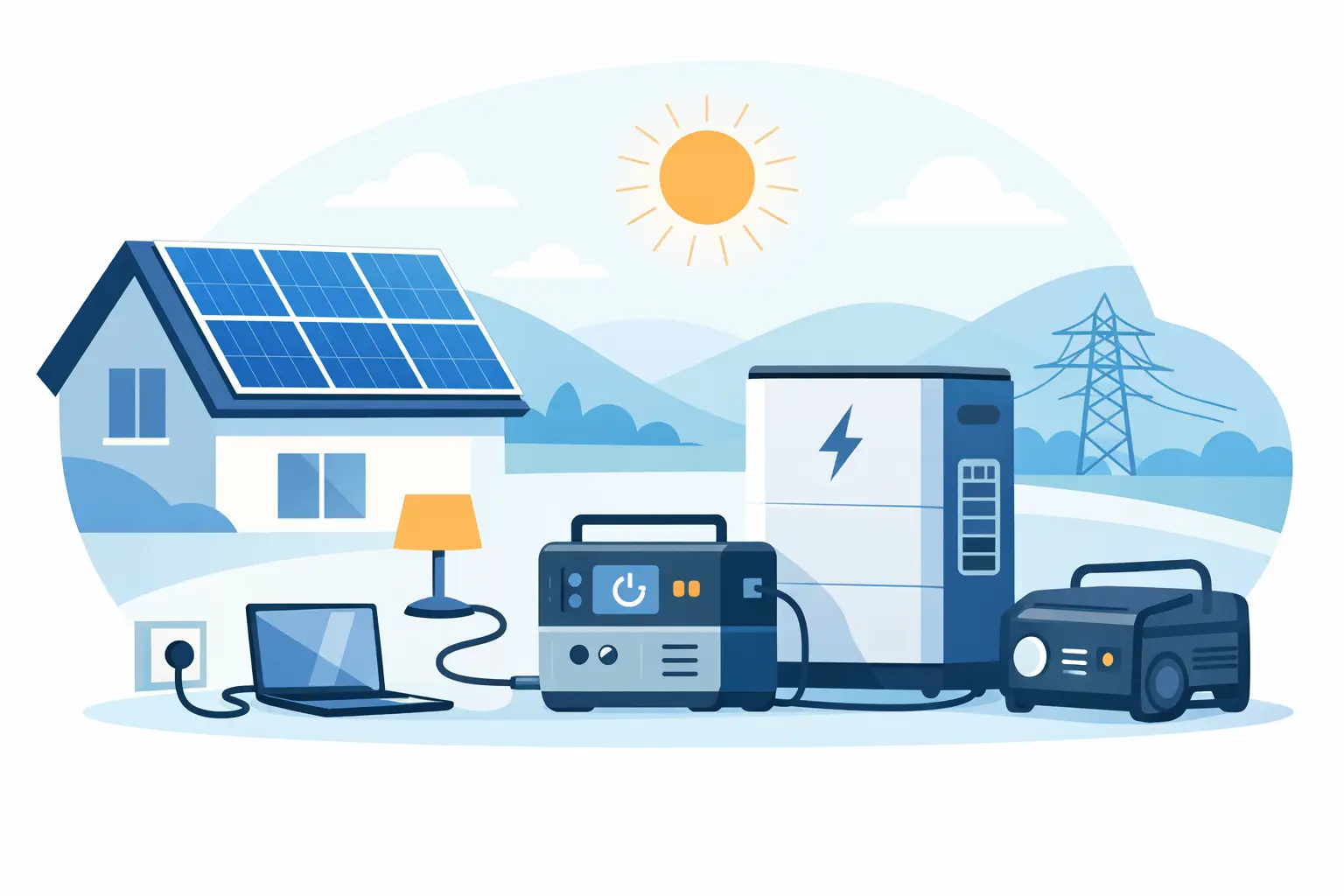
Solar backup is a power system that stores energy in a battery and can recharge from solar panels. When utility power fails, the battery supplies electricity to devices, appliances, or parts of your building. In some setups, you plug devices directly into a portable power station. In others, a home battery backup system is connected to selected circuits in your electrical panel.
The key difference between solar backup and a standard gas generator is how it operates. A battery system is quiet, requires far less routine maintenance, and can be used indoors when designed for indoor use. Solar also gives you a path to recharge without fuel deliveries, which matters when roads are blocked, fuel is scarce, or outages stretch longer than expected.
That does not mean solar backup replaces every generator in every situation. If you need to run central air, heavy machinery, or a whole large house for days with high consumption, battery capacity and solar input need to be planned carefully. In some cases, a battery system works best for essentials rather than every load you own.
Before you compare products, decide what “power during an outage” actually means for your household or business. For some people, it means phones charged, lights on, and the router working. For others, it means keeping a refrigerator cold, running a cash register, powering security equipment, or supporting medical devices.
This is where many first-time buyers go wrong. They shop by marketing terms instead of outage priorities. A better approach is to picture the first 24 hours without grid power. What must stay on? What would be nice to have? What can wait?
A small apartment, a single room, and a retail storefront will all need different backup strategies. Even in the same home, hurricane season planning may look different from everyday outage planning. If your goal is emergency resilience, essentials come first. If your goal is more daily energy independence, capacity becomes more important.
The simplest place to start is with portable power stations. These are all-in-one battery units with built-in outlets, USB ports, and charging inputs. They are a strong fit for charging phones, laptops, lights, fans, routers, CPAP machines, and in some cases a small fridge or television. They are easy to move, easy to store, and ideal for renters, travel, boats, and quick emergency use.
The next level is a solar generator setup. In practical terms, this usually means a portable power station paired with portable solar panels. The battery handles nighttime and immediate backup. The panels help recharge it during daylight. For outage preparation, this gives you much more staying power than a battery alone.
Then there are home battery backup systems. These are better for people who want selected circuits or larger appliances supported automatically or semi-automatically. They take more planning and a larger budget, but they offer a more complete backup solution for homes and some small commercial spaces.
Sizing comes down to two numbers: how much power something needs right now, and how much energy it uses over time. Power is measured in watts. Energy is usually measured in watt-hours.
If a device uses 100 watts and you run it for 5 hours, that is 500 watt-hours. A 1,000 watt-hour battery could run that device for about 10 hours in perfect conditions, though real-world performance will be lower because of inverter losses and battery reserve limits.
This matters because many beginners focus only on battery size and ignore output limits. A battery may have enough stored energy to run an appliance for hours, but if the inverter cannot handle the startup surge, the appliance will not run. Refrigerators, pumps, and some power tools often need extra startup power.
A practical first step is to list your essential devices, note their wattage, and estimate how many hours you need each one during an outage. If you are unsure, check the appliance label or manual. Once you total those numbers, add some buffer. Real outages are rarely convenient, and your needs usually grow once the power is actually out.
A battery alone is backup. A battery with solar is resilience. That distinction matters when outages last more than a few hours.
If you buy a power station but do not pair it with enough solar input, you may still run out of usable energy during an extended disruption. The battery gets you through the night or the first phase of the outage. The solar panels are what help you recover the next day.
For buyers in coastal and island environments, panel durability matters too. Heat, humidity, salt exposure, and storm conditions are not minor details. They affect long-term reliability. That is why it makes sense to choose equipment designed for harsh conditions, not just attractive specs on a product page.
Portable panels are great for flexible use and emergency deployment. Fixed panels make more sense when you want a more permanent backup setup. The best option depends on whether you need mobility, speed of setup, or ongoing home support.
In most homes, the first priority is communication and preservation. That means phones, lights, internet equipment, refrigeration, and in hot climates, fans. For some households it also means medical devices, security systems, or basic cooking capability.
For small businesses, the list may shift toward internet, point-of-sale equipment, security cameras, lights, and refrigeration if inventory depends on it. Property managers may prioritize gates, exterior lighting, communication tools, and water-related systems.
Air conditioning is where expectations need to be realistic. Small portable units may be possible with larger systems, but central AC often requires a much more substantial battery and inverter setup. If cooling is a priority, many people do better planning around fans, one cooled room, or selective use rather than whole-property cooling during every outage.
The most common mistake is underestimating energy use. People often assume a compact battery will run large appliances much longer than it actually can. The second mistake is buying too small on solar input, which leaves them unable to recharge fast enough between outages or during cloudy weather.
Another issue is ignoring environment. Equipment used in the Bahamas, coastal Florida, or other hot and humid regions has to deal with more than sunlight. Salt air, storm risk, and high temperatures can shorten product life if the system is not suited to those conditions.
Some buyers also overbuy. If your real need is communications, lights, and a fan, a full home system may not be the smartest first purchase. Starting with a well-sized portable setup can be more affordable, easier to deploy, and immediately useful for storms, outdoor use, and everyday convenience.
If you are just starting, think in stages. A smaller portable power station can cover basic essentials and give you immediate outage protection. Adding solar panels extends that protection and reduces dependence on wall charging. Later, you can step up to a larger battery or a home backup system if your needs grow.
That staged approach works well because it balances preparedness with budget. You do not need to solve every future energy scenario in one purchase. You need a dependable first layer of backup that actually gets used and trusted.
For many households, the smartest buying decision is the one that covers the most likely outage problems first. Keep the fridge safe. Keep phones charged. Keep lights on. Keep the router live. Once those basics are secure, you can build from there with much more confidence.
If your area deals with outages, storms, fuel uncertainty, or rising utility costs, solar backup is not hard to justify. It gives you control when the grid is unreliable and helps protect the essentials that matter most. For households and businesses in exposed coastal regions, that peace of mind is not theoretical. It is practical.
The right system depends on your priorities, your load requirements, and how long you need power to last. A beginner does not need to know everything about solar to make a good decision. You just need a clear picture of what must stay on, how long you need it, and whether you want a portable solution or a more permanent one.
If you shop with that mindset, solar backup stops feeling complicated and starts feeling like what it really is: a reliable layer of protection you can count on when the grid cannot.
As the shadow of Hurricane Helene still lingers, the storms of 2025 are already on the horizon. Hurricane Helene, a
The Bahamas: turquoise waters, sun-kissed beaches, gentle trade winds, and a relaxed pace of life. It’s one of the most

The Bahamas is blessed with sunshine almost all year round, making it one of the best places on earth to
All rights reserved sol1242.com © 2025


