
How to Prepare Your Home for the 2026 Hurricane Season
As the shadow of Hurricane Helene still lingers, the storms of 2025 are already on the horizon. Hurricane Helene, a

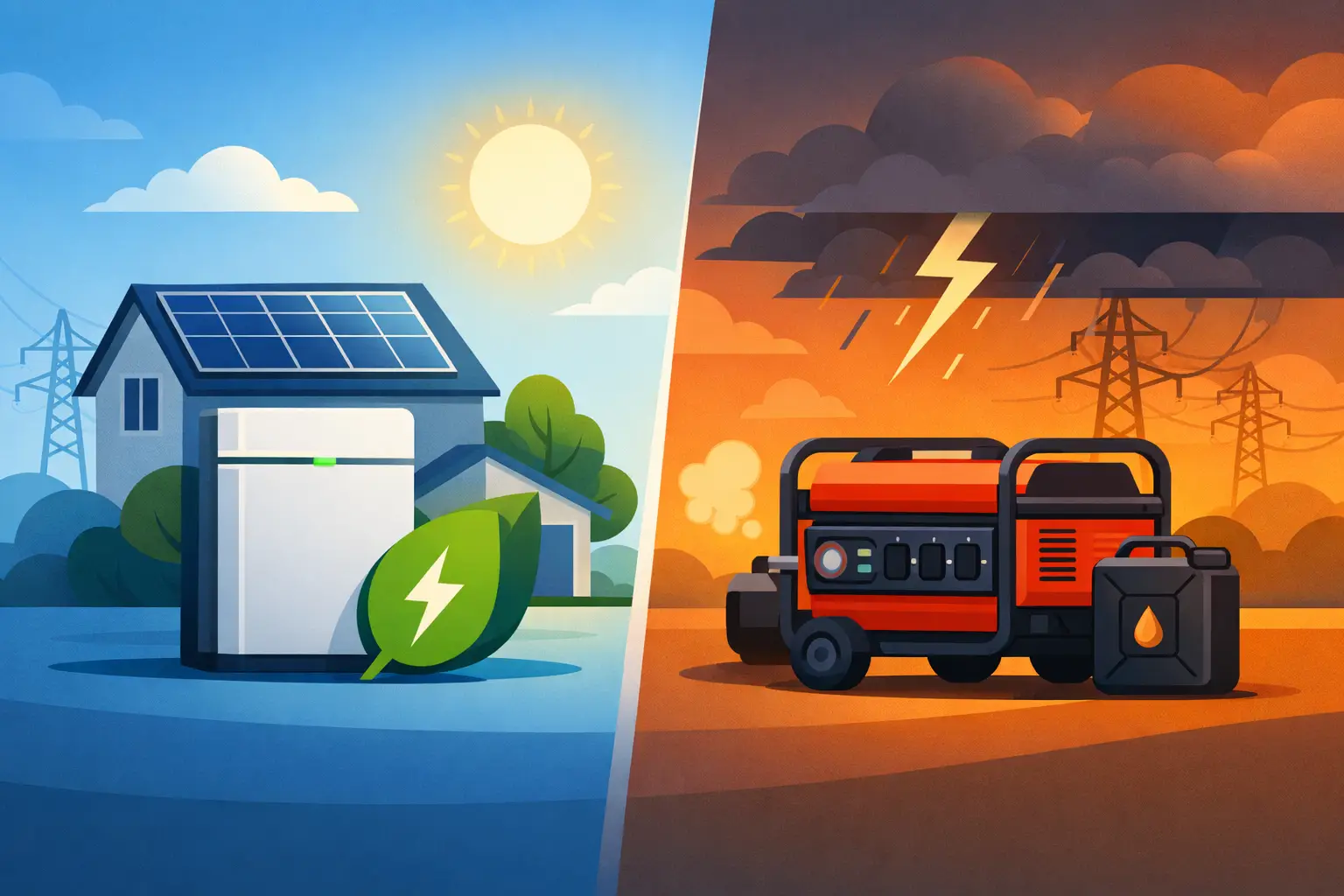
A power outage can turn from inconvenient to costly quickly. Refrigerated food, internet service, security systems, medical equipment, water pumps, and small-business operations may all be affected. When comparing home battery backup vs generator options, the best choice depends on what must stay powered, how long outages typically last, and how much hands-on work you are willing to accept when the grid goes down.
For many homes in the Bahamas and coastal areas of the United States, the decision also has a hurricane-season dimension. Fuel availability, noise restrictions, salt air, flooding risk, and long restoration times all matter. Backup power should not be a last-minute purchase. It should be part of a practical resilience plan.
A generator produces electricity by burning fuel, usually gasoline, propane, natural gas, or diesel. It can run as long as fuel is available and the unit is maintained. Generators are often the familiar choice for extended, high-demand outages because they can support major loads such as air conditioners, well pumps, refrigerators, and larger appliances when properly sized.
A home battery backup system stores electricity for use when the grid fails. It can recharge from the utility grid, solar panels, or both. During an outage, the battery provides instant, quiet power to selected circuits or, with a properly designed system, much of the home.
The difference is simple: a generator makes power during the outage, while a battery uses power stored before or replenished by solar. That distinction shapes nearly every trade-off involving cost, convenience, runtime, and maintenance.
Battery backup is often the stronger fit for households that want immediate, low-maintenance protection for essential loads. A properly installed system can keep lights, Wi-Fi, phones, computers, refrigerators, fans, security equipment, and selected outlets running without stepping outside to start a machine.
That automatic response matters during nighttime outages, severe rain, or a storm when it may not be safe to handle equipment outdoors. Batteries operate quietly and produce no exhaust at the point of use, making them practical for closely spaced homes, condos, rental properties, and neighborhoods where generator noise creates tension.
A battery has a finite capacity, so runtime depends on what you power. Running a refrigerator, lights, internet equipment, and several fans consumes far less energy than running central air conditioning, an electric water heater, or an electric stove. Smart load planning can make a battery system last through an overnight outage or longer.
Pairing battery backup with solar panels changes the equation. Once sunlight returns, solar can recharge the battery and support daytime loads, reducing dependence on fuel deliveries or open gas stations. In a place with abundant sun, that can provide meaningful energy independence after a storm.
Portable power stations and portable solar panels can also be a practical starting point. They are useful for charging phones, operating a router, powering lights, running a small refrigerator, or keeping essential work equipment online. They do not replace a whole-home system, but they create a reliable first layer of protection.
Battery systems are not automatically designed to run every appliance in a house. Large loads, especially central air conditioning, pool pumps, dryers, electric ranges, and water heaters, can drain stored energy quickly or require a larger inverter and battery bank.
Upfront cost can also be higher than purchasing a portable generator. The value comes from quiet operation, automatic backup, lower routine maintenance, and the ability to recharge from solar. For homeowners focused on essential circuits rather than every load, a battery can be a more efficient investment than oversizing a generator.
A generator can be the right answer when your priority is long runtime and high power output at a lower initial equipment cost. If an outage may last days and you need to operate heavy appliances, a properly sized generator provides flexibility that a small battery system cannot match.
For example, a homeowner may need to run a deep-well pump, multiple refrigerators, a freezer, window air conditioners, and power tools for cleanup or repairs. A generator can handle these loads, provided its output is sufficient and its fuel supply is secure.
Standby generators can start automatically and may be connected to propane or natural gas, removing much of the manual effort associated with portable units. Portable generators cost less and can be effective for essential equipment, but they require safe setup, extension-cord management or a transfer switch, refueling, and weather protection.
A generator can continue running beyond a battery’s stored capacity, but only if fuel remains available. Before, during, and after a major storm, gasoline may be difficult to find, stations may have long lines, and roads may be blocked. Fuel also needs safe storage and regular rotation.
Gasoline and diesel generators require routine maintenance, including oil changes, filter checks, test runs, and battery care for electric-start models. They must always operate outdoors, far from doors, windows, vents, and enclosed spaces. Carbon monoxide from a generator can be deadly, so indoor use, garage use, and improvised shelter setups are never safe.
Noise is another practical consideration. A generator running through the night may be necessary, but it is rarely pleasant. For a home office, rental property, or residential neighborhood, that can make quiet battery power more attractive for everyday outages.
The sticker price tells only part of the story. A generator may cost less initially, especially a portable model, but its operating costs include fuel, oil, maintenance, repairs, and potentially a transfer switch or professional installation. Fuel prices and availability can be unpredictable after severe weather.
A battery backup system generally costs more upfront, particularly for whole-home capacity and professional installation. Its ongoing maintenance needs are lower, and solar charging can reduce the cost of keeping critical loads powered. Batteries also help some homeowners use stored solar energy after sunset or reduce grid use during expensive peak periods, where local utility rules allow it.
Consider the cost of an outage, too. Lost groceries, missed work, damaged inventory, interrupted security, and a closed business can exceed the price difference between two backup options. The right system is the one that protects the loads that matter most without forcing you to buy capacity you will rarely use.
Start by separating essential loads from nice-to-have loads. Essential loads often include refrigeration, lights, communication devices, internet, medical equipment, fans, security systems, and a water pump. High-demand loads may include central air conditioning, electric cooking, clothes dryers, hot water heaters, and pool equipment.
Next, think about the type of outage you are preparing for. A few-hour outage favors a battery because it responds instantly and quietly. A multi-day outage with substantial appliance use may favor a generator. A hurricane-prone household that wants protection both overnight and through longer restoration periods may benefit from a battery-and-solar system supported by a generator for heavy loads or extended cloudy weather.
Your property also matters. A generator needs a safe outdoor location, clearances, secure fuel storage, and protection from wind-driven rain without restricting ventilation. Battery equipment should be installed in an appropriate location and sized by a qualified professional, especially when connecting to a home’s electrical panel.
Choosing between a battery and a generator does not have to be an all-or-nothing decision. A battery can handle the first hours of an outage automatically, keeping essential circuits alive with no fuel, noise, or interruption. Solar can recharge it during the day. A generator can then serve as a backup resource for prolonged outages, larger appliances, or periods of limited sun.
This approach lets homeowners use each technology where it performs best. The battery handles everyday reliability. The generator provides extra endurance and surge capacity when conditions are difficult.
For island homes, preparation should also include equipment suited to heat, humidity, and coastal exposure. Keep solar panels clear, protect portable equipment from standing water, inspect cables and connectors, and test your backup plan before hurricane season instead of during the first outage. SOL242 helps customers build practical layers of backup power around the equipment and loads they rely on most.
The best backup system is not the biggest one on paper. It is the one that keeps your household safe, connected, and capable when the grid cannot.
As the shadow of Hurricane Helene still lingers, the storms of 2025 are already on the horizon. Hurricane Helene, a
The Bahamas: turquoise waters, sun-kissed beaches, gentle trade winds, and a relaxed pace of life. It’s one of the most

The Bahamas is blessed with sunshine almost all year round, making it one of the best places on earth to
All rights reserved sol1242.com © 2025


