
How to Prepare Your Home for the 2026 Hurricane Season
As the shadow of Hurricane Helene still lingers, the storms of 2025 are already on the horizon. Hurricane Helene, a
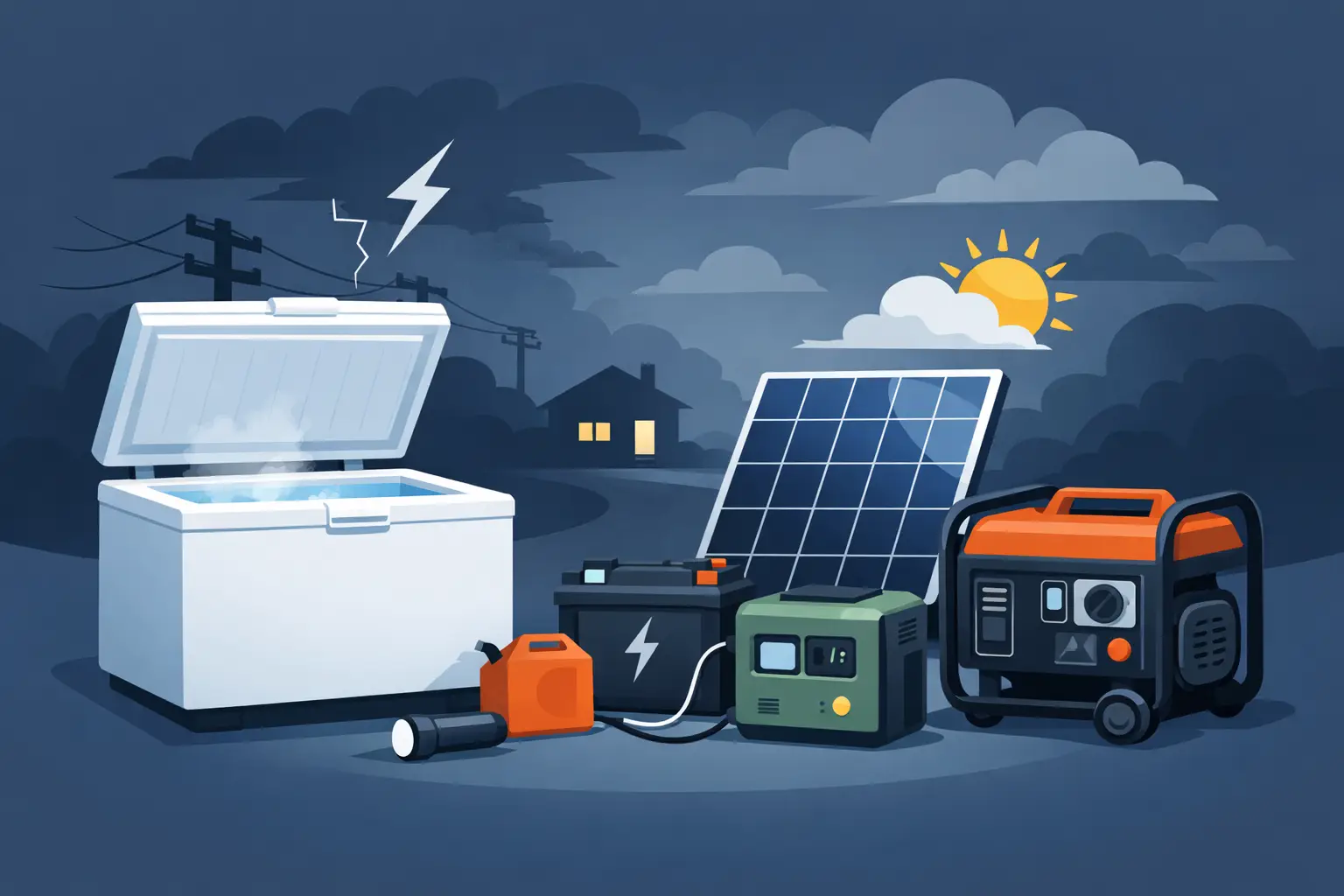
A freezer full of meat, seafood, frozen meals, or business inventory can turn into a costly loss fast when the power goes out. If you are figuring out how to power a freezer during outages, the right answer depends on three things – how long the outage lasts, how large your freezer is, and whether you want a short-term backup or a more storm-ready system.
For many households and small businesses, this is not just about convenience. It is about protecting food, medication, cash flow, and peace of mind. In storm-prone areas, especially where outages can stretch for hours or days, a freezer backup plan is part of basic preparedness.
The mistake most people make is assuming any backup power source will run a freezer. A freezer has a compressor, and compressors usually need more power to start than they need to keep running. That means a setup that looks fine on paper can still fail the moment the freezer cycles on.
You need to think about two power numbers. The first is running watts, which is the power your freezer uses during normal operation. The second is starting watts, sometimes called surge watts, which is the temporary spike needed when the compressor starts. If your backup source cannot handle both, your freezer may not run reliably.
A small chest freezer might run at roughly 100 to 250 watts once it is operating, while startup can jump significantly higher for a few seconds. Larger upright models can need more. The exact numbers vary, so checking the appliance label or manual is always the safest place to start.
There is no single best solution for every outage. The right setup depends on runtime, noise tolerance, fuel access, and how much independence you want from the grid.
Portable power stations are one of the cleanest and easiest ways to keep a freezer running during shorter outages. They are quiet, produce no fumes, and can be used indoors. For households that want simple emergency backup without managing fuel, they are often the most practical option.
The key is capacity and inverter output. Capacity, measured in watt-hours, tells you how long the battery can run the freezer. Inverter output, measured in watts, tells you whether the unit can handle the freezer’s startup surge. Both matter.
For example, if your freezer averages 150 watts while cycling, a properly sized power station may keep it going for several hours, and sometimes longer if the freezer stays closed and does not run constantly. Real runtime depends on ambient temperature, how full the freezer is, and how often the lid or door gets opened.
This is where many buyers undersize. They focus only on the battery size and forget the surge requirement. A good backup plan gives your freezer enough starting power and enough stored energy to matter.
If outages in your area are frequent or extended, a solar generator setup makes more sense than relying on battery power alone. In practical terms, this usually means a portable power station paired with portable solar panels so you can recharge during daylight.
That changes the equation. Instead of asking how long one battery lasts, you are creating a system that can recover every day the sun is available. For hurricane season and long restoration times, that matters.
Solar is especially useful in sunny coastal regions where fuel deliveries may be delayed after a major storm. It also keeps your backup system quieter and easier to manage. The trade-off is that recharge speed depends on weather, panel size, and how much sunlight you actually get. Cloud cover and storm conditions can reduce solar input, so it is smart to have enough stored battery capacity to bridge overnight hours and bad-weather periods.
A gas generator can run a freezer well, especially for longer outages, and it may support other appliances at the same time. It is a common choice when people need more raw power at a lower upfront cost.
But it comes with trade-offs. Generators need fuel, regular maintenance, and safe outdoor placement. They are noisy, they produce exhaust, and fuel storage becomes a real issue during storm season. If roads are blocked or stations are empty, your runtime is limited by what you already have on hand.
For some homes and businesses, a gas generator still makes sense. For others, especially those who want lower maintenance and indoor-safe backup, battery and solar systems are the better long-term fit.
If freezer protection is part of a larger home resilience plan, a home battery backup system may be the strongest answer. These systems can support essential circuits, reduce outage disruption, and pair with solar for longer-term energy independence.
This is usually the better path for larger homes, properties with repeated outages, or anyone who wants backup power for more than one appliance. The investment is higher, but so is the level of protection.
To choose the right system, start with your freezer’s power draw. Look for the running wattage and, if available, startup wattage. If only amps and volts are listed, multiplying them gives you a rough wattage estimate.
Then think in terms of runtime. Ask yourself whether you need to get through a 2-hour outage, an overnight outage, or multiple days. Those are very different plans.
A short outage can often be handled with a power station sized for a few compressor cycles. A long outage usually calls for more battery capacity, solar recharging, or a larger backup system. If you also want to power lights, a router, phone chargers, or a fan, those loads need to be added too.
Temperature matters as well. In hot, humid climates, freezers often work harder. A unit in a garage, outdoor kitchen, shop, or utility room may cycle more often than one inside an air-conditioned space. That means real-world runtime can be shorter than ideal calculations suggest.
Even the best backup system performs better when the freezer is used wisely during an outage. A full freezer stays cold longer than a half-empty one, so keeping it well stocked can help preserve temperature. Opening it less often also makes a big difference.
If the outage has already started, avoid standing there deciding what to cook. Every opening lets cold air escape and forces the compressor to work harder later. Group your access, open it once, and close it.
You can also improve performance by keeping the freezer in the coolest practical location and making sure the door seal is in good shape. Small efficiency gains become important when you are trying to stretch limited backup power.
If your goal is reliable freezer protection without a complicated setup, a properly sized portable power station is often the best starting point. It is clean, quiet, and fast to use. For areas with repeated outages, pairing that battery backup with solar panels creates a much more resilient system.
That combination fits real life well. You can use the battery immediately when the grid goes down, recharge from solar when the sun comes out, and avoid the noise and fuel headaches that come with gas-only solutions. For many homeowners, that is the sweet spot between affordability and readiness.
If you are protecting more than a freezer, or if outages regularly last a day or more, stepping up to a larger solar generator or home battery system is usually the smarter move. Preparedness works best when the system matches the risk.
Some people can ride out a short outage with coolers and ice. Others cannot. If you store bulk groceries, fish, game meat, breast milk, medication, or business inventory, freezer backup stops being optional. The cost of one spoiled load can exceed the cost of getting backup power in place.
That is especially true in places where storms, grid instability, and heat create a tougher environment for food storage. A backup system is not just about keeping appliances on. It is about protecting what you already paid for and keeping your household or operation stable when the grid is not.
If you are deciding how to power a freezer during outages, the safest approach is to size for real conditions, not best-case assumptions. Give yourself enough surge capacity, enough runtime, and a recharge plan if outages tend to linger. The best time to solve freezer backup is before the next outage turns a closed door into a countdown.
As the shadow of Hurricane Helene still lingers, the storms of 2025 are already on the horizon. Hurricane Helene, a
The Bahamas: turquoise waters, sun-kissed beaches, gentle trade winds, and a relaxed pace of life. It’s one of the most

The Bahamas is blessed with sunshine almost all year round, making it one of the best places on earth to
All rights reserved sol1242.com © 2025


