

Portable Solar Panels for Camping That Work
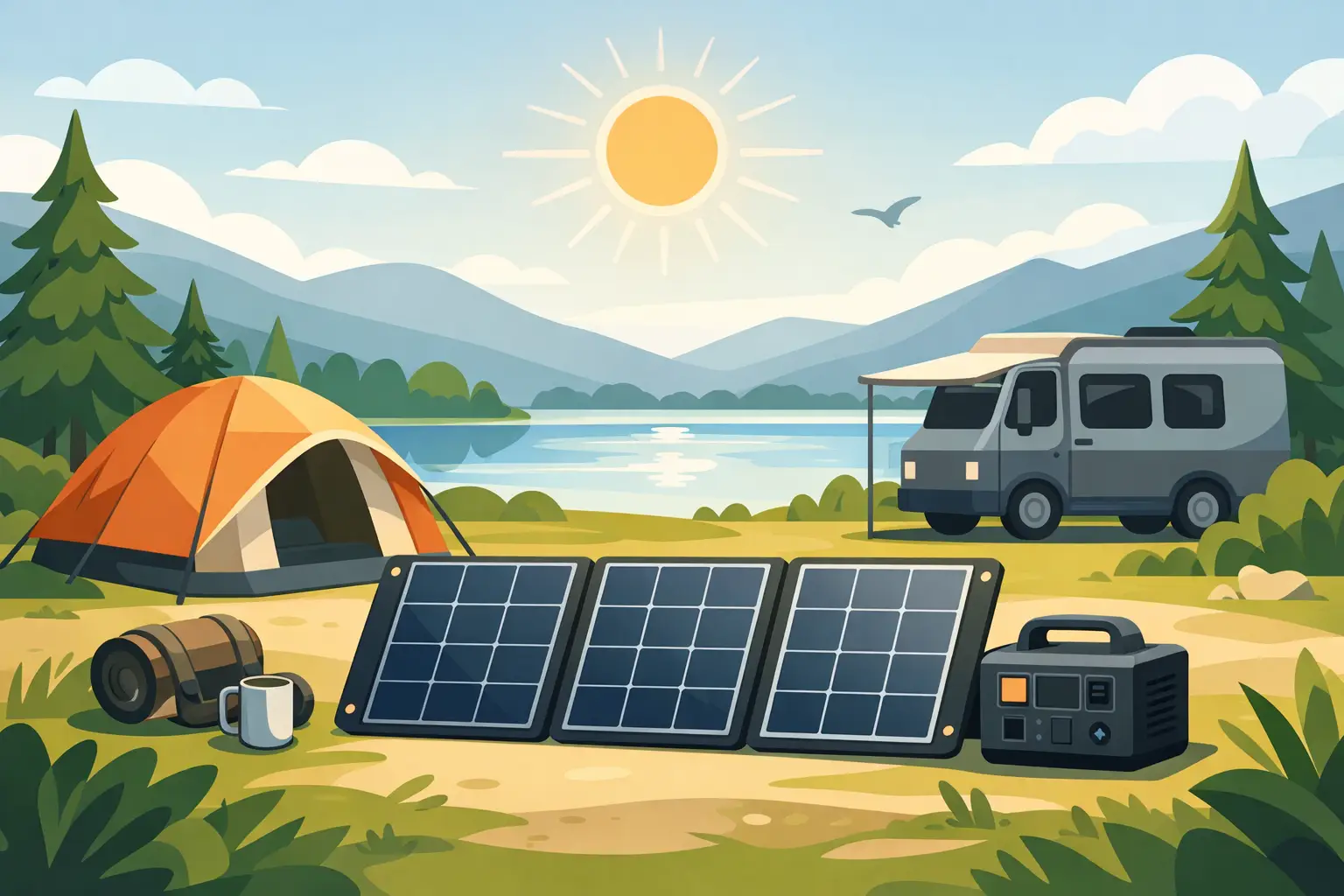
If your campsite power plan starts and ends with a half-charged phone and a cooler full of melting ice, things can go sideways fast. Portable solar panels for camping give you a quieter, cleaner, and far more dependable way to keep essential gear running, especially when you are camping far from hookups or staying out for more than a night.
For some campers, that means keeping lights on and phones charged. For others, it means running a portable fridge, topping up a power station, or making sure emergency communication stays available if weather shifts. The right setup is less about convenience and more about staying prepared.
Why portable solar panels for camping make sense
Camping power used to mean choosing between disposable batteries, noisy generators, or simply going without. Solar changes that equation. A portable panel lets you collect power during the day and either use it directly for small USB devices or, more often, send that energy into a portable power station for use after sunset.
That matters because your energy needs rarely stop when the sun goes down. Lights, fans, GPS units, radios, and medical devices all tend to be most important at night or in changing conditions. A good solar setup turns daylight into stored backup power, which is exactly the kind of reliability people want when they are away from the grid.
There is also a comfort factor. Quiet power improves the entire camping experience. You hear the water, the wind, and the people you came with – not a generator engine. And unlike fuel-based options, solar does not leave you wondering whether you packed enough gas or can get more if plans change.
What portable solar panels can realistically power
This is where expectations matter. Portable solar panels are excellent for charging small electronics and very effective when paired with a battery power station. They are not magic. Output depends on panel size, battery capacity, weather, season, and how well you position the panel.
A compact panel may be enough for phones, headlamps, speakers, and camera batteries. A mid-size or larger panel paired with a capable power station can support lights, laptops, fans, drones, CPAP machines, and portable fridges. If you are trying to run a coffee maker, electric grill, or air conditioner, that is a different category entirely and usually requires a much larger power system than most campers actually want to carry.
The practical question is not, “Can solar run everything?” It is, “What do I need to keep working every day?” Once you answer that clearly, choosing the right panel gets much easier.
How to choose the right portable solar panels for camping
Start with your battery, not your panel. If you already own a portable power station, check how many watts of solar input it can accept. Buying a high-output panel for a battery that can only take a limited input means you are paying for capacity you cannot use.
Next, think about daily energy use. If you only need to top off phones and lights, a smaller folding panel may be enough. If you are charging a larger battery every day for a fridge, fan, and electronics, you will want more panel wattage so you can recover power faster.
Portability matters too, but it means different things depending on your trip. For car camping, a larger folding panel can make perfect sense because you are not carrying it far. For beach camping, boat access, or moving camp often, size and weight become more important. The best panel is the one you will actually bring, set up, and use.
Build quality deserves more attention than people give it. In coastal climates, heat, humidity, salt exposure, and sudden rain can punish weak equipment quickly. Sturdy kickstands, reinforced corners, durable fabric on folding panels, and reliable connectors all make a difference over time. For campers in the Bahamas or along the US coast, this is not a minor detail. It is the difference between gear that lasts and gear that becomes a problem after one rough season.
Panel size, charging speed, and the weather problem
The biggest mistake buyers make is assuming panel wattage equals constant real-world output. A 200-watt portable panel can perform very well, but only under strong sun, correct angle, and minimal shading. Clouds, haze, tree cover, heat, and poor positioning can all reduce actual performance.
That does not mean solar is unreliable. It means your setup should have some margin. If your campsite essentials require a certain amount of power each day, do not shop for the exact minimum. Give yourself room for imperfect weather and less-than-perfect conditions.
This is especially important in areas where weather changes fast. Bright mornings can turn into cloudy afternoons, and tropical conditions can shift within hours. A little extra charging capacity helps protect your trip from that uncertainty.
Features worth paying for
Not every premium feature is necessary, but a few are worth it. Adjustable kickstands help you capture more sunlight throughout the day. Multiple output options can be convenient, though most campers get the best results by charging a power station rather than plugging many devices straight into the panel.
Weather resistance also matters, but it helps to be realistic. A panel described as weather-resistant is not meant to live through a storm or remain exposed in blowing salt spray for days on end. It should handle outdoor use, light splashes, and normal camp conditions. It should still be packed away when weather turns severe.
A strong carrying design is another underrated feature. If the handles, case, or folded shape make the panel awkward to move, it is going to stay in the vehicle more often than you planned.
The case for pairing solar with a power station
For most people, the best camping setup is not a panel by itself. It is a portable solar panel connected to a portable power station. That combination gives you steady storage, cleaner charging for electronics, and much better flexibility once the sun goes down.
It also creates a more resilient backup system beyond camping. A quality power station and solar panel can pull double duty during power outages at home, on a boat, at a jobsite, or during hurricane season. That kind of crossover value matters. Buying gear that serves one weekend hobby is one thing. Buying gear that supports both recreation and emergency readiness is a smarter investment.
That is where a retailer like SOL242 has a clear advantage in how it frames these products. The point is not just outdoor convenience. The point is dependable power where and when the grid is absent.
Common mistakes that lead to disappointment
Most frustration comes from setup issues, not bad technology. Shade is the biggest one. Even partial shade on part of a solar panel can reduce performance sharply, so placing the panel in full sun matters more than many first-time users expect.
Another issue is poor angle. Laying a panel flat on the ground is easy, but it usually costs you charging efficiency. Repositioning the panel as the sun moves can noticeably improve output over the course of a day.
Cable compatibility also causes problems. Before you buy, make sure the panel connectors match your power station or that the correct adapter is available. And do not ignore charging times. If your battery is large and your panel is small, refilling that battery may take longer than your trip allows.
Is a portable solar panel worth it for casual campers?
Usually, yes – if your trips involve regular device use, overnight stays, or any safety concern tied to communication and lighting. If you camp once a year for one night, a battery bank may be enough. But if you spend weekends outdoors, camp with family, use powered gear, or travel in places where weather and outages are real concerns, solar starts making a lot more sense.
The long-term value is in independence. You are less dependent on powered campsites, less likely to ration essential devices, and better prepared when plans stretch longer than expected. That kind of flexibility is hard to put a price on until you need it.
Camping should feel simple, not uncertain. A well-matched solar panel and power station setup gives you one less thing to worry about, and out in the field, that kind of reliability is what makes the trip better.


