

Portable Power Station vs Generator
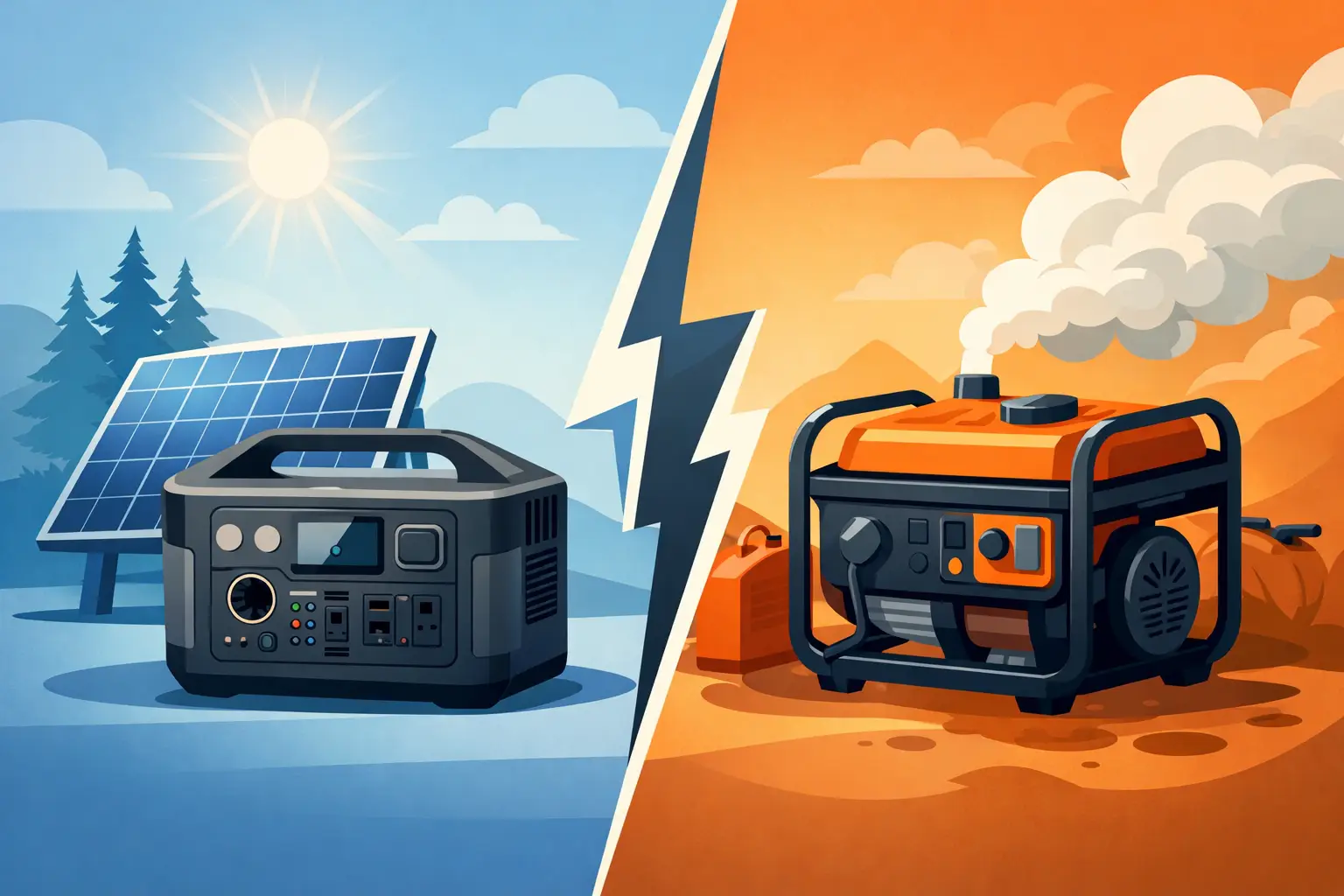
When the power goes out at 2 a.m. and the air stops moving, the question is no longer what looks better on a spec sheet. It becomes portable power station vs generator, and which one will keep your food cold, your phones charged, and your home or business functioning without adding new problems in the middle of an outage.
For many households and small businesses, both options can serve a purpose. But they are not interchangeable. The right choice depends on what you need to run, how long you need backup power, where you plan to use it, and how much noise, maintenance, and fuel handling you are willing to deal with.
Portable power station vs generator: the real difference
A portable power station stores electricity in a battery and delivers it through AC outlets, USB ports, and other output options. You charge it from a wall outlet, a vehicle, or solar panels. A generator creates electricity on demand, usually by burning gasoline, propane, or diesel.
That basic difference shapes everything else. A power station is quiet, clean to operate, and simple to use indoors. A generator is louder, more powerful in many cases, and often better suited for heavier loads or longer runtimes if fuel is available.
If your priority is safe indoor backup for essentials, a portable power station often makes more sense. If your priority is running large appliances or tools for long stretches, a generator may still be the stronger fit.
What matters most during an outage
In real-world backup situations, people rarely need to power everything. They need to power the right things. That could mean a refrigerator, modem, lights, fans, a CPAP machine, phones, security equipment, or a cash register and router for a small business.
A portable power station is usually the easier answer for essential electronics and small to medium household loads. You can place it inside, plug in devices quickly, and avoid the mess of fuel storage or engine exhaust. That matters during storms, overnight outages, and situations where you want power without stress.
A generator becomes more attractive when you need high starting wattage or longer continuous output. Large refrigerators, freezers, power tools, pumps, and some air conditioning systems may push beyond what a smaller battery unit can handle. In those cases, generator capacity can be a major advantage.
Still, more power is not always better if it comes with added noise, maintenance, and fuel dependence. During storm season, fuel access can become a problem fast.
Noise, fumes, and where you can use them
This is where the gap gets wider.
Portable power stations are quiet enough for bedrooms, apartments, offices, hotel rooms, boats, and indoor use during overnight outages. They produce no exhaust while operating, which means no carbon monoxide risk from normal use. That makes them especially practical for homes, condos, and enclosed spaces where safety and comfort matter.
Generators must be used outdoors with proper clearance. They produce engine noise and exhaust, and improper placement can be dangerous. For many homeowners, that alone is enough to narrow the decision. If you need backup power inside the house without worrying about fumes or waking everyone up, a battery-based system is the simpler and safer tool.
For island and coastal conditions, there is another layer. Salt air, humidity, and storm exposure are hard on mechanical equipment. Generators can absolutely be useful, but they require more care. A portable power station has fewer moving parts, which often means less day-to-day maintenance and fewer headaches over time.
Fuel vs charging: convenience changes everything
A generator is only as useful as your fuel supply. If you already store fuel safely and rotate it properly, that may not be a problem. But in extended outages, especially after severe weather, finding more fuel can become one more urgent task.
A portable power station shifts the equation. You charge it before an outage, top it off from the grid when available, and in many setups recharge it with solar panels when the grid stays down. That can be a major advantage for energy independence. Instead of depending entirely on gas stations or deliveries, you have a path to keep producing usable power during daylight hours.
This is one reason portable solar-ready systems are gaining ground with homeowners and property managers. They reduce dependence on outside supply chains at the exact moment those supply chains are under pressure.
That said, charging takes time. A generator can keep producing power as long as fuel is fed into it. A battery system has a fixed amount of stored energy, and once it is drained, you need time and a charging source to refill it.
Runtime depends on your habits
People often ask which option lasts longer, but that depends on what you plug in.
A portable power station can run LED lights, Wi-Fi, phones, laptops, routers, and medical devices for many hours, sometimes much longer than expected if you manage usage carefully. It can also support refrigerators and other appliances depending on battery size and load. If you only run essentials, runtime stretches.
A generator can run longer in practical terms because you can refuel it. But that does not always mean it is more efficient for smaller needs. Running an engine just to charge a phone, power a modem, and keep a few lights on is often overkill.
For many homes, the smartest approach is load matching. Use a portable power station for everyday outage essentials and quiet overnight backup. Choose a generator if you need sustained heavy-duty output for larger appliances, work equipment, or longer emergency periods without reliable solar input.
Cost is not just the price tag
At first glance, some generators look like the cheaper choice. But purchase price is only part of the story.
Generators bring ongoing fuel costs, oil changes, maintenance, and periodic servicing. If they sit too long without proper upkeep, they can fail when you need them most. That is a costly surprise in an emergency.
Portable power stations usually cost more upfront than small entry-level generators, especially as battery capacity increases. But they are often cheaper to own over time because they do not need fuel for every use, and maintenance is far lower. If paired with solar panels, they can also reduce grid dependence and create value outside of emergencies.
This matters if you want backup power that earns its keep year-round. A power station can move from storm prep to camping, remote work, outdoor events, job sites, and everyday charging. It is not sitting idle waiting for a crisis.
Which one is better for home backup?
For most homes, a portable power station is better for essential backup, especially when convenience, safety, and indoor use are top priorities. It is ideal for keeping communication, lighting, refrigeration, and small electronics running without the noise and maintenance of a fuel engine.
A generator is better for whole-home ambitions on a smaller budget, or for running bigger loads when battery capacity would be stretched too quickly. If you need to support multiple major appliances at once, a generator may still be the more realistic tool unless you step up to a much larger battery backup setup.
There is also a middle ground. Many homeowners start with a portable power station for immediate essentials, then expand with solar panels or larger battery capacity over time. That approach gives you practical backup now and room to build more resilience later.
Portable power station vs generator for small business use
Small businesses often face a different calculation. Downtime means lost sales, interrupted service, and frustrated customers.
If your business depends on internet access, checkout systems, phones, lights, and small refrigeration, a portable power station can be a strong fit. It keeps critical operations running quietly and cleanly, which is useful in retail, hospitality, mobile service, and office settings.
If your operation involves heavier equipment, frequent all-day outages, or larger refrigeration loads, a generator may be necessary. The trade-off is that you will need fuel planning, safe outdoor operation, and more maintenance discipline.
For many businesses, reliability comes from choosing the tool that matches the mission, not the one with the biggest headline wattage.
How to choose without overbuying
Start with the devices you cannot afford to lose. Add up their running wattage, then account for surge needs on appliances like refrigerators. Think about how many hours of backup you realistically need, not just what sounds reassuring.
Then consider your environment. If you need indoor-safe power, low noise, and minimal upkeep, a portable power station is the stronger choice. If you need raw output and long runtime with fuel available, a generator may be the better fit.
For storm-prone homes and properties, battery backup with solar charging offers a compelling balance of safety, simplicity, and independence. That is why many customers shopping with SOL242 look beyond old-style backup habits and choose solutions that are easier to live with before, during, and after an outage.
Preparedness works best when the system fits your real life. The best backup power choice is the one you can count on calmly, safely, and without scrambling when the lights go out.


