

Can Solar Generators Run Air Conditioners?
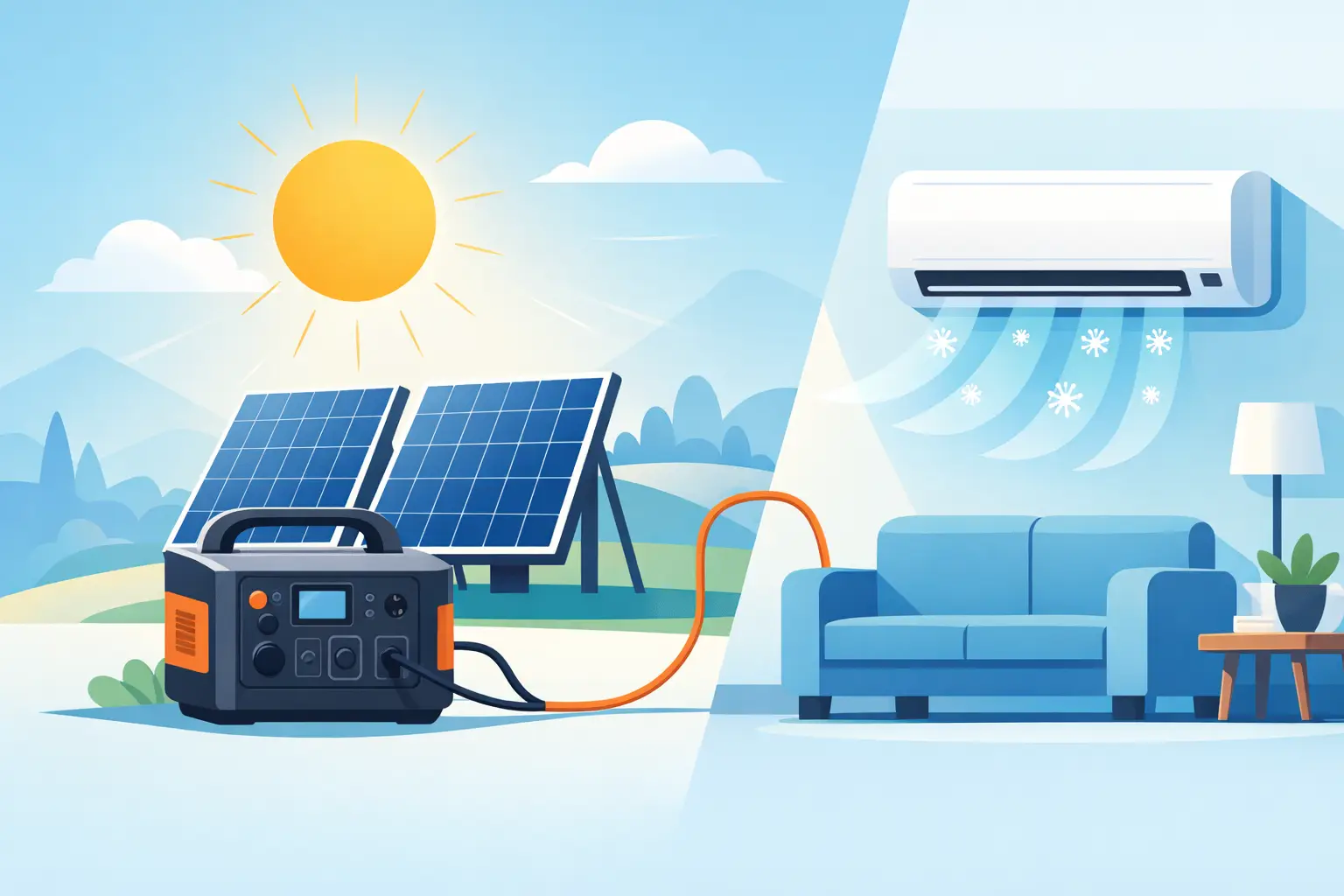
When the power goes out in the middle of a hot night, one question matters fast: can solar generators run air conditioners? The short answer is yes, but only when the system is sized correctly. Air conditioners are one of the hardest household appliances to power, so the real issue is not whether a solar generator can run one. It is whether your generator can handle your specific AC’s startup surge, running wattage, and required runtime.
That distinction matters for anyone planning backup power in storm season, managing a rental property, or trying to stay comfortable off-grid. A phone charger and a fan are easy loads. An air conditioner is not. If cooling is part of your emergency plan, guessing is expensive.
Can solar generators run air conditioners reliably?
Yes, many can, but reliability depends on three things: inverter output, battery capacity, and the type of air conditioner you want to run. A small portable power station may handle a window unit for a short period, while a larger solar generator or home battery system may support a more efficient inverter AC for much longer.
The biggest hurdle is startup power. Air conditioners often need a surge of electricity when the compressor kicks on. That surge can be much higher than the unit’s normal running watts. If your solar generator cannot handle that surge, the AC simply will not start, even if the battery is full.
The second hurdle is runtime. Running an AC for 20 minutes is very different from running it through the night. That is where battery size becomes the deciding factor.
What determines if your AC will work?
Before choosing any solar backup setup, check your air conditioner’s label or manual. You want to know the running wattage and, if possible, the startup or surge wattage. If the label only shows amps and volts, multiply them to estimate watts.
A small, efficient window unit might run at 500 to 700 watts and surge higher at startup. A larger window AC may need 900 to 1,500 running watts. Portable air conditioners are often less efficient than people expect, and central air systems usually require far more power than most portable solar generators can provide.
Battery capacity is just as important. A generator with enough output to start your AC may still run out quickly. For example, a battery around 1,000Wh might power a 500-watt air conditioner for roughly 1.5 to 2 hours under real-world conditions, sometimes less once inverter losses and compressor cycling are factored in. If your goal is overnight cooling, you need a much larger battery bank or a strategy that cools only one room.
Window units are usually the most practical
For emergency cooling, window air conditioners are often the best match for solar generators. They are simpler, more efficient than many portable floor units, and easier to size for backup power. If you are preparing for outages, a smaller high-efficiency window unit in one bedroom can be a far more realistic plan than trying to power your whole house cooling system.
Portable ACs can work, but often disappoint
Portable air conditioners with hoses are popular because they are easy to move, but many draw more power than a similar-size window unit. That means shorter runtime and a bigger battery requirement. They can still work with the right solar generator, but they are rarely the most efficient choice for backup power.
Central AC is a different category
Most central air systems are beyond the reach of standard portable solar generators. They often have large startup demands and high continuous loads. Running central air usually calls for a substantial whole-home battery system, careful load planning, and sometimes soft-start equipment installed by a professional. For many households, backing up one room instead of the entire ducted system is the more practical and cost-effective move.
How long can a solar generator run an air conditioner?
This is where expectations need to stay grounded. Solar input helps, but the battery still does most of the heavy lifting, especially in the evening, during cloudy weather, or after a storm when conditions are not ideal.
A rough way to estimate runtime is to divide usable battery watt-hours by the AC’s average running watts. If you have a 2,000Wh battery and your air conditioner averages 600 watts, you might expect around 2.5 to 3 hours after accounting for energy losses. If the compressor cycles on and off, runtime may stretch longer. If the day is brutally hot and the AC runs constantly, runtime drops.
That is why solar generators are often best for targeted cooling. Keep one bedroom cool at night. Protect a home office during a daytime outage. Maintain a comfortable area for children, older adults, or anyone sensitive to heat. Backup power works best when it is focused.
Solar panels help, but they do not erase battery limits
People sometimes picture a solar generator running an AC endlessly in full sun. In real life, it depends on how much solar input your panels can produce compared with how much power the air conditioner is using.
If your panels bring in 800 watts and your AC uses 600 watts on average, you may be able to run for extended daytime periods while also slowing battery drain. But if passing clouds cut panel output in half, or if your AC spikes higher in afternoon heat, the battery starts covering the gap.
In the Bahamas and other high-sun environments, solar charging can make a major difference during the day. Still, outage planning should assume less-than-perfect conditions. Storm season rarely delivers ideal sunlight exactly when you need it most.
What size solar generator do you need?
For most people, the right answer starts with the cooling goal rather than the biggest unit available. If you only need to cool one room during outages, a properly matched generator with enough surge capacity and a healthy battery reserve can do the job. If you want all-night runtime, you need more stored energy. If you want to run larger air conditioners, you need both higher inverter output and more battery capacity.
As a general rule, small power stations are better suited for fans, lights, routers, and device charging than for serious cooling. Mid-size systems may run a compact window AC for short to moderate periods. Larger solar generators and expandable battery systems are the better fit for overnight cooling, repeated outages, or homes where dependable backup power is not optional.
This is where product quality matters. In hot, humid, coastal environments, backup equipment needs to do more than look good on paper. It needs to perform when the grid is down, the air is heavy, and the room temperature is climbing.
Common mistakes that lead to poor results
The most common mistake is buying based on battery size alone. A large battery does not help if the inverter cannot handle the air conditioner’s startup surge.
The second mistake is trying to power too much. Running an AC, refrigerator, microwave, and several other appliances from one portable system drains capacity fast and can overload the unit. During outages, disciplined load management is what stretches comfort and runtime.
The third mistake is ignoring efficiency. If backup cooling is a priority, the air conditioner itself matters as much as the generator. Choosing an efficient window unit can reduce the size and cost of the power system you need.
Another mistake is assuming solar charging will fully carry the load every day. Panels help, but weather, shading, roof angle, and storm conditions all affect output. Build your plan around battery-backed resilience first. Treat solar recharging as a strong advantage, not a guarantee.
When a solar generator makes sense for AC backup
A solar generator is a strong fit when you need quiet indoor-safe backup power, want relief from fuel dependence, and care about resilience during outages. Unlike gas generators, battery systems do not require constant refueling, and they are easier to use for overnight indoor comfort.
They are especially useful for homeowners and small businesses that want a cleaner, lower-maintenance backup plan for critical needs. If your goal is to protect comfort in one key room, support a small office, or keep guests and family safe during summer outages, a well-sized solar generator can be a smart investment.
For customers planning around hurricane season or unreliable grid conditions, the better question is not simply can solar generators run air conditioners. It is which setup will run your air conditioner long enough to make a real difference when conditions are tough.
The best approach is usually targeted cooling
Trying to back up whole-home air conditioning with a portable system often leads to frustration. Targeted cooling is what works. Cool the room you will actually use. Close doors. Add blackout curtains. Use fans to circulate air and reduce the AC load. That kind of planning turns a backup power system from a nice idea into something dependable.
If you are shopping for backup power, size your system around the air conditioner you truly need, not the one you wish you could run. That is the path to better performance, longer runtime, and more confidence when the grid fails.
A good backup plan should leave you feeling prepared, not hopeful.


