
10 Best Emergency Power Products for Hurricanes
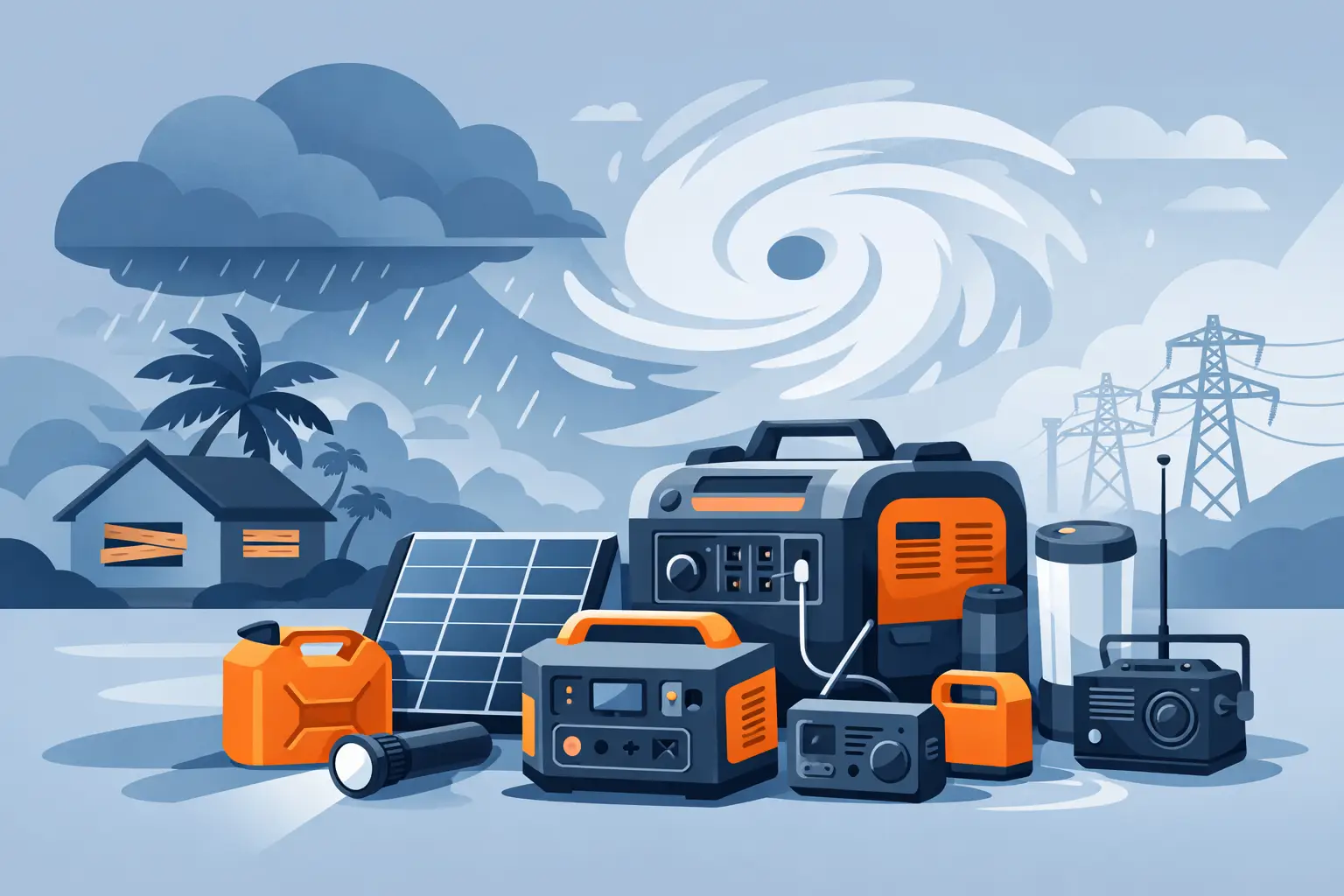
When the lights go out before the storm has even passed, your power setup stops being a convenience and becomes a lifeline. The best emergency power products for hurricanes are the ones that keep essentials running safely, recharge fast, and hold up in heat, humidity, and repeated outages.
For most households, the right answer is not one product. It is a backup power plan built around what you need to keep on, how long you may be without grid power, and whether you want to recharge with fuel, solar, or both. That matters even more in coastal areas and island environments, where restoration can take longer and storm prep has to be practical, not theoretical.
What makes the best emergency power products for hurricanes?
A good hurricane backup product does three things well. First, it powers the devices that matter most, whether that is a fridge, router, lights, phones, fans, medical equipment, or a small business point-of-sale setup. Second, it gives you realistic runtime, not just a big number on a box. Third, it works well under pressure, meaning simple operation, dependable battery chemistry, and charging options that do not leave you stuck.
That is why portable power stations, solar generators, portable solar panels, and home battery backup systems have become such strong choices. They are quieter and easier to use than traditional generators, and they can be used indoors when designed for that purpose. For many families, they also remove the hassle of fuel storage during hurricane season.
Still, there are trade-offs. A small power station is excellent for phones, lights, and a modem, but it will not run large appliances for long. A whole-home battery setup offers much more coverage, but it requires a larger investment and planning before storm season arrives.
Portable power stations: the fastest win for outage readiness
If you want the simplest place to start, a portable power station is often it. These units store electricity in a battery and give you AC outlets, USB ports, and sometimes DC outputs for common devices. They are especially useful for apartments, condos, smaller homes, and anyone who wants backup power without the noise and maintenance of a gas unit.
A compact model can keep phones charged, lights on, and internet equipment running through shorter outages. A mid-size unit can add a TV, fan, laptop, or CPAP machine. A larger portable power station can handle a refrigerator for part of the day, especially if you cycle usage carefully.
The biggest advantage is ease. You charge it before a storm, move it where you need it, and plug in your essentials. For hurricane prep, look for models with enough output for startup surges, battery chemistry built for long cycle life, and a clear display that shows remaining runtime. Fast wall charging helps when you only have a short weather window to top everything off.
Solar generators: better for longer outages
A solar generator is usually a portable power station paired with solar panels. That pairing matters when outages stretch beyond a day or two. Once the storm passes and conditions are safe, solar gives you a way to refill your battery without relying entirely on the grid or fuel supply.
This is where buyers often make a smart move or an expensive mistake. The battery may be large, but if the solar input is too limited, recharging will be slow. On the other hand, a well-matched system can keep smaller essentials going for days with sensible energy use.
For hurricane season, solar generators are strongest when used as part of a disciplined load plan. Think refrigeration in cycles, device charging during daylight, lights at night, and careful management of anything that creates heat. They are not magic. They are practical, renewable backup tools that reward realistic expectations.
Portable solar panels: the piece many people forget
Plenty of households buy battery backup and stop there. That works for short outages, but portable solar panels are what give your backup system staying power. They let you recharge after the storm, and they reduce dependence on grid restoration or scarce fuel.
Not every panel is worth packing for storm season. You want something durable, easy to set up, and simple to store before high winds arrive. Foldable panels are convenient, but build quality matters. So do connectors, weather resistance, and compatibility with your power station.
Portable solar also gives you flexibility beyond the main home. It can support an outdoor kitchen setup, a detached office, a dock utility area, or a small business that needs to keep communication devices and payment systems alive. In a place where sunlight is abundant after the weather clears, solar charging is not just a nice extra. It is a practical recovery tool.
Home battery backup systems: best for broader coverage
If your goal is more than basic survival power, a home battery backup system is the next level. These systems can support larger loads, longer runtimes, and a cleaner transition during outages. For homeowners who want more continuity during hurricane season, this is often the strongest long-term solution.
A home battery can be configured to back up selected circuits like refrigeration, lights, fans, outlets, security systems, and internet, or in some cases a larger portion of the house. When paired with solar, it also gives you an ongoing way to recharge after a storm.
The benefit here is confidence. You are not dragging extension cords through the house or deciding whether to unplug one device to run another. But it does require planning. You need to know your essential loads, your expected outage duration, and whether your property is best served by partial-home or expanded backup.
For households in hurricane-prone areas, this can be one of the best investments in comfort and continuity. It is especially valuable if you work from home, manage a rental property, operate a small business, or care for someone who depends on powered medical equipment.
The best emergency power products for hurricanes by use case
The right product depends on what you are trying to protect.
For basic family preparedness, a mid-size portable power station is often the most practical choice. It covers communications, lighting, charging, and some comfort items without a steep learning curve.
For longer outages, a solar generator setup with matching portable panels gives you a more sustainable path. This is a strong fit for households that expect multi-day interruptions or want a backup plan that does not revolve around fuel.
For larger homes, higher daily energy use, or business continuity, home battery backup is the better answer. It costs more upfront, but it gives you more stable coverage and a more organized response when the grid fails.
For people with mixed needs, combining products can make more sense than oversizing one system. A home battery can cover core circuits while a portable unit handles a detached room, mobile work setup, or extra refrigeration. That layered approach is often more resilient than relying on a single piece of equipment.
What to check before you buy
Start with your essential loads, not the biggest product you can find. A refrigerator, internet router, several lights, phone chargers, and a fan create a very different demand than an air conditioner, water heater, or electric stove. Backup power works best when it is sized to purpose.
Then look at runtime and recharge time together. A large battery that takes too long to refill may leave you exposed if cloudy weather follows the storm. A smaller unit with fast charging and efficient load management may perform better in real conditions.
Battery chemistry matters too. Lithium iron phosphate batteries are popular for good reason. They typically offer long cycle life, better thermal stability, and dependable performance for repeated use. In hot, humid climates, durability is not a bonus feature. It is part of the value.
Finally, think about storage and mobility. Can you move it quickly? Can you charge it in time before a storm? Can you safely use it where you need it? The best product on paper is not the best one for your home if it is too complicated or too heavy to deploy when weather turns fast.
A smarter hurricane power plan starts before the forecast gets serious
Too many people shop for backup power when watches and warnings are already up. By then, the best options may be gone, shipping timelines get tighter, and you are forced into rushed decisions. A better plan is to choose your backup system early, test it, and know exactly what it will run.
That is especially true in places where hurricanes are not rare events but part of the annual reality. A dependable backup setup protects food, communication, comfort, business operations, and peace of mind. For many homes and small properties, SOL242 customers are not looking for luxury. They are looking for power that shows up when the grid does not.
The smartest emergency product is the one you will actually use, understand, and keep ready. If your system fits your real needs and can handle the days after a storm, you are not just buying equipment. You are buying time, options, and a steadier recovery when it matters most.


