

Commercial Backup Power Guide for Storm Season
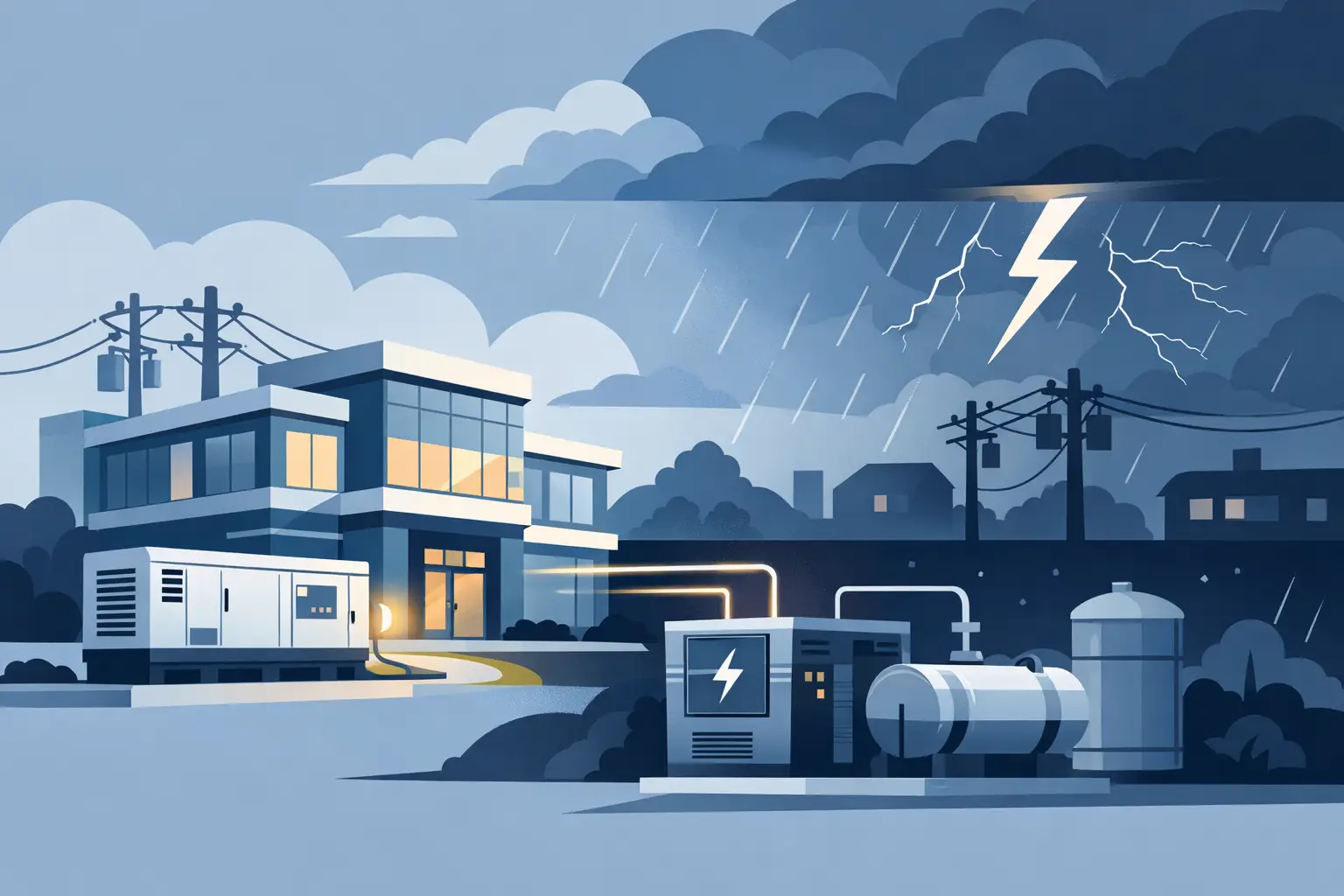
A power outage can cost a business far more than a few dark hours. Refrigerated inventory warms, payment systems stop, guests leave, security coverage drops, and staff are left waiting for the grid to return. This commercial backup power guide helps business owners choose practical battery and solar solutions that keep the work that matters most running when conditions are uncertain.
For businesses in the Bahamas and other storm-exposed areas, backup power is not a convenience purchase. It is part of continuity planning. The right system gives you time, control, and a safer way to operate through outages without relying entirely on fuel deliveries or an aging utility grid.
Start With Your Critical Loads
Do not begin by trying to power the entire property. Begin with the equipment that protects revenue, safety, and customer service during an outage. For a small retail shop, that may mean a point-of-sale terminal, router, lights, security cameras, and a small refrigerator. For a restaurant or food business, refrigeration may take priority. A property manager may need gate controls, pumps, emergency lighting, communications equipment, and a dedicated circuit for tenants.
Write down each critical device, its running wattage, and how many hours it must operate. Wattage is usually listed on the product label or in the manual. If a device is rated in amps, multiply amps by voltage to estimate watts. In most commercial settings, that means multiplying by 120 volts for standard equipment.
A simple example: A router using 20 watts for 12 hours needs 240 watt-hours. A 150-watt refrigerator that runs intermittently might use roughly 1,200 to 1,800 watt-hours over the same period, depending on its efficiency and how often the door is opened. Add every priority load together, then include a margin for losses and changing conditions.
Some equipment also needs extra power at startup. Refrigerators, freezers, pumps, and air conditioners can draw a brief surge above their normal running wattage. Your backup system’s inverter must handle that surge, not just the everyday total.
Choose the Right Type of Commercial Backup Power
The best setup depends on the size of the operation, how long outages usually last, and whether the property has usable solar exposure. A portable power station is often a strong starting point for small businesses that need immediate, flexible backup. It can run communications equipment, lights, laptops, charging stations, small appliances, and selected refrigeration loads without installation-heavy work.
For longer outages or larger critical circuits, a home or commercial battery backup system connected through a properly installed transfer solution offers more capacity and easier operation. Instead of running extension cords across a workspace, designated circuits can receive power automatically or with a simple manual changeover.
Solar panels extend runtime by recharging batteries during daylight. This matters in sunny island climates, where a battery-only system eventually reaches its limit if the outage lasts several days. Solar does not replace battery capacity overnight, but it can reduce generator fuel use, restore battery reserves, and help your business stay open longer.
Fuel generators still have a place, especially for high-demand loads or extended emergencies. Their trade-off is clear: they need fuel, maintenance, ventilation, and safe storage. A battery-and-solar system is quieter, cleaner at the point of use, and ready the moment the power drops. Many businesses use a hybrid approach, with batteries covering immediate needs and a generator reserved for long-duration or high-load events.
Commercial Backup Power Guide: Size for Runtime, Not Hope
Battery capacity is measured in watt-hours or kilowatt-hours. One kilowatt-hour equals 1,000 watt-hours. A 2 kWh battery can theoretically run a constant 200-watt load for about 10 hours. Real-world runtime is lower once inverter losses, battery reserve settings, temperature, and load changes are factored in.
A useful planning rule is to size for the outage you are likely to face, then add room for the outage you cannot afford to face. If your area commonly experiences four-hour interruptions, a system designed for only four hours offers little protection when repairs take longer. For essential operations, planning for 1.25 to 1.5 times your expected energy need is usually more realistic.
Consider these common scenarios:
- A salon may need lights, fans, a router, payment equipment, phone charging, and a few selected outlets to continue serving clients.
- A small market may prioritize refrigeration, checkout systems, cameras, and exterior lighting rather than every appliance in the building.
- A vacation rental or property management office may need internet, water pressure, entry systems, security, and a communications station.
- A construction crew or mobile service business may need portable power for tools, device charging, lighting, and jobsite communications.
Air conditioning deserves special attention. It is one of the largest loads in most businesses, and it can quickly push a modest battery system beyond its practical runtime. Rather than powering central AC, some owners choose fans, a cooled office or service area, or a high-efficiency mini-split on a carefully sized dedicated circuit. The right answer depends on the equipment and the role comfort plays in your operation.
Plan for Heat, Humidity, Salt, and Storm Damage
Island conditions shape every backup power decision. Batteries and electronics should be kept out of standing water, direct rain, and areas exposed to salt spray. Install fixed equipment in a dry, ventilated, accessible location that remains above likely flood levels. Do not place equipment in a sealed, overheated closet simply because it is out of sight.
Portable solar panels need secure placement before and after use. During a hurricane warning, panels should be packed away or secured according to their design and local safety guidance. They are valuable energy tools, but no portable panel should be left loose where high winds can turn it into a hazard.
Cables, connectors, and outlets also deserve attention. Use equipment rated for its environment, keep connections dry, and inspect for corrosion regularly. A backup power system only performs when its parts are maintained, charged, and ready.
Build a Simple Outage Procedure
The equipment is only half the plan. Your team should know what happens when utility power fails. Assign one person to confirm the outage, one to start or check the backup system, and one to protect sensitive equipment and communicate with customers if needed. For a very small business, this may be one owner following a printed checklist.
Keep the procedure practical: identify the critical circuits, list the devices that should not be connected, state how to monitor battery percentage, and set a point at which nonessential loads must be turned off. This prevents a staff member from plugging in a microwave, hot plate, or extra refrigerator and draining the battery needed for checkout systems or security.
Test the plan before hurricane season. Run the selected loads from backup power for an hour or two, check for unexpected overloads, and confirm that staff know where cables, panels, and instructions are stored. A test also reveals whether a refrigerator’s startup surge, a pump, or an older appliance needs a larger inverter than expected.
Protect the Investment Between Outages
A backup system should not sit forgotten until the next storm. Check battery charge levels monthly, inspect cables and connectors, and keep portable units clean and dry. Recharge after every use. If your system includes solar charging, test the panels and verify that the battery is actually receiving power under normal sunlight.
For fixed systems, use a qualified electrician for transfer switches, load panels, and any work involving building wiring. Never backfeed a building through a wall outlet or attempt to connect a battery system to electrical circuits without the right equipment and installation. That puts employees, utility workers, and your property at risk.
SOL242 helps business owners build practical power plans around portable stations, solar charging, and larger battery backup needs suited to demanding coastal conditions. The goal is not to buy the biggest system available. It is to buy the system that keeps your essential work moving when the grid cannot.
When you choose backup power around your actual critical loads, train your team, and test the setup before the weather turns, an outage becomes a managed interruption instead of a business emergency.


