

Solar Equipment for Coastal Homes That Lasts
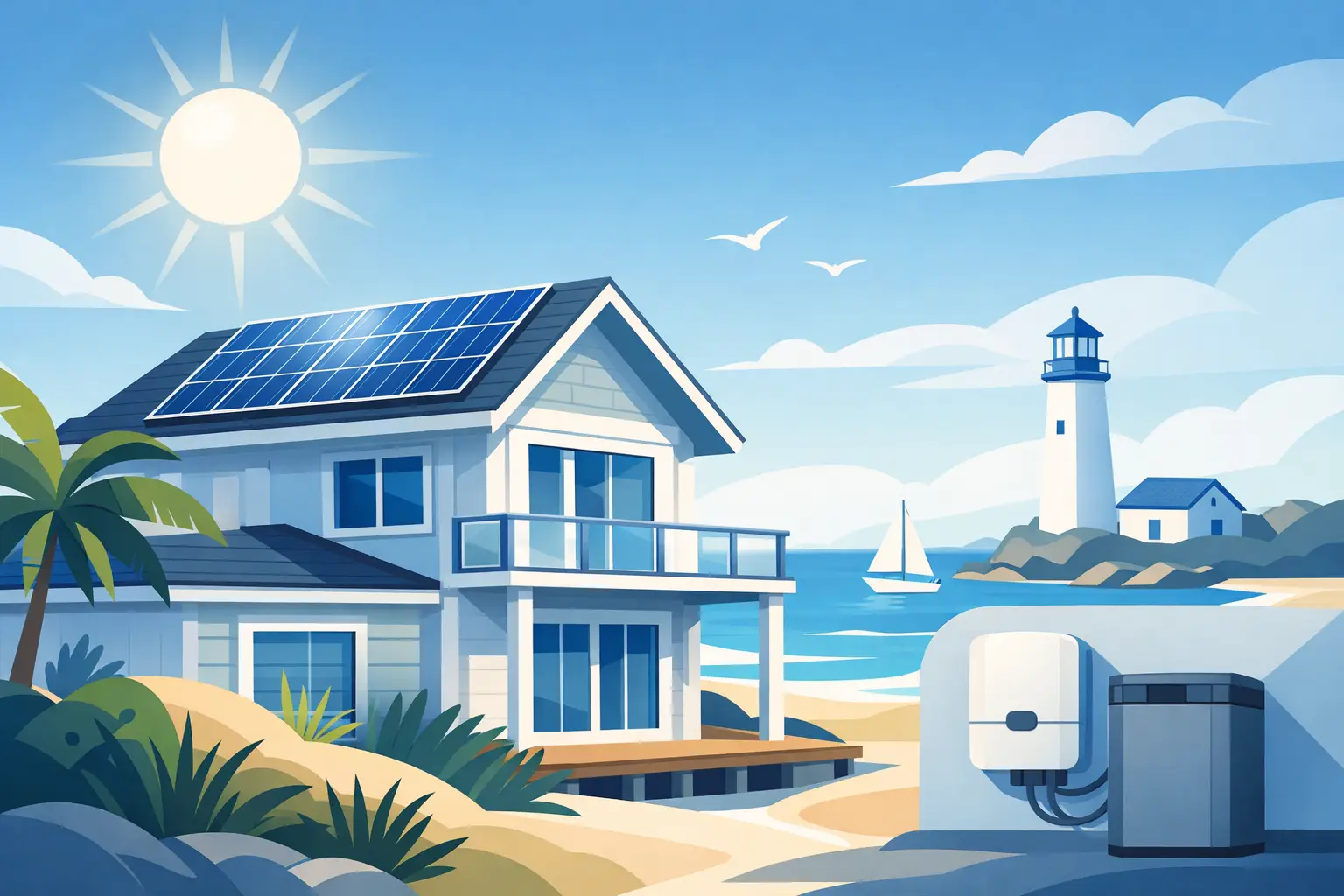
A bright shoreline is ideal for solar production, but salt air has a way of finding every exposed connector, metal bracket, and poorly sealed enclosure. The best solar equipment for coastal homes does more than collect sunlight. It keeps essential power available when utility service is interrupted, humidity is high, and storm season is approaching.
For homeowners in the Bahamas and along U.S. coastlines, the goal is not simply to install the largest possible system. It is to build a power plan that fits the home, protects the equipment, and keeps the appliances that matter most running when the grid does not.
Choosing Solar Equipment for Coastal Homes
Coastal conditions change the buying decision. Salt spray and salt-laden air can accelerate corrosion, especially around untreated steel hardware, exposed fasteners, electrical terminals, and damaged cable jackets. Heat can reduce battery and inverter efficiency. Heavy rain, wind-driven moisture, and hurricanes add another layer of risk.
That does not mean solar is a poor fit for the coast. It means the equipment and installation details need to match the environment. Start with solar panels, a battery or portable power station, an inverter, and the appropriate cables and mounting hardware. Then consider how each component will be stored, protected, and used during an outage.
A portable solar setup is often the fastest route to backup power for apartments, smaller homes, renters, and anyone who wants flexibility. A fixed rooftop or ground-mounted array paired with a home battery can support more circuits and longer outages, but it requires more planning, proper installation, and local approval where applicable.
Start With the Loads You Cannot Lose
Backup power becomes much easier to choose when you stop thinking about the whole house and focus on essential loads. During an outage, most households do not need every room, large appliance, and air conditioner operating at once. They need refrigeration, lights, communications, fans, medical equipment, and the ability to charge phones and laptops.
Write down the wattage and expected daily runtime for the devices that must stay on. A 100-watt refrigerator that cycles for eight hours in a day may use roughly 800 watt-hours, though real use varies with the unit, ambient temperature, and how often the door opens. Add lighting, a Wi-Fi router, fans, phone charging, and any critical equipment. This gives you a practical daily energy target.
Battery capacity is normally measured in watt-hours or kilowatt-hours. A 1,000Wh power station does not always provide the full 1,000Wh at the outlet because some energy is lost during conversion. For a modest outage kit, extra capacity is usually better than trying to run a battery to empty every day.
Also check the inverter output, measured in watts. Battery capacity determines how long equipment can run. Inverter output determines what it can start and run at one time. Refrigerators, pumps, and some power tools can require a brief startup surge that is higher than their normal running wattage. A large battery with an undersized inverter may still fail to start the appliance you need.
Match the System to the Type of Outage
A portable power station and folding solar panels can be an excellent first line of defense. It can be charged from the wall while the grid is available, then recharged from solar panels during extended outages. This setup is useful for running a refrigerator, lighting, communications, fans, and small electronics without fuel storage or generator fumes.
For longer or more demanding outages, a solar generator package with higher-capacity battery storage offers more room for essential loads. The right package depends on whether you are powering a single refrigerator and devices, a small business point-of-sale system, several rooms of lights and fans, or critical household circuits.
A permanently installed home battery backup system is a stronger option for owners who want automatic operation during outages. With a properly designed transfer system, it can support selected circuits without dragging extension cords through the house. It costs more than a portable setup and generally needs professional electrical work, but it offers convenience and a cleaner long-term backup strategy.
If central air conditioning is your priority, be realistic about the size and cost of the system required. Cooling loads can consume far more power than lights, fans, and a refrigerator. In many coastal homes, the practical plan is to back up efficient fans, one small room air conditioner, or a mini-split rather than attempting whole-home air conditioning from a modest battery.
Look for Coastal-Ready Details
Solar panels are built for outdoor use, but the surrounding equipment deserves just as much attention. Use mounting hardware intended for exterior installations and select corrosion-resistant materials appropriate for a marine or coastal environment. Aluminum rails and quality stainless-steel fasteners are common choices, but materials still need to be correctly installed and periodically inspected.
Cables should be rated for outdoor solar use and routed to avoid standing water, sharp edges, foot traffic, and direct damage from debris. Connections need to be fully seated and protected from unnecessary exposure. Never assume that a power station, battery, or portable panel is waterproof just because it is designed for outdoor energy use. Check the manufacturer’s stated weather rating and bring portable electronics inside when rain, spray, or severe weather is expected.
Heat management matters too. Batteries and power stations perform best within their specified operating range. Do not place them in a sealed shed, hot vehicle, or direct sun for long periods. A dry, shaded, ventilated indoor location is usually the better choice, provided it follows the product’s safety instructions and leaves enough space around the unit for airflow.
Plan for Hurricane Season Before the Forecast Changes
Solar equipment should support your hurricane plan, not complicate it. Fixed panels and mounting systems must be designed and installed for local wind requirements. Do not rely on improvised hardware, loose roof attachments, or assumptions about what survived the last storm. A qualified installer can assess roof condition, attachment points, wind exposure, drainage, and electrical protection.
Portable panels require a different approach. They are valuable because they can be deployed after the weather clears, but they should be folded, disconnected, and stored securely well before tropical-storm-force winds arrive. Leaving portable panels outside to capture a little more charge is not worth the risk of flying debris, damaged equipment, or injury.
Keep a simple charging routine during hurricane season. Charge batteries before a storm watch becomes urgent, test your refrigerator and communications setup, and keep the necessary cables in one labeled location. A backup system only delivers confidence when everyone in the household knows how to use it safely.
Solar Recharging: Size Panels for Reality
Solar panels can extend battery runtime dramatically, but panel output changes throughout the day. Cloud cover, shade, panel angle, heat, cable losses, and dirt all affect production. A panel labeled at 200 watts will not deliver 200 watts every hour from sunrise to sunset.
For portable systems, choose solar input that can meaningfully recharge the battery during the available daylight window. A small panel may be perfect for phones, lights, and a compact power station, while a refrigerator-focused backup setup benefits from more panel capacity. Check the power station’s maximum solar input voltage and wattage before connecting panels. Exceeding those limits can damage equipment.
Keep panels clean, but avoid abrasive cleaners or hard tools that could scratch the surface. In coastal areas, a gentle rinse and soft cloth may be appropriate when salt residue or dust builds up. Follow the panel manufacturer’s care guidance, particularly if water restrictions or local conditions affect cleaning methods.
Maintenance Is Part of Reliability
A coastal solar system needs regular attention, not constant worry. Every few months, inspect visible cables, connectors, panel frames, mounting points, and battery storage areas. Look for corrosion, loose hardware, cracked insulation, water intrusion, pest damage, or discoloration around electrical connections.
Test your backup system before you need it. Run the refrigerator or other essential loads for a few hours from battery power, confirm solar charging works, and verify that every family member can locate the manual and emergency cables. If you have a home battery system, follow the installer’s recommended inspection schedule and contact a qualified professional if you see damage or unusual system alerts.
Build in Layers Instead of Waiting for One Perfect System
The strongest coastal energy plan is often built in stages. Start with a portable power station for communications, lighting, and refrigeration support. Add portable solar panels to recharge during extended outages. Later, move toward larger battery capacity, more solar input, or installed backup for essential circuits as your budget and power needs grow.
That layered approach avoids buying too little for critical needs while giving you a clear path toward greater energy independence. SOL242 helps homeowners choose backup power built for heat, humidity, outages, and the realities of island living.
The right system is the one you can rely on before, during, and after the storm: protected from the elements, sized for the loads that matter, and ready to provide power when the grid is not.


