

Energy Storage for Reliable Backup Power
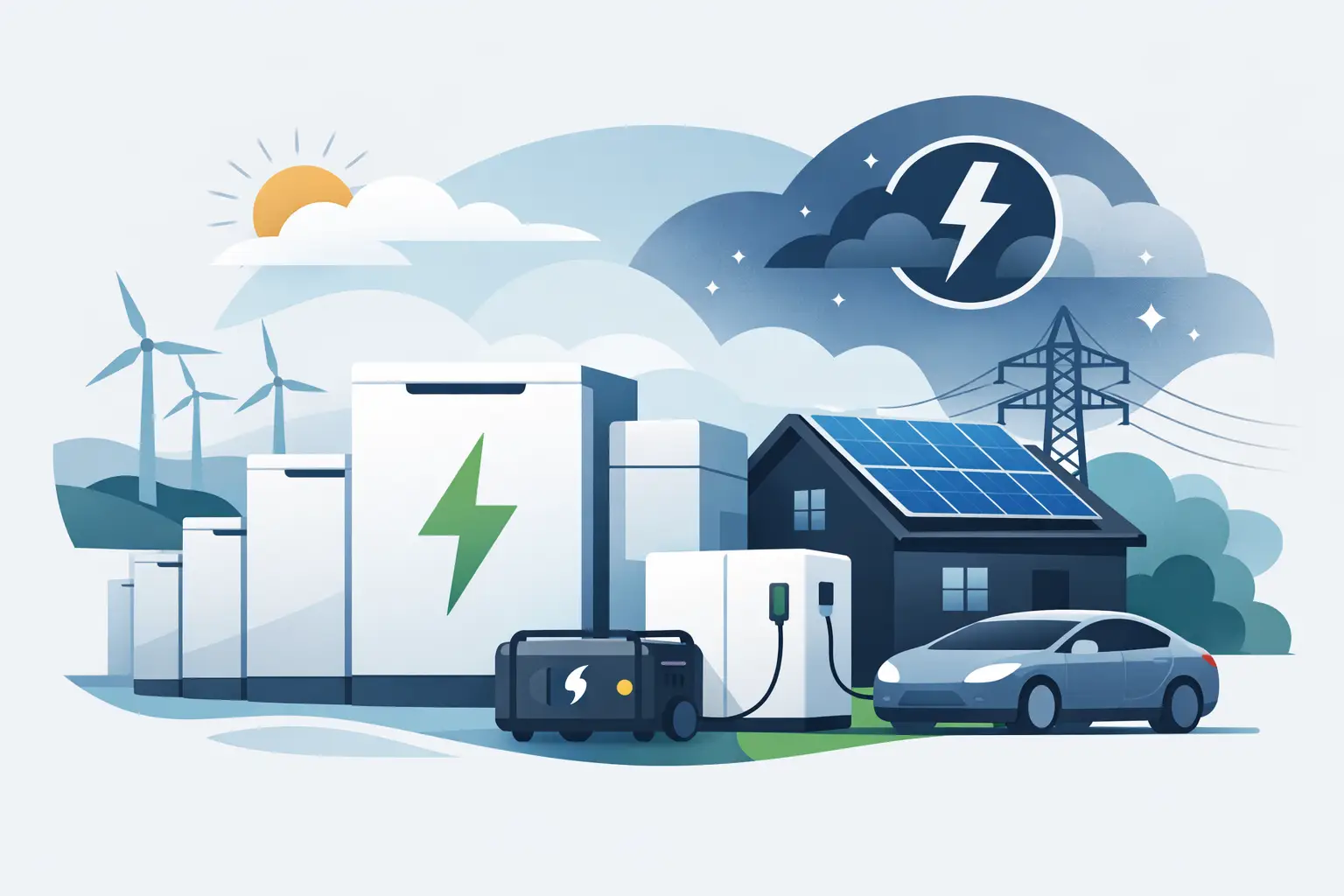
When the grid goes down, the value of energy storage becomes immediate. Lights stay on, phones remain charged, refrigerated food is protected, and a home or business can keep operating without waiting for utility crews. For households and properties exposed to hurricanes, heat, and recurring outages, stored power is not a luxury. It is part of a practical readiness plan.
A battery cannot prevent a storm or repair the grid. What it can do is give you control over the hours, and sometimes days, that follow. The right system turns available solar production or lower-cost grid electricity into power you can use when it matters most.
What Energy Storage Actually Does
Energy storage captures electricity for later use. In most home and small-business applications, that means lithium battery systems connected to a portable power station, a solar generator, or a fixed home battery backup system.
The battery stores power from solar panels, the utility grid, or both. When an outage occurs, it supplies electricity to connected devices and appliances. A portable unit may power a refrigerator, router, lights, fans, phones, and medical equipment. A properly sized home battery system can support selected circuits or, in some cases, much of the property.
This is different from owning solar panels alone. Standard grid-tied solar systems may shut down during a utility outage as a safety requirement, even when the sun is shining. Pairing solar with a battery gives that solar energy somewhere useful to go. It can charge the battery during the day and help extend your available backup power after dark.
Why Batteries Matter During Outages
Outages create a chain of problems. Food spoils, communication becomes harder, indoor temperatures rise quickly, and business interruptions can lead to lost revenue. In island and coastal communities, restoration may also take longer after severe weather because crews must assess damage across a wide area.
Backup batteries give you a quieter and lower-maintenance alternative to relying only on a fuel generator. There is no gasoline to store, no fumes near the house, and no engine noise competing with an already stressful situation. For overnight use, a battery can keep essential loads operating without refueling.
That does not mean batteries replace generators in every situation. A large property with central air conditioning, electric water heating, well pumps, or heavy commercial equipment may need a larger battery bank, a generator, or a hybrid approach. The smart choice depends on what must stay powered and for how long.
Choosing the Right Energy Storage Size
Battery shopping becomes much simpler when you separate two measurements: capacity and output.
Capacity is measured in watt-hours (Wh) or kilowatt-hours (kWh). It tells you how much energy the battery can store. A 1,000Wh power station holds roughly 1kWh of energy before normal conversion losses. Output, measured in watts (W), tells you how much power the battery can provide at one time.
A battery might have enough capacity to run a refrigerator for many hours, but it also needs enough output to handle the refrigerator’s startup surge. Motors in refrigerators, freezers, pumps, and some power tools often need extra power for a few seconds when starting.
Start by identifying your essential loads. For many homes, that includes refrigeration, lighting, fans, a Wi-Fi router, phone charging, laptops, and a television. Add a medical device if one is required. For a small business, priorities may include a point-of-sale system, internet equipment, security cameras, lighting, and a small refrigeration load.
Then consider runtime. A compact portable power station is ideal for charging devices, powering a router, and keeping a few small essentials operating. A larger solar generator can support a refrigerator and more household loads for an overnight outage. A fixed battery backup system is the stronger choice when you need selected circuits, automatic switchover, or multi-day solar recharging.
Avoid sizing based on a single product label or a guess. Appliance consumption varies by age, temperature, and use. A refrigerator in a hot kitchen works harder than the same model in a cool space. Air conditioners and electric cooking appliances can drain a battery quickly. Planning around real priorities prevents disappointment later.
Portable Power Stations vs. Home Battery Systems
Portable power stations offer flexibility. They can be moved where needed, used in a vehicle or at an outdoor worksite, and stored inside until storm season. They are especially useful for renters, condo residents, boat owners, and anyone who wants backup power without electrical installation.
They work best when you can manage loads manually. You plug in the devices that matter, monitor remaining battery capacity, and recharge from a wall outlet, vehicle outlet, or portable solar panels. This makes them practical for immediate preparedness and off-grid use.
Home battery backup systems are built for a more permanent role. Installed with the appropriate transfer equipment, they can detect an outage and switch to battery power automatically. They can support dedicated circuits, recharge from rooftop solar, and reduce dependence on the grid beyond emergencies.
The trade-off is cost and planning. A fixed system requires professional design and installation, especially when it connects to a home’s electrical panel. It may also require decisions about which circuits receive backup power. That planning is worthwhile if automatic, whole-property or partial-home protection is the goal.
Solar Makes Stored Power Last Longer
A battery starts with a finite amount of energy. Solar panels help replenish it. This changes the conversation from “How long will the battery last?” to “How much energy can we produce and manage each day?”
Portable solar panels can recharge a compatible power station during daylight hours. They are useful for temporary setups, outdoor work, camping, and emergency use. Positioning matters: direct sun, correct panel angle, and minimal shading all affect charging speed. Even partial shade from a railing, tree branch, or roof edge can significantly reduce output.
For homes, rooftop solar paired with battery storage can support a more dependable long-term backup strategy. Daytime solar production powers current needs and charges the battery. At night, the battery handles essential loads. During extended cloudy weather, you may need to reduce consumption or have another charging option available.
Solar does not eliminate the need for sensible power management. Running an air conditioner continuously, cooking with high-wattage appliances, and charging every device at once can overwhelm a modest system. The strongest backup plans match available energy to the loads that protect comfort, safety, and communication.
Build a Storm-Ready Power Plan
Energy storage works best before the first warning is issued. Charge batteries fully when severe weather is approaching, test cables and solar inputs, and decide which appliances will receive power first. Keep extension cords rated for the intended load, and never run cords through standing water or damaged openings.
For hurricane preparedness, store portable units indoors in a dry, ventilated location away from direct sun and flood risk. Although many products are designed for demanding use, batteries and electronics should not be left exposed to rain, salt spray, or extreme heat. Inspect connectors for corrosion, especially in coastal environments.
A useful plan also includes behavior changes. Set refrigerators and freezers to colder settings before an expected outage. Use LED lights instead of high-wattage bulbs. Keep phones and backup communication devices charged. Delay nonessential loads such as laundry, electric cooking, and heavy tools until power is stable or solar production is strong.
Energy Storage for Everyday Savings
Backup power is the first reason many people consider a battery, but daily energy management can add value. In areas with time-based utility rates, a battery may charge when electricity costs less and supply power when rates are higher. Solar-equipped households can also store excess daytime production for evening use rather than sending all of it back to the grid.
Savings depend on local utility rules, electricity pricing, solar production, household usage, and the size of the battery. A battery should not be purchased on savings claims alone. Its clearest value is often the combination of outage protection, solar self-consumption, quieter operation, and reduced exposure to fuel shortages.
For a vacation rental, retail shop, or home office, that reliability can protect more than convenience. It can preserve inventory, maintain internet access, keep guests comfortable, and prevent a short outage from becoming a costly interruption.
Make the Battery Fit the Job
The best energy storage setup is not necessarily the biggest one. It is the one designed around your actual risks and essential needs. A homeowner who needs refrigeration, fans, and communications has a different solution from a business that must protect refrigerated goods or a family that needs automatic backup for critical circuits.
Start with the loads you cannot afford to lose, then choose enough battery capacity, output, and solar charging capability to support them. SOL242 helps make that decision practical with backup power options built around real outage scenarios, not vague promises. A well-chosen battery gives you more than stored electricity – it gives your household or property a dependable next step when the grid cannot.


