
Guide to Blackout-Ready Homes: Start Here
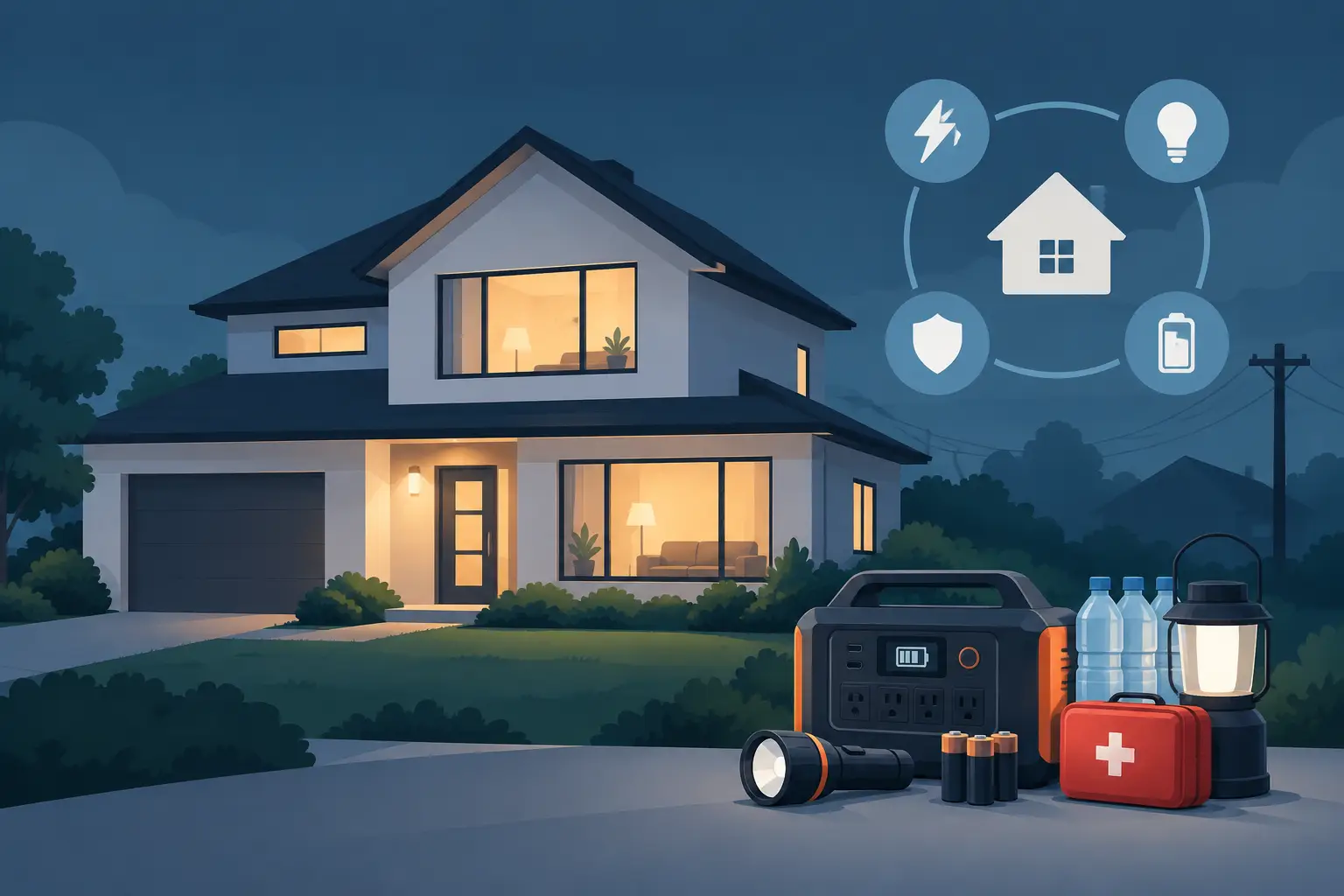
A blackout changes a normal home quickly. The refrigerator starts warming, phones begin losing charge, water pumps may stop, and a hot, humid evening can become uncomfortable within hours. This guide to blackout ready homes helps you prepare for that moment with a practical plan built around the loads that matter most.
The goal is not necessarily to power every appliance as if nothing happened. For most households, the smart approach is to keep essential systems running safely, stretch battery capacity, and add solar charging so your backup power can last beyond the first night.
Start With the Essentials, Not the Biggest Battery
A blackout-ready home begins with priorities. Make a short list of what your household truly needs during an outage. For many families, that means a refrigerator, lights, phones, internet equipment, fans, medical devices, and a way to charge radios or tools. If your property relies on an electric water pump, that may belong near the top of the list as well.
Your needs may be different. A home office may need a router, laptop, and monitor to stay connected. A small business may need point-of-sale equipment, security cameras, or a freezer protecting inventory. Families with medical equipment should plan for that load first and keep a separate emergency charging option where possible.
It is tempting to start with a large power number, but wattage only tells part of the story. You also need to know how long each device will run. A 60-watt fan uses far less energy over a night than an air conditioner, while a refrigerator uses power in cycles. Read the appliance label, check the owner manual, or use a plug-in power meter to understand actual consumption.
Build Your Blackout Backup Plan in Layers
The most dependable backup setups use layers. That way, one dead battery or a few cloudy hours do not leave the entire home without options.
Layer one: Everyday emergency power
A compact portable power station is useful for the first response to an outage. Keep one charged for phones, lights, a router, a fan, and other low-draw essentials. It is quiet, requires no fuel storage, and can be used indoors when operated according to the manufacturer’s instructions.
This layer is especially valuable for apartment residents, renters, and households that need a simple backup solution without electrical installation. It can also be your grab-and-go power source if you need to move to another location after a storm.
Layer two: Extended home backup
For longer outages, move up to a higher-capacity power station, solar generator, or installed home battery backup system. These options can support more critical loads and provide longer runtimes. Depending on the system, you may be able to run refrigeration, multiple fans, lighting circuits, communications equipment, and selected outlets.
A whole-home battery can be the right choice for a larger property or a household that wants automatic protection, but it is not the only answer. A well-sized portable system can offer meaningful protection at a lower entry cost when you focus on selected essentials. The right choice depends on your budget, the size of your loads, and whether you need automatic switchover.
Layer three: Solar recharging
Battery power is limited until it can recharge. Portable solar panels turn daylight into a practical advantage, particularly in places where fuel deliveries or gas station access may be difficult after severe weather. During a multi-day outage, solar can recharge a compatible power station and reduce dependence on the grid.
Solar production varies with panel size, shading, cloud cover, angle, and time of year. Do not assume a small panel will replace a full day of heavy energy use. Treat solar as part of a planned system: reduce unnecessary loads, charge during the best sun hours, and reserve stored energy for nighttime and urgent needs.
Size Backup Power for Real Life
Start by estimating the watts each device uses and the hours you expect to run it. Multiply watts by hours to estimate watt-hours. For example, a 50-watt fan running for eight hours uses about 400 watt-hours. Add the expected use of your other essentials, then leave room for conversion losses and changing needs.
Also account for surge power. Refrigerators, pumps, and some power tools may briefly draw far more power when starting than they use while running. A battery system must have enough output capacity to handle that momentary surge, not just the appliance’s running wattage.
Air conditioning deserves special attention. Portable batteries can help with fans, but running central air or large window units for long periods requires substantial battery capacity and often a professionally designed system. In a blackout, using fans, closing blinds, limiting door openings, and cooling only occupied rooms can be a more realistic strategy. Comfort matters, but protecting the battery for food, communications, and medical needs may matter more.
Protect Food, Water, and Communication
Backup power works best alongside basic outage habits. Keep refrigerator and freezer doors closed as much as possible. Use a thermometer so you are not guessing whether food is still safe. Freeze containers of water ahead of storm season to help hold cold temperatures and provide drinking water as they thaw.
Water planning is equally important. If your home depends on a pump, test whether your chosen backup system can start and run it. If not, store an appropriate emergency water supply and understand how long it will last. Do not wait for an outage to find out that the pump has a higher startup requirement than your battery can support.
Keep phones charged before severe weather arrives, but do not rely on phones alone. A battery-powered radio, flashlights, spare charging cables, and a printed contact list are low-cost safeguards. Place these items with your power equipment so they are easy to find in the dark.
Choose Equipment Built for Your Environment
Heat, humidity, salt air, and storm conditions are hard on energy equipment. Store portable power stations in a dry, ventilated area away from direct sun, standing water, and corrosive moisture. Do not leave batteries in a hot vehicle or exposed outdoor space for extended periods.
For coastal and island homes, durability is not a marketing detail. Check operating temperatures, storage guidance, panel construction, cable quality, and warranty support before you buy. Solar panels should be secured or stored safely before high winds arrive. Portable panels are useful during recovery, but they should never become flying debris during a storm.
SOL242 focuses on backup power and solar equipment suited to the demands of island conditions, helping households match practical products to their outage priorities rather than buying more capacity than they can use.
Test Before Hurricane Season
A backup plan that has never been tested is only a collection of equipment. Every few months, run a short blackout drill. Turn off grid power to the devices you plan to support, connect them to your backup system, and track battery use for several hours. You will quickly learn whether a refrigerator outlet is accessible, whether your router restarts properly, and whether your family knows which loads to unplug.
Check battery charge levels, inspect cables for wear, clean solar panel surfaces, and confirm that extension cords are rated for the load and in good condition. Never run fuel-powered generators indoors, in garages, or near doors and windows. Carbon monoxide safety is non-negotiable.
A blackout-ready home is not defined by one expensive purchase. It is defined by clear priorities, reliable equipment, and a plan your household can use under pressure. Set up the essentials now, test them on an ordinary day, and let the next outage be an inconvenience rather than a crisis.


