

Home Energy Audit Guide for Backup-Ready Homes
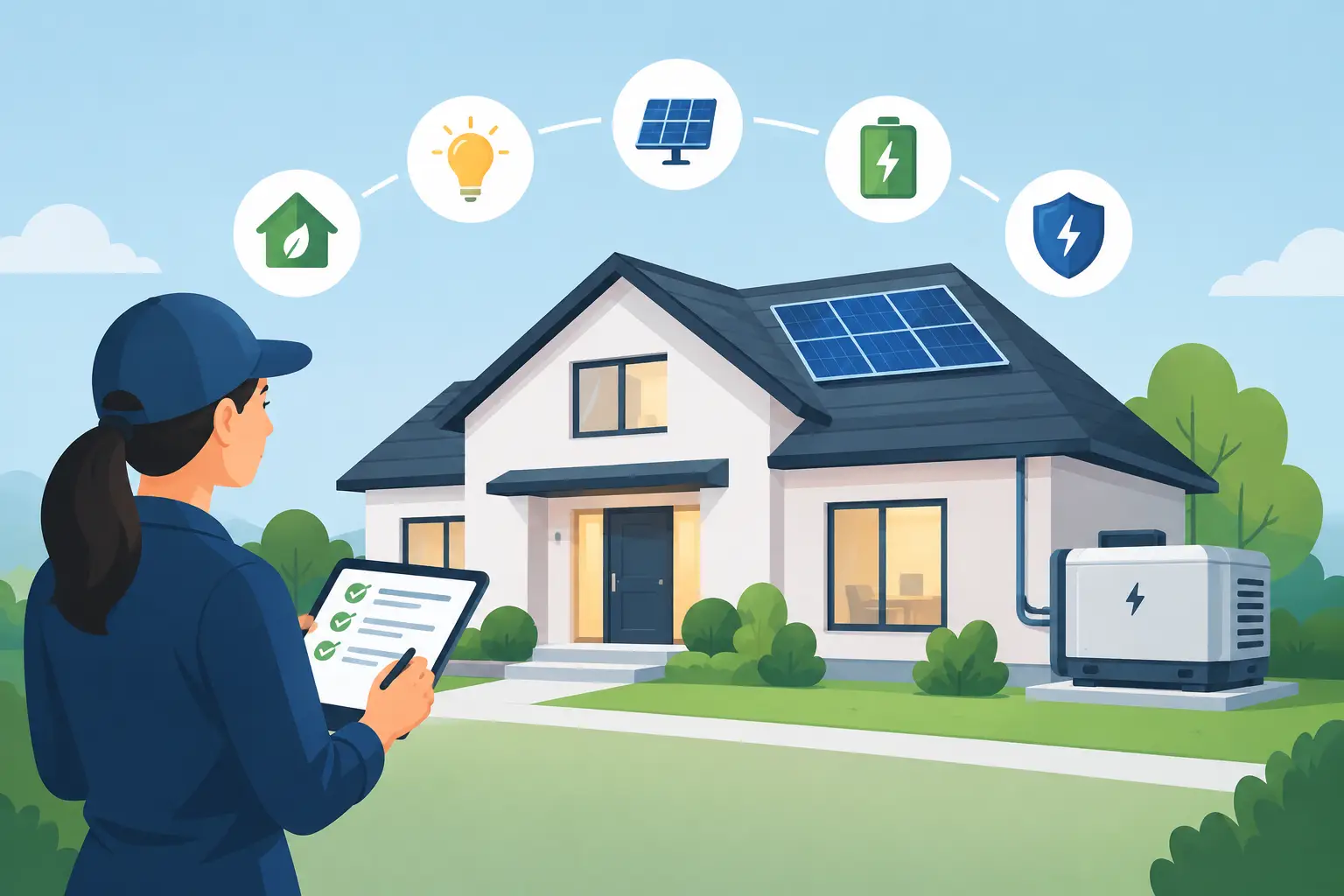
A power bill can tell you that your home uses a lot of electricity. It cannot tell you what will still run when the grid goes down, which appliances are quietly raising costs, or whether your backup power plan will carry your household through a long outage. This home energy audit guide helps you answer those practical questions before hurricane season, the next utility increase, or the next unexpected blackout forces the issue.
For homes in the Bahamas, Florida, and other coastal areas, an energy audit is not only about efficiency. It is a readiness plan. The goal is to reduce waste first, identify the loads that matter most, and then choose solar and battery backup capacity that supports real life.
Start With What Your Home Actually Uses
Begin with your electric bills from the past 12 months. Write down the kilowatt-hours used each month, the total cost, and the months with the highest bills. A single bill is a snapshot. A full year reveals patterns caused by hotter weather, air conditioning, guests, laundry, pool equipment, or holiday use.
Next, walk through the property room by room. Look for equipment that runs continuously or for long periods: refrigerators, freezers, air conditioners, water pumps, internet equipment, security systems, dehumidifiers, pool pumps, and outdoor lighting. These loads deserve attention because they shape both your monthly bill and the size of the backup system you may need.
Do not assume the biggest appliance is always the main problem. An older refrigerator with worn seals, a poorly maintained air conditioner, or a pump running longer than necessary can consume far more energy than expected. Heat, humidity, and salt air can make equipment work harder and wear faster, especially in island environments.
Build a Room-by-Room Energy Picture
Your audit does not require advanced electrical knowledge. It requires honest observation. For each major appliance, record its wattage, how many hours it runs each day, and whether it is essential during an outage. The wattage may be listed on a label, in the manual, or on the appliance itself.
A simple estimate is:
Watts x hours used per day = watt-hours per day
For example, a 100-watt television used for four hours consumes about 400 watt-hours, or 0.4 kilowatt-hours. The calculation becomes more useful when you add several devices together. It shows why a few small items are manageable on a portable power station while high-draw appliances can drain a battery quickly.
Pay close attention to these categories:
- Cooling and comfort, including air conditioners, ceiling fans, refrigerators, freezers, and dehumidifiers
- Water and food, including well or booster pumps, coffee makers, microwaves, electric ranges, and ice makers
- Work and communications, including routers, phones, laptops, monitors, security cameras, and cash registers
- Safety and access, including medical devices, garage doors, alarms, exterior lighting, and gates
- High-demand equipment, including electric water heaters, clothes dryers, pool pumps, and central air conditioning
The distinction that matters is not simply how much electricity an item uses. It is whether you need it during an outage. A refrigerator may be essential. A dryer can wait. A fan may deliver meaningful comfort for a fraction of the power required by central AC.
Find the Waste Before Buying More Capacity
Battery backup is valuable, but it should not be used to compensate for avoidable waste. Every watt you eliminate helps your stored energy last longer. That can mean a smaller, more affordable system or more hours of essential power when conditions are difficult.
Start with cooling. Clean or replace HVAC filters, clear outdoor condenser areas, service aging systems, and check that doors and windows seal properly. Use ceiling fans to support comfort, but remember that fans cool people, not rooms. Turn them off when spaces are empty.
Then look for standby loads. Cable boxes, old entertainment systems, unused chargers, second refrigerators, and always-on equipment can create steady consumption that goes unnoticed. Smart plugs or plug-in energy monitors are useful for testing individual devices, particularly if you suspect an appliance is using more power than its label suggests.
Lighting is another straightforward win. If older bulbs remain in high-use fixtures, LED replacements reduce energy use and generate less heat. Outside, use timers, motion sensors, or dusk-to-dawn controls so lighting supports security without running unnecessarily all day.
Efficiency upgrades have trade-offs. Replacing every appliance at once is rarely the best move. Focus first on equipment that is old, heavily used, expensive to operate, or critical during an outage. A reliable refrigerator and a well-maintained AC system often matter more than replacing a lightly used appliance that has years of service left.
Separate Essential Loads From Nice-to-Have Loads
This is the part of a home energy audit that turns a general efficiency exercise into a backup power strategy. Make two columns: essential loads and optional loads.
Essential loads commonly include refrigeration, selected lights, fans, phone charging, internet, a television or radio for updates, security devices, and necessary medical equipment. Depending on your home, water pumping may also be essential. For a small business or rental property, the list may include a point-of-sale system, modem, cameras, or a small freezer.
Optional loads often include electric cooking appliances, large entertainment systems, laundry equipment, pool equipment, and whole-home air conditioning. That does not mean these items can never run on backup power. It means they require more capacity, more careful scheduling, or a larger home battery system.
Also account for starting wattage. Motors in refrigerators, pumps, and air conditioners can briefly draw more power when they start than when they run. A backup system must handle that surge, not just the appliance’s normal running wattage. This is a common reason a setup that looks sufficient on paper struggles in real use.
Match Your Backup System to the Outage You Expect
Not every household needs the same solution. The right choice depends on outage frequency, the appliances you want to protect, available solar exposure, budget, and how long you need to operate independently.
For short outages and everyday convenience, a portable power station paired with portable solar panels can keep communications, lights, fans, and small electronics running. It is also easy to store, move, and use away from home.
For longer outages, refrigeration, pumps, or a dedicated essential-load panel, a larger solar generator or home battery backup system may be the better fit. A properly planned system can recharge from solar during daylight and preserve battery power overnight. However, cloudy conditions, heavy rain, shade, and high household demand all affect performance. Plan for your realistic weather and usage, not the best-case day.
Portable panels are useful for flexibility, but placement matters. They need direct sun and should be secured or stored ahead of severe weather. Fixed solar equipment and battery systems require more planning, especially where wind exposure, corrosion resistance, code requirements, and professional installation apply.
Put Your Findings Into an Action Plan
Your audit should end with priorities, not a stack of notes. Start with no-cost changes such as adjusting thermostat habits, switching off unused loads, and setting equipment schedules. Follow with low-cost improvements such as LED bulbs, weatherstripping, smart plugs, appliance maintenance, and surge protection.
Then decide what level of resilience you need. If your priority is keeping food cold and phones charged for a day, your power needs will be very different from a household that needs water pumping, internet, security, and medical equipment for several days. Use your essential-load total to guide battery capacity, inverter output, and solar charging needs.
Test the plan before an emergency. Run essential devices from the backup system for several hours. Confirm that cords, transfer equipment, solar panels, and charging methods are ready. Keep batteries charged according to the manufacturer’s instructions, and store portable equipment in a dry, protected location away from direct salt spray.
A home that wastes less energy is easier and less expensive to protect. Take the audit one room at a time, invest where reliability matters most, and choose backup power that gives your household a calm, capable response when the grid cannot.


