

The Future of Hurricane Backup Power at Home
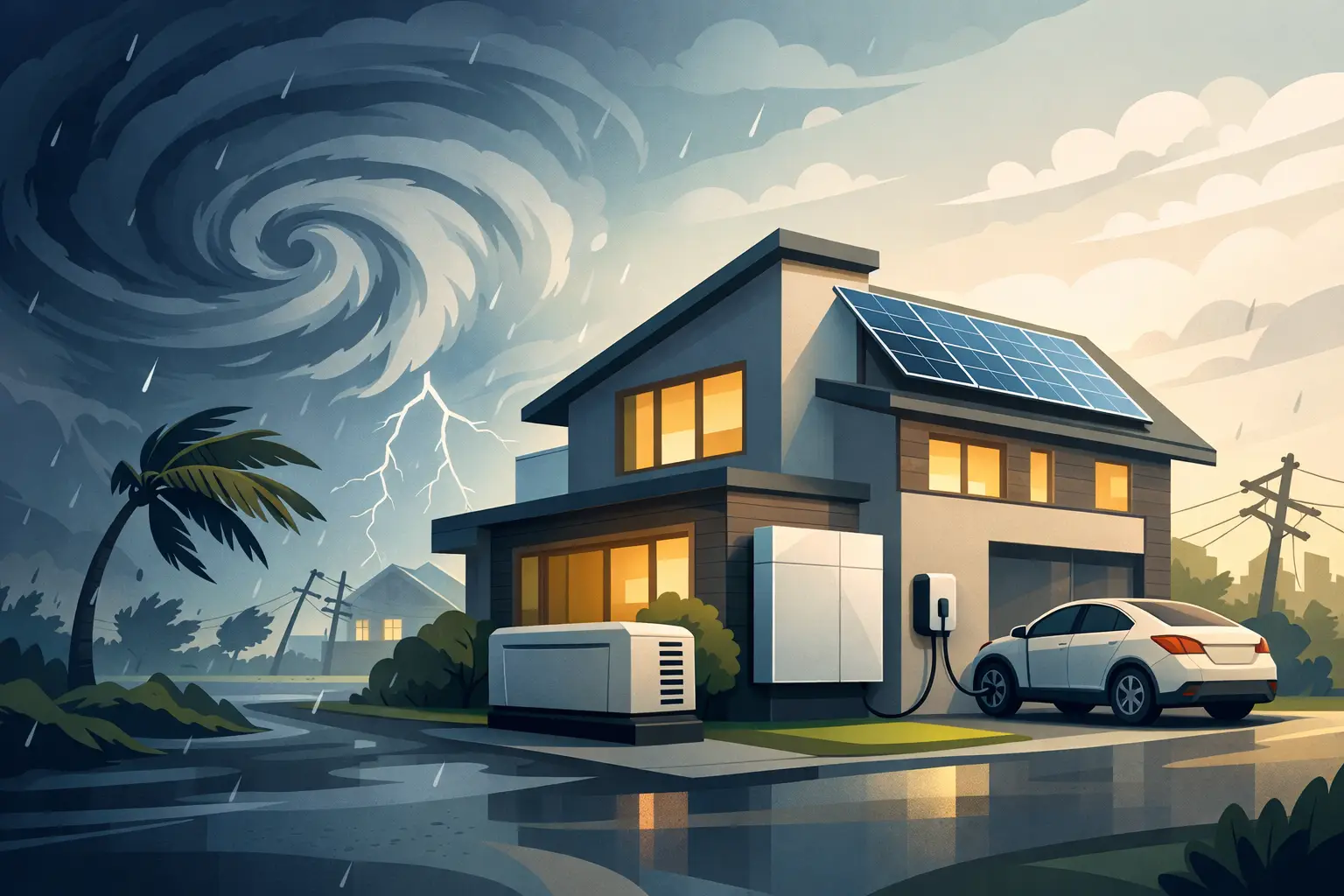
A hurricane watch changes the meaning of electricity. Power is no longer about convenience. It is about keeping food cold, phones charged, medical equipment running, water moving, and a family connected when the grid is down. The future of hurricane backup power is moving away from noisy, fuel-dependent emergency plans and toward quieter battery systems, solar charging, and layered power strategies built for days without utility service.
For homes and small businesses in coastal areas, this shift is already practical. Better batteries, faster solar charging, and smarter energy management are making backup power easier to use before, during, and after a storm. The goal is not necessarily to power every appliance as if nothing happened. It is to protect the loads that matter most and regain control when fuel, roads, and utility repairs are uncertain.
The Future of Hurricane Backup Power Is Layered
The strongest backup plan is rarely a single device. A whole-home battery may protect critical circuits, while a portable power station keeps essential electronics available in another room, a vehicle, or a temporary location. Portable solar panels can recharge smaller systems when fuel is scarce or the outage lasts longer than expected.
This layered approach matters because hurricanes do not create one predictable type of outage. A short interruption may only require a power station for Wi-Fi, lighting, and refrigeration. A multi-day outage after major wind damage may call for solar recharging, battery expansion, or a larger home backup system that supports a water pump, freezer, communications equipment, and selected outlets.
For many households, the smartest first step is to identify critical loads rather than trying to replace the entire grid. Refrigerators, fans, lights, phones, laptops, medical devices, routers, security systems, and certain pumps usually deserve priority. Large central air-conditioning systems, electric water heaters, dryers, and full electric ranges require far more power. They can be supported in some larger setups, but they change the system size and budget quickly.
Batteries Are Replacing “Wait for the Generator” Plans
Traditional generators still have a place, especially where high-output power is required for extended periods. But they come with real hurricane-season limitations. They need fuel, regular maintenance, safe placement, oil changes, and careful operation to avoid carbon monoxide hazards. Fuel stations may be closed, roads may be blocked, and gasoline storage brings its own safety concerns.
Battery backup removes several of those pressure points. A portable power station can operate indoors with no exhaust. A home battery can switch on automatically when utility power fails, depending on the installation and configuration. Both provide quiet power for overnight use, which makes a meaningful difference when families are already dealing with heat, stress, and disrupted sleep.
The trade-off is capacity. Batteries store a finite amount of energy, so runtime depends on what is plugged in. A small unit may run phones, lights, and a router for many hours, but not a refrigerator and window air conditioner indefinitely. That is why battery capacity, inverter output, and recharge options must be considered together.
A useful way to think about a backup system is simple: capacity determines how long it can run, output determines what it can run, and recharge determines how long it can remain useful. A system with large capacity but no way to recharge during a long outage can still leave a household limited. Solar input, vehicle charging, grid charging before the storm, and generator charging can all extend a battery system’s usefulness.
Solar Becomes More Valuable After Landfall
Solar panels are often discussed as a way to reduce monthly utility bills. During hurricane recovery, their value is more immediate: they can turn daylight into usable power without a trip to the gas station.
Portable solar panels are especially useful for power stations because they can be stored before a storm and deployed when conditions are safe. They should never be left outside during hurricane-force winds or used in dangerous weather. After the storm has passed, panels need a clear, stable location, secure positioning, and attention to damaged cables or connectors.
For a home with fixed solar and battery storage, the details matter even more. Not every rooftop solar system works during an outage. Many grid-tied systems shut down when the utility fails to protect line workers from backfeed. A properly designed battery-backed solar system can continue serving selected loads, but only when the equipment, transfer controls, and installation are designed for backup operation.
That distinction is one of the biggest changes shaping hurricane preparedness. Solar panels alone are not the same as backup power. Solar plus storage, properly configured for island conditions and local electrical requirements, is what creates usable energy independence during a blackout.
Smarter Power Management Extends Every Watt
The next generation of backup power is not only bigger. It is more selective. Home battery systems and advanced power stations increasingly let users monitor consumption, prioritize circuits, set charging limits, and see remaining runtime from an app or display.
That visibility helps households make better decisions during an outage. If the battery is at 65 percent and sunlight is limited, it may be time to turn off nonessential devices and preserve power for refrigeration, communications, and nighttime lighting. If solar production is strong, that may be the right time to recharge devices, run a small appliance, or cool a room before evening.
Simple habits are just as valuable as smart controls. Keep refrigerator and freezer doors closed. Use LED lights. Charge phones during daylight when solar is available. Choose fans over air conditioners when possible. Avoid running high-wattage appliances at the same time unless the system was designed for that load.
These choices are not about living uncomfortably. They are about making stored power last through the hours that matter most.
Hurricane-Ready Equipment Must Handle the Environment
Coastal backup power faces conditions that buyers inland may not consider. Heat can affect battery performance. Humidity can accelerate corrosion. Salt air can damage exposed connections. Heavy rain, wind-blown debris, and flooding can turn a poorly placed power setup into a safety risk.
That makes storage and placement part of the purchase decision. Portable power stations should be kept dry, elevated away from possible flooding, and stored where extreme heat will not build up. Solar panels need durable frames, protected connectors, and secure storage before storms. Home battery equipment should be installed by qualified professionals in a location that meets manufacturer requirements and local codes.
Durability does not mean leaving equipment exposed to every condition. The best hurricane-ready system is one that is protected before the storm, easy to access afterward, and operated within its rated limits.
What to Buy First Depends on Your Risk
A renter who needs phone charging, lights, a fan, and a way to keep a small cooler or CPAP running has different needs from a homeowner with a well pump and a full refrigerator. A small business may need to protect point-of-sale equipment, communications, security cameras, and a few essential lights to reopen faster.
Start by writing down the devices you cannot afford to lose. Check each device’s wattage and estimate how many hours it must run. Then choose a power station, solar generator, or home battery system that has enough output for those devices and enough stored energy for a realistic outage window.
It also helps to plan for the recharge path before buying. If utility power is usually restored within a day, a charged battery may be enough. If outages commonly last several days, solar input and expandable battery capacity become much more valuable. In The Bahamas and other storm-exposed coastal communities, that added flexibility can separate a useful backup system from one that runs out too early.
SOL242 focuses on portable power stations, solar panels, solar generators, and home backup options because no single solution fits every property. The right system matches your essential loads, budget, available space, and the level of independence you want after a storm.
Prepare Before the Forecast Turns Serious
Backup power works best when it is not treated as a last-minute purchase. Test your system before hurricane season. Fully charge batteries, inspect cables, confirm that essential appliances can connect safely, and practice operating the system in a normal setting. If you have solar panels, review how they will be stored before high winds and where they can be safely deployed afterward.
Keep extension cords rated for the intended load, spare charging cables, flashlights, batteries, and a written list of priority devices near the system. For installed home batteries, make sure everyone responsible for the property understands what the system powers and what should remain off during an outage.
The future of hurricane backup power is not about chasing the largest battery or the most complicated setup. It is about having dependable energy that fits your real life, protects what matters, and gives you practical choices when the grid cannot. Before the next storm forms, choose one essential load to protect, calculate what it needs, and build your backup plan from there.


