

Backup Power for Storm Shelters That Works
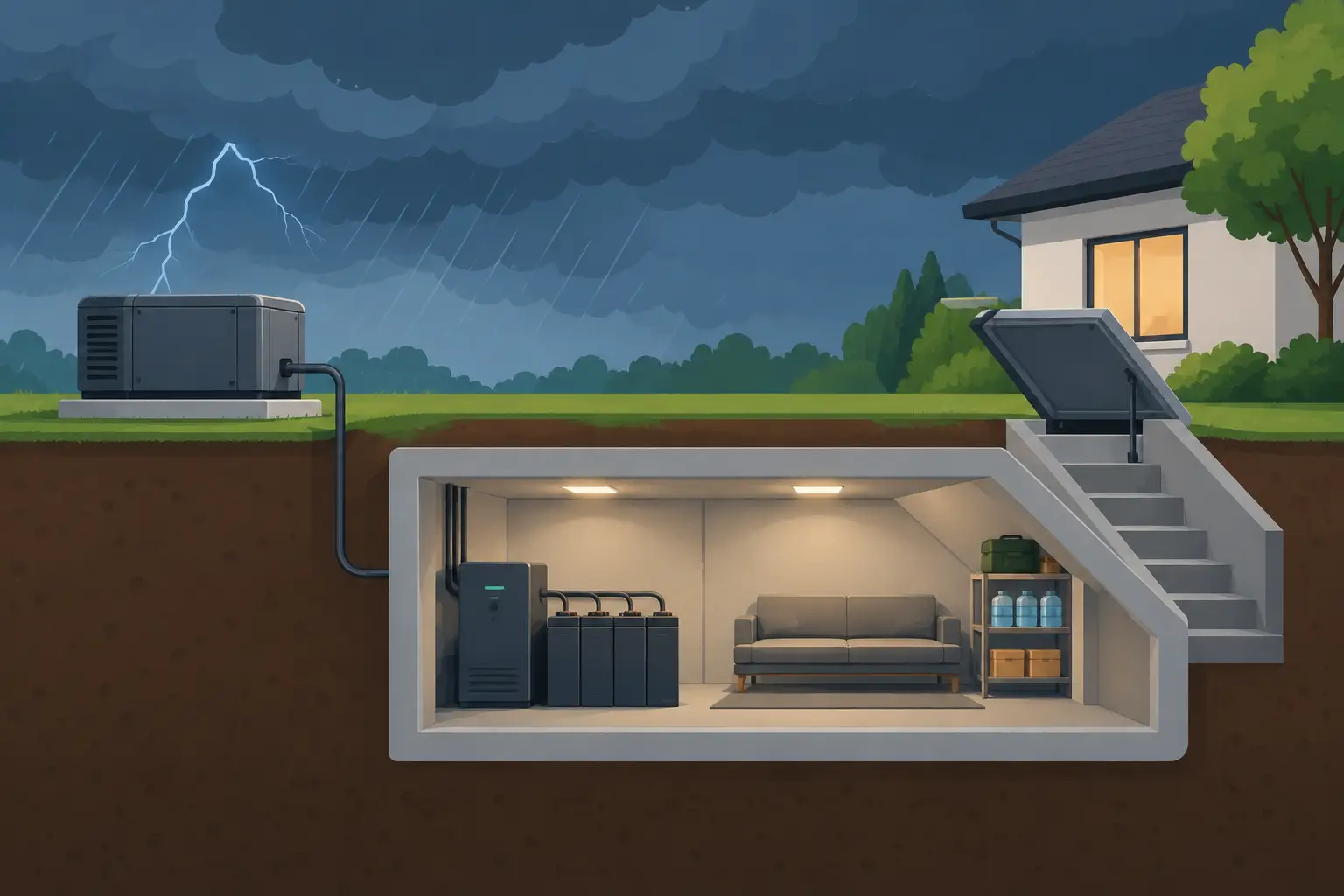
When the power fails during a hurricane or severe storm, a shelter can quickly become hot, dark, and disconnected. Backup power for storm shelters gives your family or occupants a dependable way to run essential lighting, charge phones, receive weather alerts, and support critical medical equipment while conditions outside remain unsafe.
A good setup is not about powering every appliance in the house. It is about choosing enough stored energy for the few items that make a shelter safer and more livable, then placing and operating that equipment correctly. For homeowners and property managers in coastal areas, this is a practical part of storm readiness, not an afterthought.
What Should Backup Power Run in a Storm Shelter?
Start by separating essential loads from convenience loads. During the hours you may be sheltered in place, reliable light, communication, airflow, and access to information matter most. A portable power station can cover many of these needs quietly and without the fumes associated with a fuel generator.
Typical storm-shelter priorities include LED lights, phones and tablets, a weather radio, a small fan, and a router or hotspot if service is available. If someone relies on a CPAP machine, oxygen concentrator, refrigerated medication, or other medical device, that equipment needs its own power calculation and a larger margin of battery capacity.
A portable power station in the 500Wh to 1,000Wh range may handle lights, phone charging, a radio, and a fan for many hours. A 1,500Wh to 3,000Wh unit provides more room for medical equipment, a small refrigerator outside the shelter, or longer outages. Actual runtime depends on the wattage of each device, the age of the battery, ambient temperature, and how frequently equipment cycles on and off.
Do not size a shelter system based only on the battery’s advertised watt-hours. Check the continuous AC output rating too. A battery may store enough energy for a device but still be unable to start it if the device requires more power than the inverter can supply.
A Simple Way to Estimate Battery Size
Find the wattage of each item you need to run, then multiply that number by the expected hours of use. For example, a 10-watt LED light used for 10 hours consumes about 100Wh. A 40-watt fan running for eight hours uses about 320Wh. Add phone charging, a radio, and a reasonable buffer for conversion losses.
If your essential loads total 700Wh, selecting a 1,000Wh battery is usually more realistic than selecting a 700Wh battery. You should not plan to drain every battery to zero during an emergency. A reserve gives you options if the storm lasts longer, a device draws more than expected, or charging is delayed by weather.
For medical equipment, follow the device manufacturer’s power guidance and speak with a qualified provider or electrician when needed. A storm shelter is not the place to test an unproven setup for the first time.
Battery Power Is Safer Than Running a Generator Near a Shelter
Fuel generators have a place in whole-home outage planning, but they are not shelter appliances. Never operate a gasoline, propane, or diesel generator inside a storm shelter, garage, enclosed patio, or near doors, windows, and vents. Carbon monoxide can be deadly, and storms can make safe outdoor placement difficult.
Portable battery stations avoid exhaust and can operate quietly, making them a strong choice for shelter essentials. That does not mean they should be treated casually. Keep the unit dry, protect it from standing water, and follow the manufacturer’s ventilation and operating instructions. Do not cover it with blankets, stack gear around its vents, or use damaged cords.
If a generator is part of your larger backup plan, keep it outside in a dry, open area only after conditions permit safe setup. Use carbon monoxide alarms in sleeping areas and any occupied enclosed space. For the shelter itself, battery backup is the simpler and safer primary solution.
Build a Storm Shelter Power Kit Before Hurricane Season
A dependable system is more than a battery placed on a shelf. Store the power station fully charged and inspect it regularly. In humid, salt-air environments, check cable connections, outlets, and solar connectors for corrosion or damage before every storm season.
Keep the supporting equipment together in a weather-resistant bin near the shelter entrance. Your kit should include charging cords, a power strip rated for the intended load, LED lanterns, a battery-powered weather radio, spare device cables, and written instructions for household members or staff. Label the cords for essential devices so no one is sorting through a tangled box after the lights go out.
It also helps to use lower-power equipment by design. LED lanterns draw far less power than older work lights. A direct-current fan or efficient USB fan can extend battery runtime compared with a large household fan. Charging phones and radios through USB ports may also avoid unnecessary inverter losses.
For a business, rental property, or community facility, assign one person to check the system before a storm. Confirm the battery charge level, test critical devices, make sure extension cords are in good condition, and verify that everyone knows where the equipment is stored.
Solar Charging Extends Backup Power, But Weather Sets the Rules
Portable solar panels can recharge a power station after a storm and reduce dependence on fuel or a damaged grid. In The Bahamas and other sunny coastal locations, solar can be a valuable part of a longer outage plan. But it should not be your only assumption during the storm itself.
Heavy cloud cover, rain, wind, and debris can reduce or stop solar production. Portable panels should be brought inside and secured before dangerous weather arrives. Do not leave panels outdoors during hurricane-force winds, and do not try to deploy them while conditions remain unsafe.
Once the weather clears, place panels in direct sun on a stable surface away from pooled water and falling debris. Use the correct cable and input rating for your power station. A larger solar array can refill a battery faster, but only if the power station can accept that level of solar input.
For properties that need longer-duration resilience, a home battery backup system paired with permanently installed solar may be the better fit. It can support selected household circuits automatically, such as refrigeration, lighting, internet, and a water pump. The trade-off is higher upfront cost, professional installation, and careful planning for local electrical requirements. A portable unit is easier to move into a shelter and can be an excellent first layer of preparedness.
Avoid the Mistakes That Leave Power Unavailable
The most common failure is buying a battery without calculating what it must run. The second is leaving it discharged for months and discovering too late that it was never ready. A third is connecting high-wattage appliances such as hot plates, hair dryers, space heaters, or large window air conditioners that drain a battery rapidly or overload the inverter.
Avoid placing a power station where floodwater can reach it. In a lower-level shelter, set equipment on a stable raised surface and keep cords away from wet floors. Use only equipment rated for the environment, and do not attempt repairs to a wet battery, damaged solar panel, or frayed cable.
Finally, do not wait for a storm warning to learn the controls. Run a family drill. Turn on the lights, power the fan, charge a phone, and confirm the radio receives local alerts. That small test often reveals missing adapters, an undersized battery, or a device that needs a different charging method.
Choosing the Right Backup Power for Storm Shelters
The right system depends on how long you expect to shelter, how many people will use the space, and whether you need to support medical or refrigeration loads. A compact power station may be enough for a short overnight shelter period. A larger solar generator or home battery system makes more sense for extended outages, larger properties, and households that need continuity beyond the shelter itself.
SOL242 focuses on practical solar and battery solutions for the conditions that matter most during storm season: heat, humidity, outages, and the need to stay connected when the grid cannot be counted on. Choose equipment with enough capacity for your actual essentials, protect it from water and heat, and keep it charged well before the forecast turns serious.
The best time to discover that your shelter has enough light, communication, and backup power is on a calm afternoon, not while the wind is rising outside.


