

How to Calculate Backup Loads for Your Home
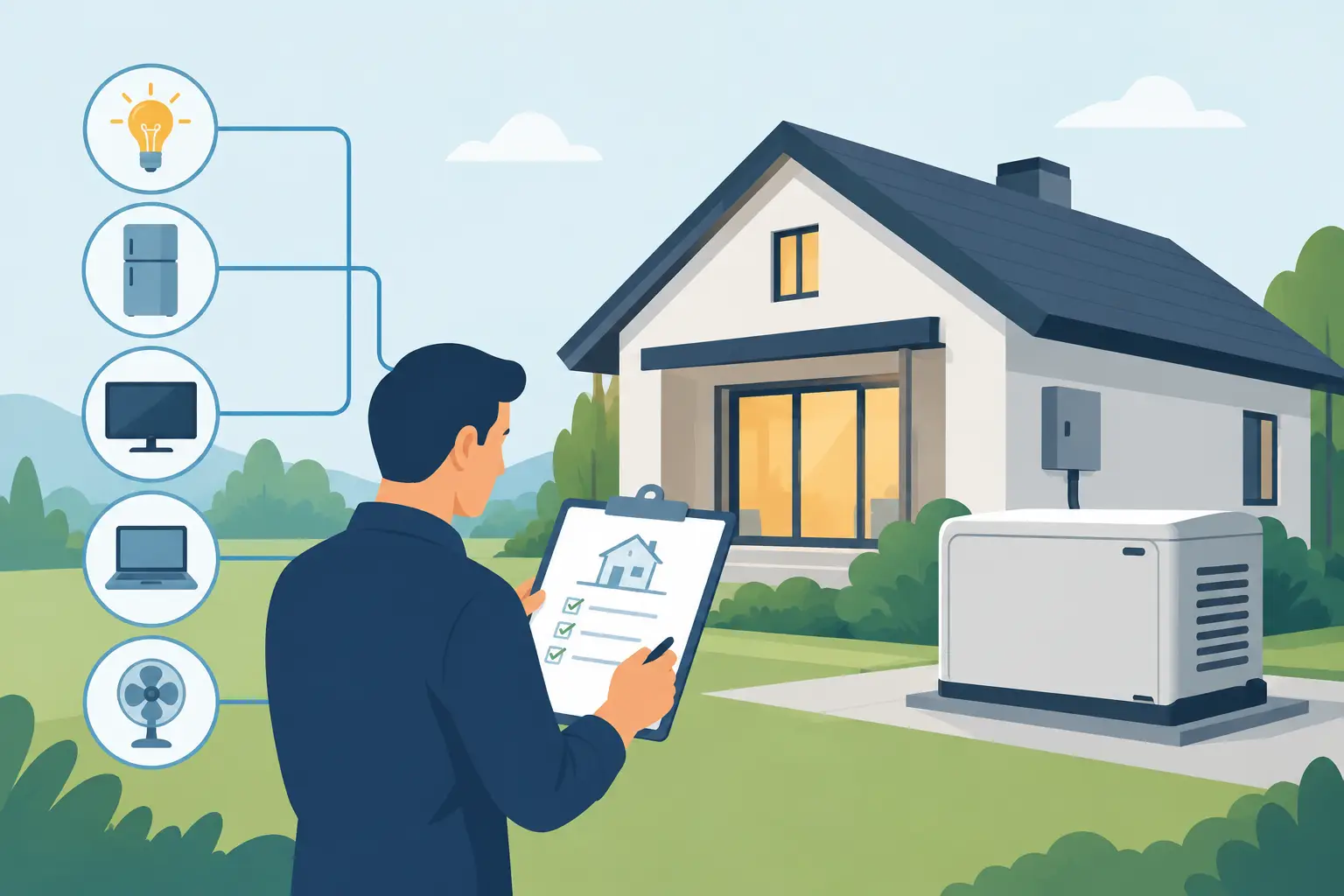
When the power drops during a storm, the question is not whether your entire house can run as usual. It is whether the equipment that protects your comfort, food, safety, and communication will stay on. Knowing how to calculate backup loads gives you a clear target for choosing a portable power station, solar generator, or home battery system that can carry your household through an outage.
For homes in the Bahamas and other storm-prone coastal areas, that planning matters before hurricane season, not after the first warning. A properly sized backup system can keep lights on, preserve refrigerated food, power internet access, charge phones, and support critical medical or water equipment without wasting money on capacity you will never use.
Start With Your Essential Loads
A backup load is any appliance, device, or circuit you want your battery system to power when utility electricity is unavailable. The key word is essential. During an outage, most households do not need every television, bedroom air conditioner, oven, and pool pump operating at once.
Start by walking through your home and separating true necessities from convenience loads. A practical emergency list may include a refrigerator, freezer, a few LED lights, Wi-Fi router, phones, laptops, fans, a television, a small microwave, a CPAP machine, or a water pump. A small business may instead prioritize point-of-sale equipment, security cameras, routers, lights, and refrigeration.
Avoid adding high-demand equipment automatically. Central air conditioning, electric water heaters, clothes dryers, electric ranges, and large pool pumps can consume a battery quickly. They can be included, but they usually move a project from portable backup into a larger home battery or generator-based solution.
How to Calculate Backup Loads in Watts and Watt-Hours
Every backup power calculation starts with two measurements: power and energy. Power is measured in watts, while energy is measured in watt-hours, written as Wh, or kilowatt-hours, written as kWh.
Watts tell you how much power a device needs while it is running. Watt-hours tell you how much battery capacity it will consume over time. The basic formula is simple:
Watts × hours of use = watt-hours needed
For example, a 100-watt refrigerator that runs for an estimated eight total hours over a 24-hour period uses about 800Wh per day. A 10-watt Wi-Fi router operating all day uses 240Wh. Five 9-watt LED bulbs used for five hours consume 225Wh.
Add the watt-hours for every device you plan to run. That total is the minimum daily energy capacity your backup system must provide. If you need power for more than one day without reliable solar recharging, multiply the daily total by the number of days you want to cover.
Find the Wattage of Each Appliance
The most accurate number is usually printed on the appliance label, power brick, user manual, or manufacturer specifications. Look for watts or a rating in volts and amps. If only volts and amps are listed, multiply them:
Volts × amps = watts
A device rated at 120 volts and 2 amps uses approximately 240 watts. This method is useful for smaller electronics, but actual consumption can vary. Refrigerators, freezers, pumps, and air conditioners cycle on and off, so their label wattage may not reflect their average daily use.
For more certainty, use a plug-in power meter on standard wall-powered appliances for several normal days. It records actual energy use in kWh, which is especially helpful for older refrigerators that may consume far more than expected in a hot, humid room.
Account for Starting or Surge Power
Some equipment needs a short burst of extra power when it starts. Refrigerators, freezers, pumps, power tools, and many air conditioners are common examples. This is called surge power, starting watts, or peak watts.
Your power station or inverter must handle both the running watts and the highest startup surge likely to occur. A refrigerator may run at 150 watts but briefly require 1,000 watts or more to start its compressor. If the inverter cannot meet that momentary demand, it may shut down even if the battery has plenty of stored energy.
Check the continuous AC output and surge rating of the backup unit. Then consider what might start at the same time. If a refrigerator and water pump could cycle on together, size for that realistic peak rather than assuming appliances will take turns perfectly.
Build a Simple Backup Load Worksheet
A written worksheet prevents guesswork. Include each essential appliance, its running watts, estimated daily hours of use, and the resulting watt-hours. Here is an example for a household focused on outage essentials:
| Device | Running watts | Daily use | Daily energy | | — | —: | —: | —: | | Refrigerator | 120W | 8 hours | 960Wh | | Wi-Fi router | 15W | 24 hours | 360Wh | | Six LED bulbs | 54W | 5 hours | 270Wh | | Two fans | 100W | 8 hours | 800Wh | | Phones and laptops | 120W | 3 hours | 360Wh | | CPAP machine | 50W | 8 hours | 400Wh |
This example totals 3,150Wh, or 3.15kWh, for one day. That does not mean a 3.15kWh battery is automatically enough. Batteries and inverters have efficiency losses, and actual use can rise when temperatures are high or family members use equipment longer than planned.
Add a 15% to 25% planning margin. In this example, a system with roughly 3.7kWh to 4kWh of usable battery capacity offers a more comfortable starting point for one day of essential power. If you want two days of battery-only coverage, plan for roughly 7.4kWh to 8kWh, or pair a smaller battery with enough solar input to recharge during daylight.
Size the Inverter Separately From the Battery
Battery capacity determines how long your equipment can run. Inverter output determines what it can run at one time. Both numbers must work together.
Add the running watts of appliances you expect to use simultaneously. If your refrigerator, two fans, lights, router, and laptop could all operate together, the combined load may be around 400 to 600 watts. A 1,000-watt continuous inverter could cover that comfortably, provided its surge rating can start the refrigerator.
A microwave, coffee maker, hair dryer, kettle, or power tool can change the picture quickly. A 1,200-watt microwave added to a 500-watt base load creates a 1,700-watt demand. That requires a larger inverter and faster battery discharge capability. Decide whether those high-watt appliances are truly part of your outage plan or whether they can wait.
For a whole-home battery, the same principle applies at the circuit level. An electrician can help identify critical-load circuits and prevent heavy equipment from overloading the system. This approach is often more reliable than trying to back up every circuit in the panel.
Factor in Solar Recharging and Weather
Solar panels can extend runtime significantly, but they should not be treated as guaranteed output during a storm. Cloud cover, rain, panel orientation, heat, and shading all affect production. Hurricane conditions may also require panels to be secured and stored according to their design and safety guidance.
Use solar as a daily recharge plan, not as an excuse to undersize your battery. If your essential loads use 3kWh per day, aim for enough panel capacity to replace a meaningful portion of that energy during normal sunny conditions. A portable solar setup may be ideal for charging phones, lights, fans, and smaller stations, while a home battery system with a properly designed solar array can support larger loads over repeated outages.
For coastal homes, keep equipment dry, elevated where flood risk exists, and protected from salt air when not in use. Reliable backup power depends on careful storage and maintenance as much as correct calculations.
Common Mistakes That Leave a Battery Short
The most common error is confusing watts with watt-hours. A 2,000-watt power station does not necessarily store 2,000 watt-hours of energy. Its watt rating may describe inverter output, while its battery capacity could be much smaller or larger.
Another mistake is using nameplate wattage for every appliance without considering runtime. A refrigerator does not run its compressor continuously, but a router often does run around the clock. Estimate actual hours, then revisit the numbers after using your system during a short test outage.
Finally, do not forget charging losses and accessory loads. Running devices through an inverter, charging laptops, and using extension cords all introduce small losses. Your margin is what turns a paper calculation into dependable power when conditions are less than perfect.
A backup system should give your household options when the grid cannot. Calculate the essentials first, choose capacity with room to spare, and test the plan before storm season so your power is ready when you need it most.


